
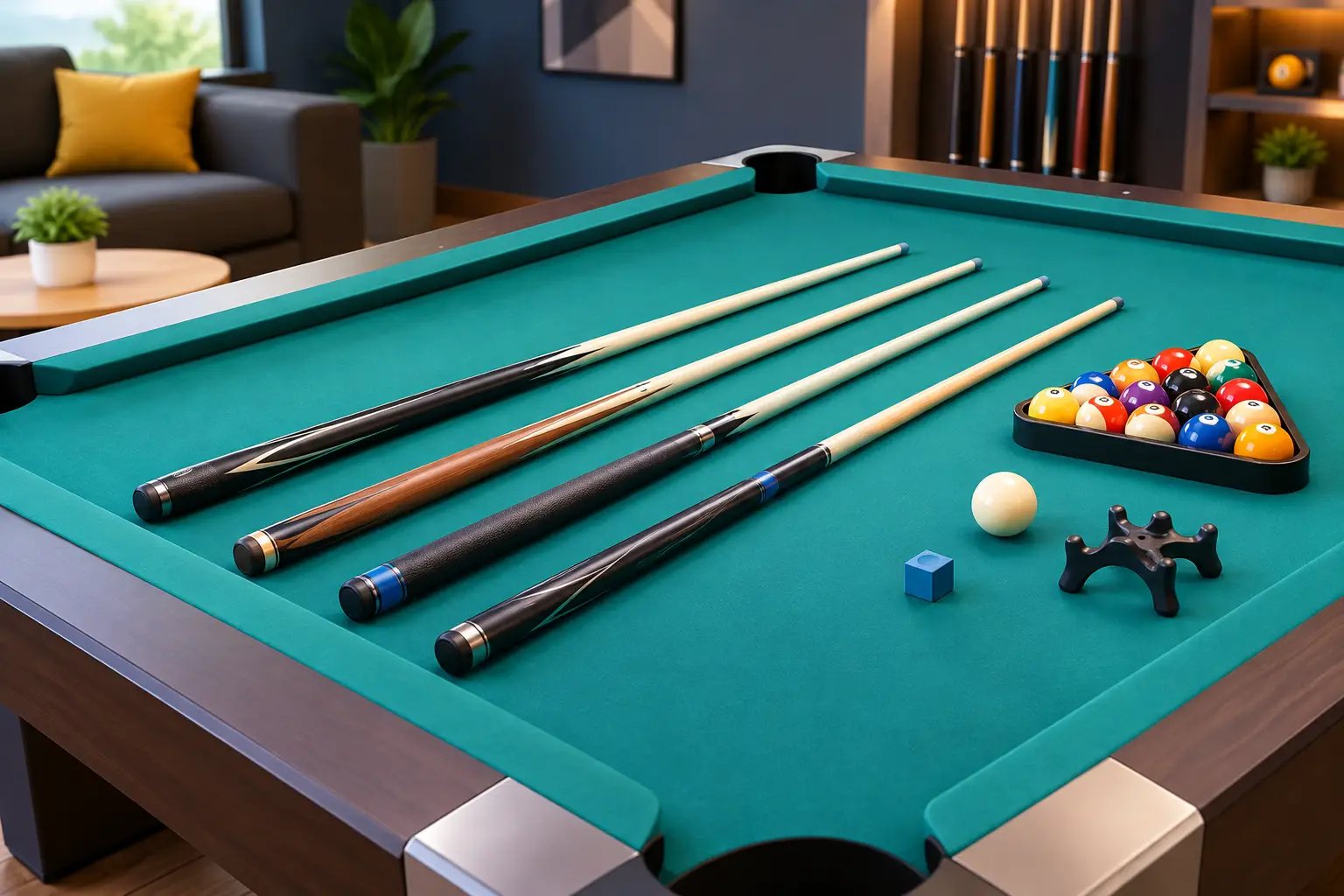
A house cue is fine for a few casual games. But once you are learning how to aim, control speed, and put a little English on the cue ball, an inconsistent or warped cue can make every miss feel like your fault. The best cues for beginner players are not necessarily the most expensive. They are straight, well-balanced, correctly sized, and built with enough quality to let a new player develop without immediately needing an upgrade.
For Arizona homeowners building a game room, a personal cue is also a simple way to make the pool table feel like it belongs to the family. The right first cue gives each player a familiar feel at the table while protecting a premium playing surface from the rough handling that often comes with tired bar-style house cues.
What Makes the Best Cues for Beginner Players?
A beginner cue should be dependable before it is flashy. Decorative inlays, exotic wraps, and a famous name on the butt do not help a player who is still building a consistent stroke. Start with the fundamentals: a straight two-piece cue, a comfortable weight, a quality leather tip, and a shaft that slides smoothly through the bridge hand.
Most beginners do well with a standard 58-inch cue. This is the common adult length and works for the majority of players. A shorter cue is useful when a room has limited clearance around the table, while junior players may need a 48- or 52-inch cue until they can comfortably use a full-length model. Buying a cue that fits the room matters as much as buying one that fits the player. Even a beautiful table becomes frustrating if the walls leave no room for a full stroke.
A two-piece cue is the practical choice for most households. It stores easily, travels well, and allows the shaft and butt to be replaced separately if needed. One-piece cues can feel solid and are perfectly acceptable as dedicated house cues, but they are less convenient for personal ownership and harder to protect from heat, moisture, and accidental damage.
Start with a 19- or 20-Ounce Weight
Cue weight is one of the first decisions buyers ask about, and the answer is refreshingly straightforward. A 19-ounce cue is the safest starting point for many new players. It is light enough to encourage a smooth stroke but substantial enough that it does not feel flimsy. A 20-ounce cue can suit players who prefer a little more feedback and a more deliberate feel on straight shots.
Heavier is not automatically better. A 21-ounce cue may help a player who naturally swings too softly, but it can also encourage a jabbed stroke and make touch shots harder to learn. Lighter cues can feel quick and comfortable, yet some beginners struggle to keep them steady. If possible, hold and hit with both 19- and 20-ounce options before deciding. The cue should feel balanced in the hand, not like all its weight is packed into the butt.
Choose a Standard Shaft Before Chasing Technology
For a first cue, a traditional maple shaft with a 12.5 to 13 mm tip is usually the smart purchase. A slightly larger tip gives a beginner more forgiveness on center-ball contact. It also feels familiar to anyone who has played with standard house cues.
Low-deflection shafts can reduce cue-ball squirt when applying side spin, and they are excellent equipment for the right player. But they cost more, and they do not replace sound fundamentals. A beginner who is learning a level stroke, accurate aiming, and speed control will get more value from a well-made standard shaft than from buying advanced technology too early.
That said, there is no need to buy a bargain cue with a poorly finished shaft. Run your hand along it. It should feel smooth and clean, with no rough spots, dents, or sticky finish. In Arizona’s dry climate, keeping the cue in a proper case and away from extreme heat will help it remain straight and comfortable for years.
Cue Tips Matter More Than Most New Players Expect
The small leather tip is the part of the cue that actually contacts the cue ball, so its condition affects every shot. Beginner players are generally best served by a medium leather tip. It offers a sensible balance between control and durability, holds chalk reasonably well, and does not require the constant attention of a very soft tip.
Soft tips can create a little more grip and feel, especially for spin shots, but they mushroom and wear faster. Hard tips hold their shape longer but can feel less forgiving and make it harder to develop touch. A medium tip lets a new player focus on learning rather than repeatedly repairing or replacing equipment.
Look for a cue with a properly installed leather tip and a ferrule that is clean, secure, and free of cracks. If the tip is glazed, flattened, or badly mushroomed, it can often be shaped or replaced. That is normal maintenance, not a reason to discard an otherwise good cue.
Materials and Construction That Deliver Real Value
Maple remains the standard shaft material for good reason. It is durable, stable, and provides the crisp feedback most players expect. On the butt section, maple, ash, and other hardwoods are common, often with decorative stains or overlays. For a beginner, construction quality matters more than the species or visual treatment.
Avoid cues that feel excessively hollow, have loose joints, or show obvious gaps where components meet. When you screw together a two-piece cue, the joint should tighten smoothly and sit flush. A steel joint can create a firmer hit, while wood-to-wood and composite joints may feel softer. Neither is automatically superior for a beginner. The better choice is the cue that feels solid, straight, and comfortable.
Fiberglass-coated cues deserve a practical mention. They can be durable and easy to clean, making them useful in high-traffic family spaces. However, many players prefer the natural feel of a wood shaft. If the cue will be used primarily by kids, guests, or outdoor entertaining areas, durability may be the priority. If it is a personal cue for someone committed to improving, a traditional maple shaft is usually more satisfying.
Four Buying Mistakes to Avoid
A first cue should not become an expensive lesson. Watch for these common mistakes when comparing options:
- Buying solely by appearance, then discovering the cue is poorly balanced or slightly warped.
- Choosing an unusually heavy cue because it seems more powerful, then fighting it on finesse shots.
- Paying for professional-level shaft technology before the player has established basic mechanics.
- Skipping a case, chalk, and simple tip care, then allowing a good cue to become damaged in storage.
The straightness check takes only a moment. Roll the assembled cue gently on a known-flat table and watch for a visible lift or wobble. Then sight down the shaft. A minor imperfection may not affect casual play, but a clearly bent cue should stay on the rack.
Match the Cue to the Player and the Room
A household with several regular players does not need one universal cue. A 19-ounce cue with a 13 mm tip may become the dependable all-around option, while a smaller adult or teenage player might prefer 18 ounces and a slightly slimmer shaft. Keeping a few quality house cues alongside personal cues makes game night easier and prevents guests from borrowing a favorite cue carelessly.
It also pays to consider the table itself. Quality balls, clean cloth, correct table leveling, and well-maintained cushions reveal what a cue can really do. A premium cue cannot compensate for a table that rolls unevenly or rails that have lost their response. For homeowners investing in a custom table, accessories deserve the same practical attention as the table’s solid hardwood cabinet, 1-inch Brazilian slate, and tournament-grade felt.
The Billiard Broker helps Arizona homeowners look beyond retail hype and choose equipment that fits how their family will actually play. A private showroom appointment is a practical place to compare cue feel, table sizes, finishes, and the room-clearance details that online shopping cannot answer.
Your first cue does not need to be a lifetime purchase. It should be a trustworthy tool that makes practice more enjoyable, supports better habits, and gives you a clear reason to rack up one more game.