
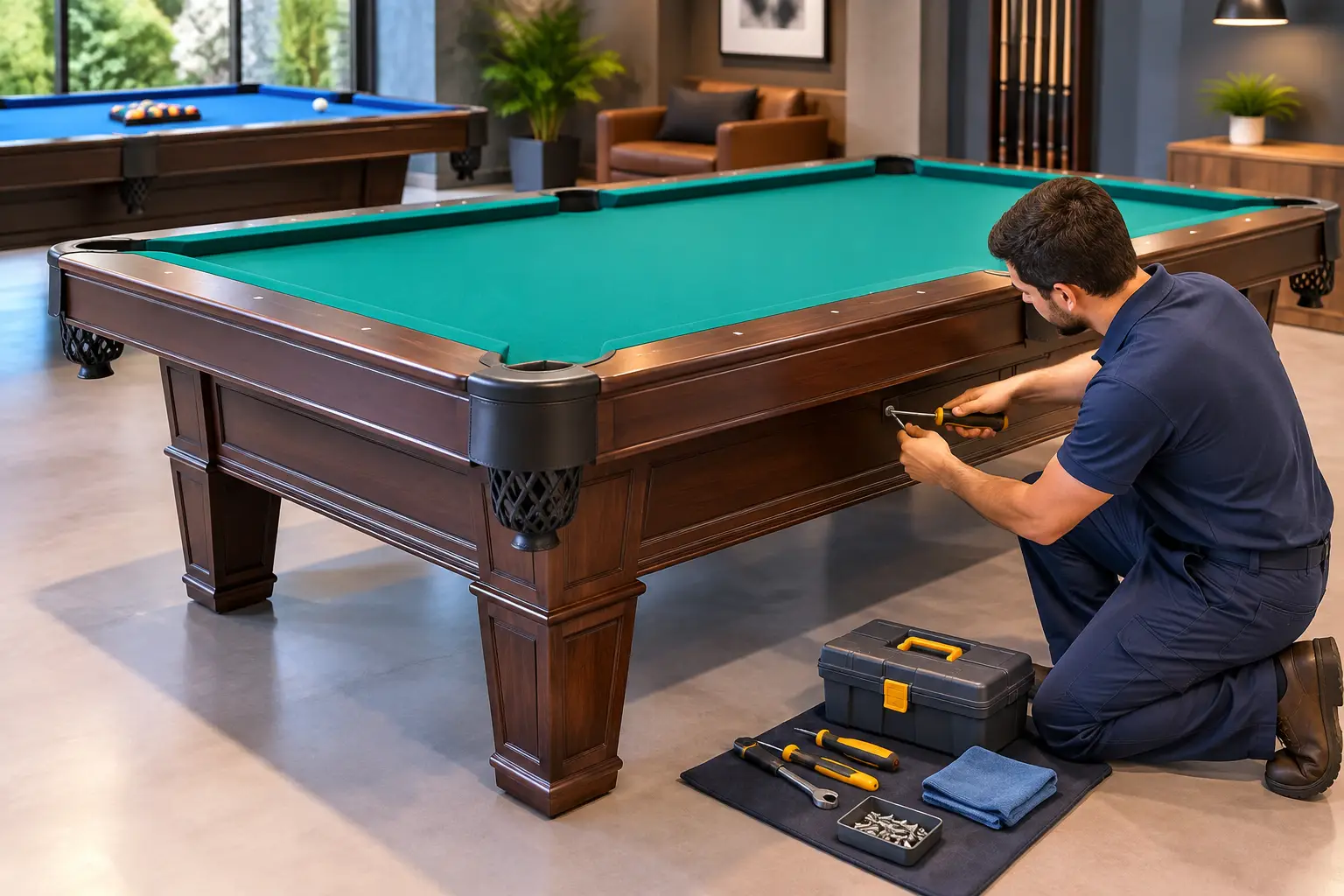
A pool table can look fine from across the room and still play poorly the moment the first ball rolls. A slow rail, a slight lean, worn felt, or a seam beginning to separate can turn a beautiful game room centerpiece into a source of frustration. Professional billiard table repair protects the table you invested in, restores a true playing surface, and helps prevent a small issue from becoming an expensive rebuild.
For Arizona homeowners, repair is especially valuable because dry conditions, temperature changes, moves, and everyday family use all take a toll over time. The right answer is not always a complete restoration. Sometimes the table needs a careful level adjustment. Other times, new cloth or cushions will make it play like a different table. Knowing the difference helps you spend wisely.
When Billiard Table Repair Is Worth It
A quality table is built to be serviced, not replaced. Tables made with solid hardwood, one-inch slate, K66 gum rubber cushions, and quality hardware can provide decades of use when they receive proper care. That is one reason construction matters at the time of purchase: premium materials give an experienced technician something worth preserving.
Repair is generally the smart move when the slate is sound, the frame remains structurally stable, and the table has sentimental, design, or resale value. A well-built table may need new felt after years of play, new rubber after a decade or more, or professional leveling after a move. Those are normal ownership costs, not signs that the table has reached the end of its life.
Be more cautious with lightweight furniture-grade tables, particleboard frames, or tables with warped playing beds. Putting premium cloth on an unstable table rarely solves the real problem. A qualified billiard technician should assess the frame, slate, rails, pockets, and cloth before recommending work.
The signs should not be ignored
Some problems are easy to spot. Others appear only when a straight shot rolls off line or a ball dies against the cushion. Schedule an evaluation if you notice four or more of these issues:
- Balls consistently drift toward one side or corner of the table.
- Bank shots feel dull, inconsistent, or noticeably slower than before.
- The cloth has tears, burn marks, stains, thin spots, or loose seams.
- Rails have cracks, loose bolts, damaged laminate, or separating rubber.
- Pockets sag, leather is splitting, or liners are brittle and broken.
- The table has been moved, stored, or exposed to major temperature changes.
A table does not need to be visibly damaged to need attention. Even a minor shift in level can affect play, particularly on a slate table designed for accurate, tournament-style roll.
The Most Common Billiard Table Repairs
Precision leveling and slate correction
Leveling is not a matter of putting a carpenter’s level on the rail and turning a few leg adjusters. On a quality slate table, a professional checks the cabinet, frame support, slate seams, and playing surface. The slate may need to be shimmed, seams may need to be reworked, and each section must be aligned before the cloth is installed or stretched.
This work becomes essential after a move. Pool tables are heavy, but their precision comes from the slate being supported correctly, not simply from their weight. Moving one without disassembly can crack slate, strain the frame, loosen seams, and throw the table out of level.
Refelting or recovering the table
New cloth is one of the most visible improvements you can make. It refreshes the appearance of the room while restoring speed and consistency to the game. The best choice depends on how you use the table.
A durable woolen cloth works well for active family rooms and casual play. Tournament-grade wool felt offers a refined look and dependable performance for many home installations. Faster worsted cloth may appeal to serious players, but it also shows chalk and wear differently and can be less forgiving for beginners. Color matters, too. Traditional green remains timeless, while charcoal, navy, burgundy, and neutral tones can better match a custom game room.
A proper recover includes more than stretching fabric over the slate. The technician removes rails, inspects feather strips and cushion condition, prepares the slate, installs the cloth with correct tension, and refits the rails so pocket openings and play remain consistent.
Cushion and rail replacement
Dead rails are among the clearest signs a table needs professional service. If a ball makes a flat sound and barely rebounds, the cushion rubber may have hardened, dried out, or separated from the rail. Arizona heat and dry air can accelerate this deterioration, especially in garages, patios, or rooms without consistent climate control.
Replacing cushions correctly requires the right profile of gum rubber, accurate rail preparation, and careful cloth installation. This is not a repair to handle with generic adhesive and a weekend guess. Poorly installed cushions can create uneven rebound angles that make the table frustrating no matter how level the slate may be.
Pocket, hardware, and cosmetic restoration
Leather drop pockets, shield pockets, fringe, castings, rail caps, and sights all influence the way a table looks in your home. They also endure constant contact. A pocket repair may be practical when the leather is sound but a liner or attachment point has failed. Full replacement may be the better value when leather is cracked, faded, or no longer matches the room.
Cosmetic work should complement the table rather than erase its character. A traditional solid-wood table may deserve a careful finish touch-up. A contemporary table may benefit more from clean new pockets, fresh cloth, and corrected hardware. The repair plan should match both the table’s condition and your home’s design.
Why DIY Repairs Often Cost More Later
There is a difference between routine care and technical repair. Brushing cloth, using a proper billiard vacuum, keeping drinks away from the rails, and covering the table during construction are sensible owner tasks. Removing slate, stretching felt, replacing cushions, or leveling a three-piece table is specialized work.
The risk is not just cosmetic. Incorrect cloth tension can cause wrinkles and premature wear. Improper slate seams can telegraph through the cloth. Missing a frame issue can leave a table unstable, while overtightening rail hardware can damage components that are difficult to replace. Saving a service call can become expensive when the repair must be undone and rebuilt correctly.
If your table is an heirloom, a premium custom model, or a table you may sell later, professional documentation and workmanship also help preserve its value. Buyers notice uneven rails, poor cloth installation, and makeshift repairs immediately.
Protect Your Table Between Service Visits
Good habits extend the life of every repair. Keep the table away from direct sun and avoid placing it beneath HVAC vents that constantly blow on one rail. Use a fitted cover when the room is not in use, particularly in homes with pets, young children, or active entertaining spaces.
Clean chalk dust gently rather than aggressively scrubbing the cloth. Do not sit on the rails, and never use household furniture polish on rail surfaces or leather pockets. Most importantly, call for help before moving the table. Even moving it a few feet for new flooring or a remodel can change its level or stress its structure.
For homeowners in Peoria, Scottsdale, Phoenix, and across Arizona, The Billiard Broker can assess whether your table needs a simple tune-up, a recover, a move and reinstallation, or more involved restoration. The goal is straightforward: protect the table you own and make sure it performs the way a real pool table should.
A well-repaired table brings people back to the game room. Before the next family gathering or game-night tournament, give that first break the playing surface it deserves.