
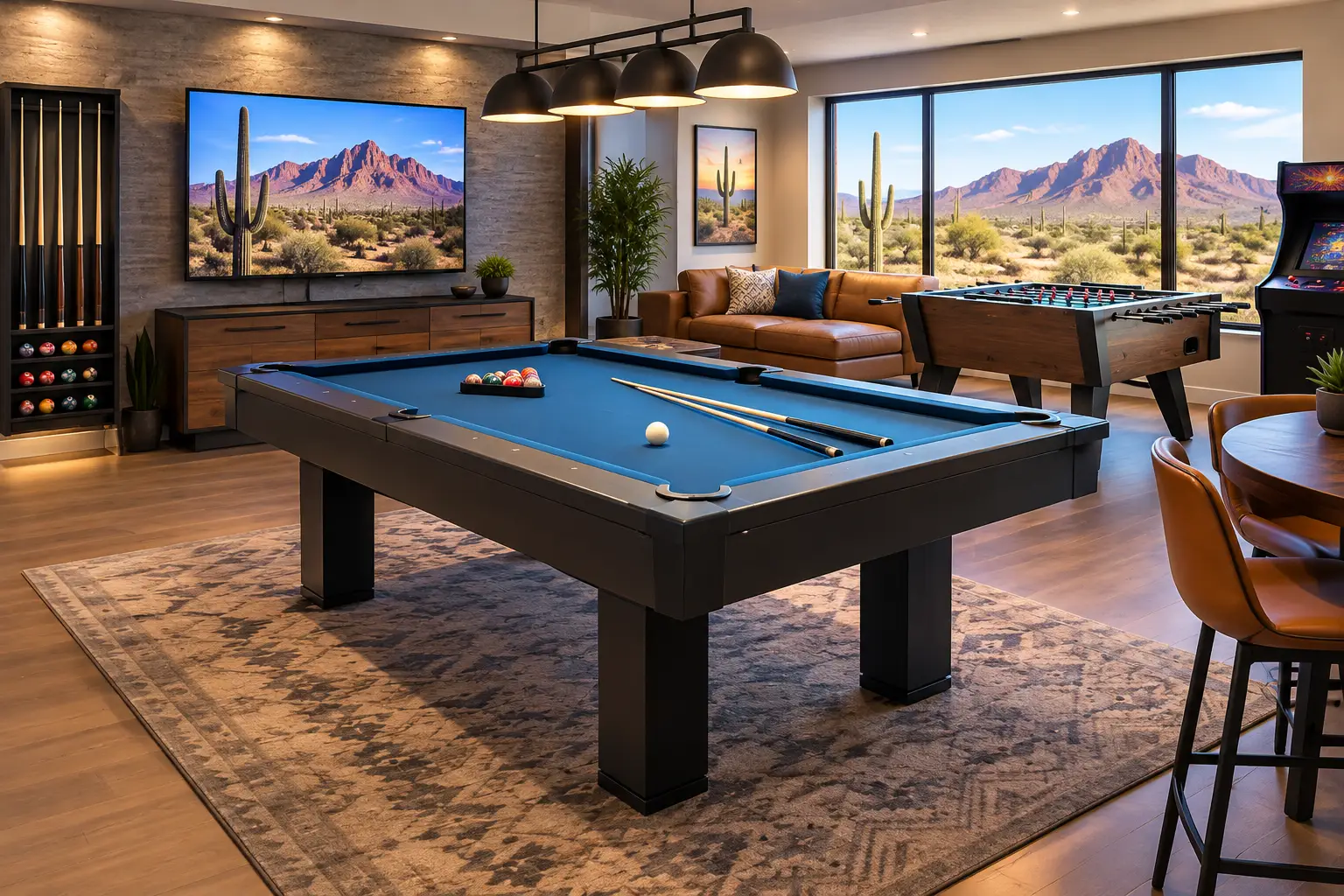
A great game room is not built around whatever happens to fit in the spare bedroom. It is built around the way your family entertains, the room you actually have, and a centerpiece that will still feel right ten years from now. This Arizona indoor game room guide helps homeowners make those decisions before a pool table, shuffleboard table, bar, or oversized TV turns a promising space into a tight and frustrating one.
For most Arizona homes, the best game room begins with one premium table and enough space to enjoy it properly. Start there, then layer in seating, storage, lighting, and finishes that make the room inviting without crowding the game.
Start With the Room, Not the Table
A pool table may be the focal point, but clearance is what determines whether it plays well. The table itself is only part of the footprint. Players need room to stand, stroke, and move around every rail without constantly shortening a shot or bumping into furniture.
For a 7-foot pool table, plan on a room around 17 by 13 feet for comfortable play with standard cues. An 8-foot table generally needs about 18 by 14 feet, while a 9-foot table is best in a room closer to 19 by 15 feet. These are practical starting points, not rigid rules. A smaller room can still work if players are comfortable using a shorter cue for occasional tight shots, but that compromise should be intentional.
Measure the usable area, not just the wall-to-wall dimensions. Account for a built-in bar, a sectional sofa, swinging doors, fireplace hearths, windowsills, and walkways. In many bonus rooms and converted living spaces, the difference between a good layout and a cramped one is simply moving a sofa to another wall or choosing bar stools that tuck completely under the counter.
Choose the Right Anchor Game
Pool is the natural centerpiece for many homes because it works for serious players, casual guests, teenagers, and multi-generation family gatherings. It also brings real design presence. A solid hardwood table with the right finish can look as appropriate in a Scottsdale great room as it does in a dedicated media room in Peoria.
Shuffleboard is an excellent alternative or companion when the room is long and narrow. It encourages conversation, takes less side-to-side clearance than pool, and fits beautifully in a bar-style entertaining space. If you want both, resist the urge to force them into one undersized room. A better solution may be placing the pool table in the main game room and using shuffleboard in an adjacent lounge, finished basement, or covered indoor-outdoor entertaining area.
Buy Construction That Holds Up
Arizona homeowners know that heat and dry air can expose weak materials. Even in a climate-controlled room, a game table is a long-term piece of furniture. Construction matters far more than a flashy cabinet design or a low advertised price.
For a home pool table that is meant to stay level and play consistently, look for a one-inch Brazilian slate bed, solid hardwood cabinet and rails, K66 gum rubber cushions, and tournament-grade wool felt. These are not decorative upgrades. They determine how the table rolls, rebounds, wears, and responds after years of family use.
A table with thin slate, particleboard framing, or bargain cushions can look acceptable on delivery day. The trouble shows up later in dead rails, uneven play, loose pockets, and a cabinet that does not hold its adjustment. Replacing a low-quality table is rarely the bargain it first appeared to be.
The value conversation should be just as direct. Traditional retail showrooms often build substantial overhead and markup into the price. Dealer-direct pricing can put a made-to-order, American-made table with premium components within reach without asking homeowners to settle for entry-level construction. A table commonly priced around $5,000 in conventional retail can be available closer to $2,495 when the retail markup is removed.
Design a Room That Feels Finished
A game room should be fun, but it does not have to look like an arcade or sports bar. The strongest rooms connect to the rest of the home through materials and color choices.
Start with the wood finish. Warm walnut, espresso, weathered gray, natural oak, and black finishes each create a different effect. A lighter wood table can soften a dark media room, while a rich traditional finish can bring weight to a formal den or lodge-inspired space. Match the overall mood rather than trying to duplicate every cabinet or floor color exactly.
Felt is where homeowners can add personality without making a permanent design mistake. Traditional green remains timeless, while charcoal, taupe, burgundy, navy, and tournament blue can coordinate with more current interiors. If the room will serve as a polished extension of the home, neutral felt often gives you the most flexibility. If the table is in a dedicated sports or entertainment room, a bolder color may be exactly right.
Pocket style also matters. Leather shield pockets create a traditional, furniture-grade appearance. Fringe pockets lean more classic and recreational. Drop pockets keep the experience simple, while a ball return may appeal to frequent players who prefer faster games. None is universally better. The right choice depends on how formal the room feels and how the table will be used.
Keep Furniture Outside the Playing Zone
Once the table is positioned, furnish the perimeter instead of filling the center. A small pub table, two or three comfortable chairs, a wall-mounted cue rack, and closed storage for balls and accessories often provide everything the room needs.
Avoid deep sofas directly behind a shooting lane. They make the room feel cozy until someone has to move furniture for every game. Also consider traffic: guests should be able to get a drink, use the restroom, or pass through the room without walking between a player and a shot.
Lighting Should Help the Game, Not Compete With It
The best pool table lighting is focused, even, and positioned high enough to keep sightlines clear. A dedicated billiard light centered over the table gives the room character and makes the playing surface easier to read. It should illuminate the full bed without creating harsh glare on the balls.
Recessed lights and decorative fixtures can support the room, but they should not replace task lighting over the table. Dimmers are worth considering, especially in a room that shifts between family game night, watching sports, and hosting friends. Brighten the table for play, then lower the surrounding light when the room becomes a lounge.
Natural light is welcome, but direct sun can fade cloth over time. If the room has large windows, use shades or shutters that let you control intense afternoon light. This is particularly useful in west-facing Arizona rooms.
Plan for Professional Delivery and Leveling
A pool table is not a boxed piece of furniture that should be assembled casually. Slate is heavy, seams must be set correctly, cloth must be stretched properly, and the finished surface must be precision leveled. A table can be made with excellent materials and still play poorly if installation is rushed.
Professional delivery also protects your home. Experienced installers know how to move slate through hallways, stairs, tight turns, and finished spaces while protecting flooring, walls, and the table itself. They disassemble and reassemble tables correctly when a homeowner moves, remodels, or relocates a game room.
This is one reason to choose a local ownership partner rather than a seller who disappears after the transaction. The Billiard Broker provides statewide white-glove delivery, professional installation, moving, maintenance, repair, and accessories, so the table has support long after the first game.
A Simple Way to Customize With Confidence
A custom table does not need to feel complicated. Think through the decision in four practical steps: confirm the room size and ideal table size; select the hardwood style and finish; choose felt, pockets, and accessories; then schedule professional delivery and leveling.
Private showroom appointments are particularly useful for this kind of purchase. Seeing wood samples, rail profiles, pocket options, and cloth colors in person gives homeowners a far better sense of quality than scrolling through product photos. It also makes it easier to compare a true furniture-grade table with lower-cost alternatives that may look similar at first glance.
Your game room should invite people to stay a little longer, put their phones down, and play another round. Measure carefully, buy the quality that protects your investment, and choose a table that belongs in your home rather than merely filling an empty room. When you are ready to see the options in person, schedule a private appointment and get the details right before delivery day.