
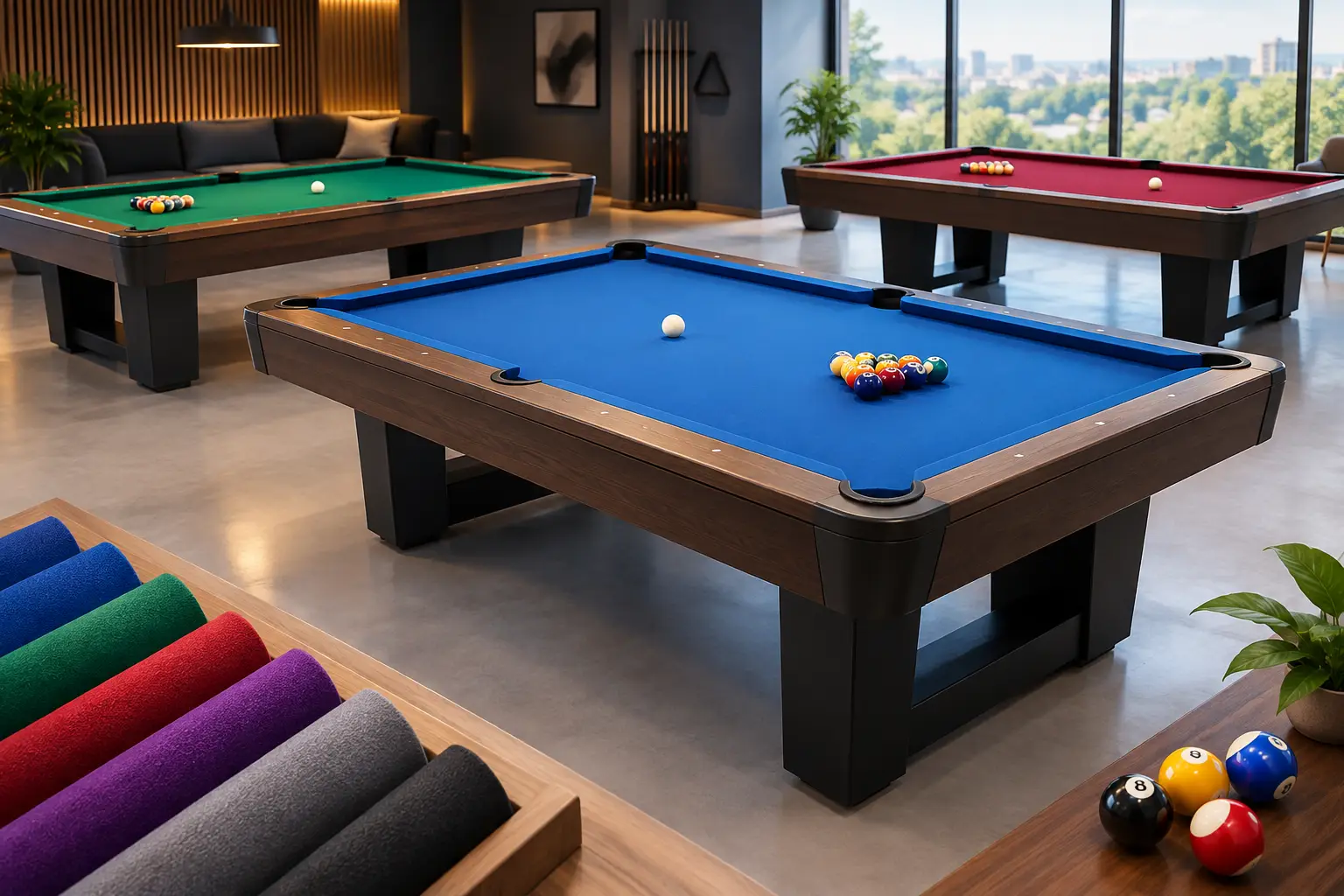
A pool table can be built from solid hardwood, premium 1-inch Brazilian slate, and tournament-grade cushions, yet the cloth color is often what people notice first. Billiard cloth colors set the tone for the entire room. They can make a table look like a serious piece of game equipment, a tailored furniture statement, or the center of a relaxed family hangout.
For Arizona homeowners planning a game room, loft, bonus room, or covered outdoor entertainment area, color should do more than match a paint swatch. The right felt needs to fit how you use the table, how much natural light the room receives, and how much maintenance you are willing to take on. A great-looking color that shows every bit of chalk may not be the best choice for a busy household. On the other hand, a classic color can be worth the upkeep when the goal is a more traditional billiards look.
Start With How the Table Will Be Used
Before choosing from a cloth sample book, be honest about the role your pool table will play. A dedicated player may prioritize ball visibility and a familiar tournament appearance. A family purchasing its first table may care more about a color that stays presentable between gatherings. A homeowner designing a high-end entertaining space may want the cloth to coordinate with cabinetry, flooring, or leather seating.
Traditional green remains popular for a reason. It is easy on the eyes, immediately recognizable, and comfortable for long games. Green also works with nearly every wood finish, from warm oak and walnut to darker espresso stains. If you want a classic table that will not feel dated after a redesign, green is a safe and proven choice.
That does not mean it is the only choice. Premium home tables are furniture as much as they are game equipment. A rich navy can sharpen a contemporary room. Charcoal or black can give a table a dramatic, tailored look. Burgundy and wine tones bring warmth to traditional spaces with darker woods and leather. Electric blue, bright red, and other bold options make more sense when the game room is meant to have personality.
The Most Popular Billiard Cloth Colors
The best color is rarely about following a trend. It is about balancing style, visibility, and real-world upkeep.
Traditional Green
Green is the standard against which other billiard cloth colors are measured. Medium and dark greens hide light chalk dust better than pale shades and create good contrast with most object balls. They are ideal for homeowners who want the familiar look of a billiards room without having to explain their design choice to anyone.
Green is especially forgiving in multipurpose rooms. It pairs well with wood furniture, framed sports memorabilia, neutral walls, and both traditional and transitional interiors. If several family members will use the table and no one has a strong preference, green is usually the low-risk decision.
Tournament Blue
Tournament blue has become a favorite among serious players because it offers excellent contrast with the balls. Television events helped make this shade familiar, but its value goes beyond appearance. Many players find that a clear blue field makes it easier to follow the cue ball and read shots.
Blue also fits Arizona homes with clean, modern finishes. It works beautifully with gray, black, or natural wood table frames. Keep in mind that lighter and brighter blues can show chalk marks and lint more readily than darker green cloth, particularly under strong overhead lighting.
Charcoal, Black, and Graphite
Dark neutral cloth has a strong visual presence. On the right table, charcoal or black felt can make solid hardwood rails and custom leather pockets stand out. These colors are a natural fit for contemporary homes, media rooms, and spaces with black hardware, dark cabinetry, or industrial-style accents.
The trade-off is visibility. Dark cloth can make dark-colored balls, chalk residue, pet hair, and lint more noticeable depending on the lighting. Black can also reduce visual separation between the pockets and playing surface for casual players. It is a striking choice, but it works best when the room has well-planned lighting and the table will be maintained regularly.
Burgundy, Red, and Wine
Deep red cloth brings a traditional clubroom feel to a home setting. It looks especially strong with mahogany, cherry, walnut, and darker distressed finishes. Burgundy is warm without being loud, making it a strong option for a study, formal game room, or Southwest-inspired home with rich interior tones.
Bright red is bolder and less forgiving. It can be a fun statement in a sports-themed room, but it may limit future decorating changes. If you love red, a deeper wine or burgundy often delivers the same character with more staying power.
Tan, Camel, and Other Light Neutrals
Light neutral cloth can look outstanding in a luxury home. Camel, taupe, sand, and beige options coordinate naturally with desert palettes, pale stone, cream walls, and lighter hardwood finishes. They can make a full-size table feel less visually heavy in an open room.
They also reveal chalk, spills, and everyday dust faster than nearly any other color. That does not make them a bad choice. It simply means they are best for owners who treat the table as a carefully maintained furnishing, use clean hands and quality chalk, and keep food and drinks away from the rail.
Match the Cloth to the Room, Not Just the Sample
A four-inch cloth swatch can be misleading. A color that seems subtle in a showroom can dominate an eight-foot or nine-foot playing surface at home. View samples next to your flooring, wall color, cabinetry, and any furniture that will share the space. If possible, look at them in daylight and under the room’s evening lighting.
Lighting changes everything. Strong Arizona sunlight can brighten blue and green cloth while revealing dust on very dark surfaces. Warm recessed lighting can make burgundy look richer and can shift some greens toward olive. A table placed near large windows may benefit from shades and UV protection, since prolonged direct sun can fade cloth over time.
Also consider the table finish and pockets as one design package. A weathered gray table with black leather pockets may call for charcoal, steel blue, or tournament blue. A warm pecan or walnut frame can look more natural with green, burgundy, or camel. The goal is not to make every element match exactly. It is to make the table look intentionally designed rather than assembled from separate choices.
Cloth Color Does Not Change Table Quality, but Cloth Type Does
Color affects appearance and maintenance. It does not determine whether the table plays true. That comes from the foundation: a stable hardwood cabinet, precision-cut one-inch slate, quality K66 gum rubber cushions, and professional leveling during installation.
The cloth itself matters just as much as its color. Tournament-grade wool felt is a practical choice for many home tables because it provides a durable, familiar playing surface at a sensible price. Faster worsted cloth is smoother and offers more speed and precision, which appeals to experienced players and owners who want a more competition-oriented feel.
Neither is automatically right for every buyer. A family table that hosts weekend games may benefit from durable wool felt in a forgiving mid-tone color. A dedicated player may choose worsted cloth in tournament blue and accept the extra attention it may require. The smart purchase is the one that fits your household rather than a one-size-fits-all package from a conventional retail showroom.
Practical Maintenance by Color
All cloth benefits from gentle brushing, occasional vacuuming with the proper upholstery attachment, and prompt attention to spills. Avoid aggressive scrubbing, household cleaners, and eating directly over the table. Those habits protect any color, but they matter most with light neutrals and black cloth.
For active family use, medium green, medium blue, and deeper burgundy tend to offer the best balance between style and day-to-day forgiveness. They conceal minor chalk transfer better than camel while avoiding some of the lint visibility common on black. If children, guests, or frequent game nights are part of the plan, this middle ground can save you from constantly policing the table.
When it is time to recover a table, color is also an opportunity to refresh the room without replacing a well-built piece of furniture. Professional service protects the slate, cushions, and rails while ensuring the new cloth is stretched correctly. A pool table should play as well after a cloth update as it did before it.
Choose the Color With the Table in Front of You
A private showroom appointment gives you a better way to choose than clicking through color thumbnails. You can compare billiard cloth colors against actual hardwood finishes, pocket styles, rail details, and table sizes while talking through how the table will live in your home. The Billiard Broker helps Arizona homeowners build made-to-order American pool tables without paying inflated traditional retail markups, then handles professional delivery, setup, and precision leveling statewide.
Choose the cloth color you will still enjoy when the room is quiet, the lights are on, and the table is simply part of your home. If that choice also makes game night easier to maintain and more enjoyable to play, it is the right one.