
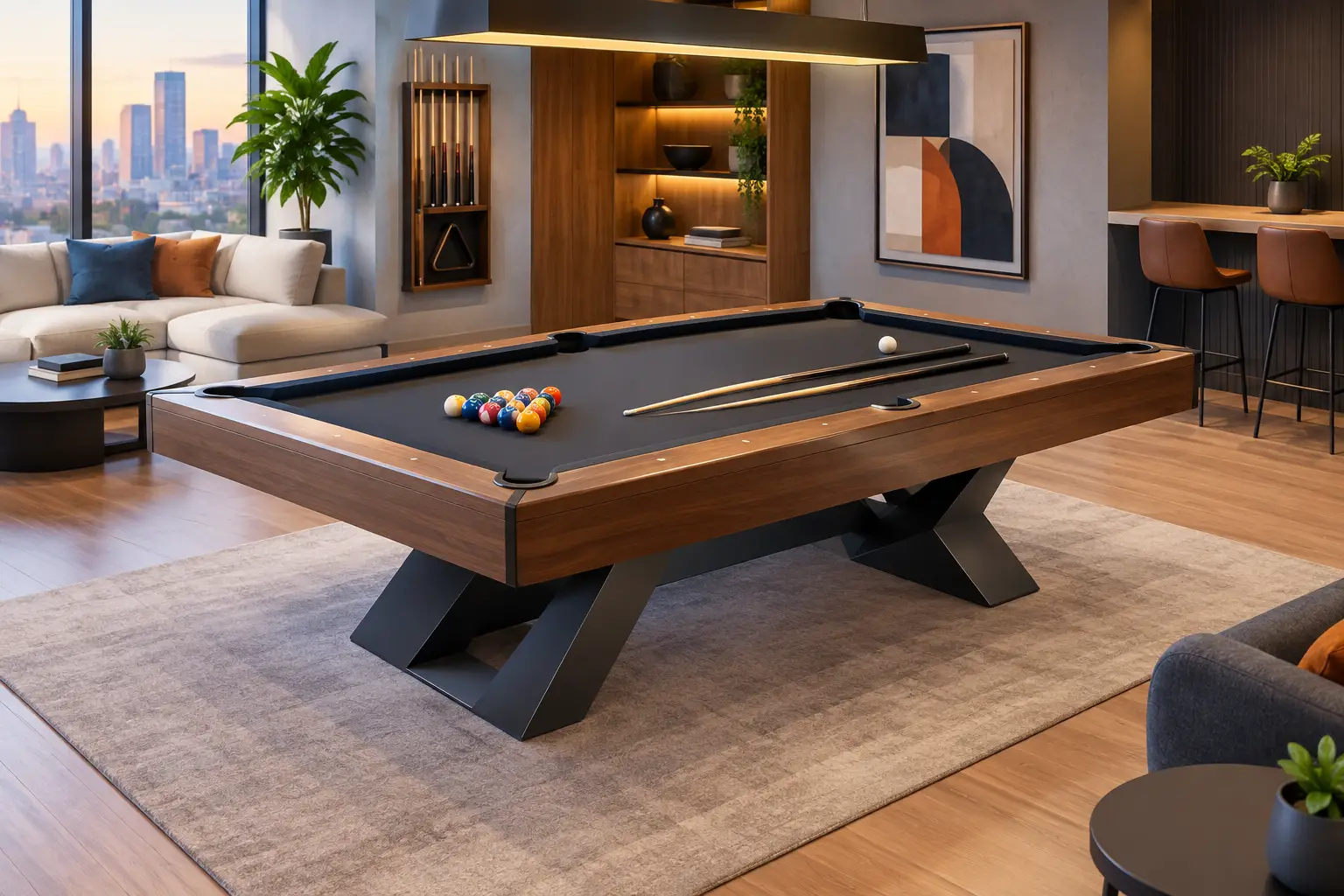
A pool table should not force you to choose between a serious game room and a well-designed home. The best billiard furniture does both: it gives your family a genuine playing experience while looking intentional alongside your flooring, cabinetry, seating, and lighting. That balance matters whether you are furnishing a Scottsdale bonus room, a Peoria game room, or a covered Arizona entertainment space.
The mistake is treating a pool table as a temporary recreation purchase. A well-built table becomes part of the home for decades. It hosts family tournaments, neighborhood gatherings, and quiet practice after work. It also occupies a meaningful amount of visual and physical space. Choosing wisely means looking beyond a photo, a low advertised price, or a trendy finish and focusing on construction, scale, customization, and the service behind the sale.
What Billiard Furniture Really Means
Billiard furniture is not simply a pool table placed in a room. It is a table selected and finished as a piece of furniture first, without compromising the components that make it play correctly. The frame, legs, rails, pockets, felt, and finish should complement the room. Underneath that design, the table needs stable structure, quality slate, responsive cushions, and professional installation.
That distinction separates a lasting investment from a light-duty table that looks acceptable on delivery day but develops problems after regular use. Tables made with particleboard cabinets, thin slate, synthetic cushions, or weak leg assemblies often struggle with leveling and durability. They may cost less upfront, but they are rarely a bargain once moving, repair, or replacement enters the picture.
For a home table that will see real play, start with the foundation: a solid hardwood cabinet, one-inch Brazilian slate, and K66 gum rubber cushions. One-inch slate provides the stable, flat playing surface players expect. Hardwood handles years of use better than veneered composite material. Quality cushions give the ball a predictable rebound instead of the dull, inconsistent response that makes even a casual game frustrating.
Start With the Room, Not the Table Photo
A pool table can be a centerpiece, but it cannot be chosen in isolation. Before falling in love with a style, measure the room and account for cue clearance around every side. A seven-foot table can work beautifully in a compact game room, while an eight-foot table is often the best fit for many family spaces. A nine-foot table delivers the closest experience to a tournament table, but it requires a larger dedicated room.
The table itself is only part of the footprint. You need room to stand, bridge, and comfortably move a cue in every direction. Standard cues are typically 58 inches long, although shorter cues can help in a tight area. Short cues solve a localized clearance issue, such as one wall near a doorway, but they should not be used to make an undersized room work. If every shot requires a short cue, the space may be better suited to a smaller table.
Also consider how the room is used when no one is playing. In an open-concept home, a pool table may be visible from the kitchen or living area every day. That is where furniture-level design earns its value. A dining conversion top can make the table more versatile, but it adds weight and changes how the room functions. It is a strong choice for multipurpose spaces, not a requirement for every home.
Match the Table to Your Home’s Design
The right style is usually the one that echoes details already in the room. A traditional home may call for carved legs, warm walnut, leather pockets, and a classic green or burgundy felt. A modern home often benefits from clean lines, squared legs, matte black hardware, and a tailored charcoal, navy, or gray cloth.
Rustic and transitional tables remain popular in Arizona because they work with wood beams, natural stone, leather furniture, and indoor-outdoor entertaining areas. Yet rustic does not have to mean oversized or overly distressed. A clean farmhouse-inspired table with a weathered oak finish can feel refined when the proportions are right.
Customization should be useful, not overwhelming. Focus on the choices that have the greatest impact: finish color, leg style, pocket treatment, cloth color, and rail sights. Bring cabinet samples, flooring photos, or a photo of the room to a private showroom appointment. Seeing wood tones and felt colors in person is far more reliable than trying to judge them from a phone screen.
Felt Color Is a Design Decision and a Playing Decision
Tournament-grade wool felt is available in far more than traditional green. Blue and charcoal are popular because they coordinate easily and offer good contrast with the balls. Burgundy adds warmth in more traditional rooms. Tan and lighter neutral cloths can look beautiful, but they tend to show chalk marks and everyday use more readily.
For households with active kids, frequent guests, or pets, a medium or darker cloth is often the practical choice. If serious play is a priority, ask about speed and durability rather than selecting a cloth based on color alone. The best option depends on whether the table is primarily for casual family use, regular practice, or both.
Do Not Let the Finish Distract From Construction
A handsome finish cannot compensate for a weak table. This is where buyers should ask direct questions. Is the cabinet solid hardwood? How thick is the slate? Is the slate a single piece or a three-piece set? What kind of cushion rubber is used? Who installs and levels the table?
A three-piece, one-inch slate table is the standard worth pursuing for a premium home installation. The separate slate sections allow a trained installer to level the playing surface with precision. The slate is then waxed and covered with cloth, creating a continuous playing field. This work is not an accessory service. It is essential to how the table performs.
Professional delivery also protects your home and your investment. Pool tables are heavy, complex pieces of billiard furniture. They should be disassembled, carried, assembled, leveled, and tested by experienced technicians. Attempting to move or install one with general movers can lead to damaged rails, cracked slate, uneven play, or damage to walls and flooring.
Premium Does Not Have to Mean Retail Markups
Many homeowners assume a solid hardwood, one-inch slate table belongs in an inflated traditional showroom price range. That assumption is expensive. Dealer-direct buying and a private, appointment-only showroom can eliminate much of the overhead that gets built into conventional retail pricing.
The comparison should be honest. A lower price is only meaningful when materials, warranty, delivery, installation, and service are comparable. A typical $5,000 retail table may be available around $2,495 through a lower-overhead dealer-direct model, depending on the design and options selected. That difference can leave room in the budget for matching seating, a wall-mounted cue rack, a dining top, upgraded cloth, or a professional shuffleboard table.
At The Billiard Broker, the goal is not to push a one-size-fits-all table from a warehouse floor. It is to help homeowners compare the construction, personalize the design, and avoid paying for retail layers that do not improve the table itself.
Plan for Ownership After Delivery
A quality pool table is easier to keep beautiful than many buyers expect, provided it is cared for properly. Brush the cloth with a dedicated billiard brush, keep drinks off the rails, avoid direct sunlight when possible, and use a fitted cover if the table sits near open doors or a high-traffic area. Never place heavy objects on the playing surface.
Arizona homeowners should pay special attention to climate and placement. Indoor climate-controlled rooms are ideal. A covered patio may be suitable only when the table is specifically built for outdoor conditions, with materials designed to handle heat, dust, and moisture. A standard indoor hardwood table does not become outdoor-ready because it is under a roof.
If you remodel, relocate, or sell your home, arrange for professional table moving. Pool tables should be taken apart before transport and re-leveled after reassembly. This preserves both the slate and the accuracy of the game.
Make the Table the Reason People Gather
The right pool table does more than fill an empty room. It gives the room a purpose. It creates a place where teenagers put down their phones, friends linger after dinner, and a quiet weeknight can turn into a few competitive racks.
Choose billiard furniture with the same care you would give a dining table or custom cabinetry: make sure it fits the room, insist on real materials, and select a finish you will still enjoy years from now. Then schedule a private appointment, bring your room measurements and inspiration photos, and see what a professionally built table feels like before you make the decision.