
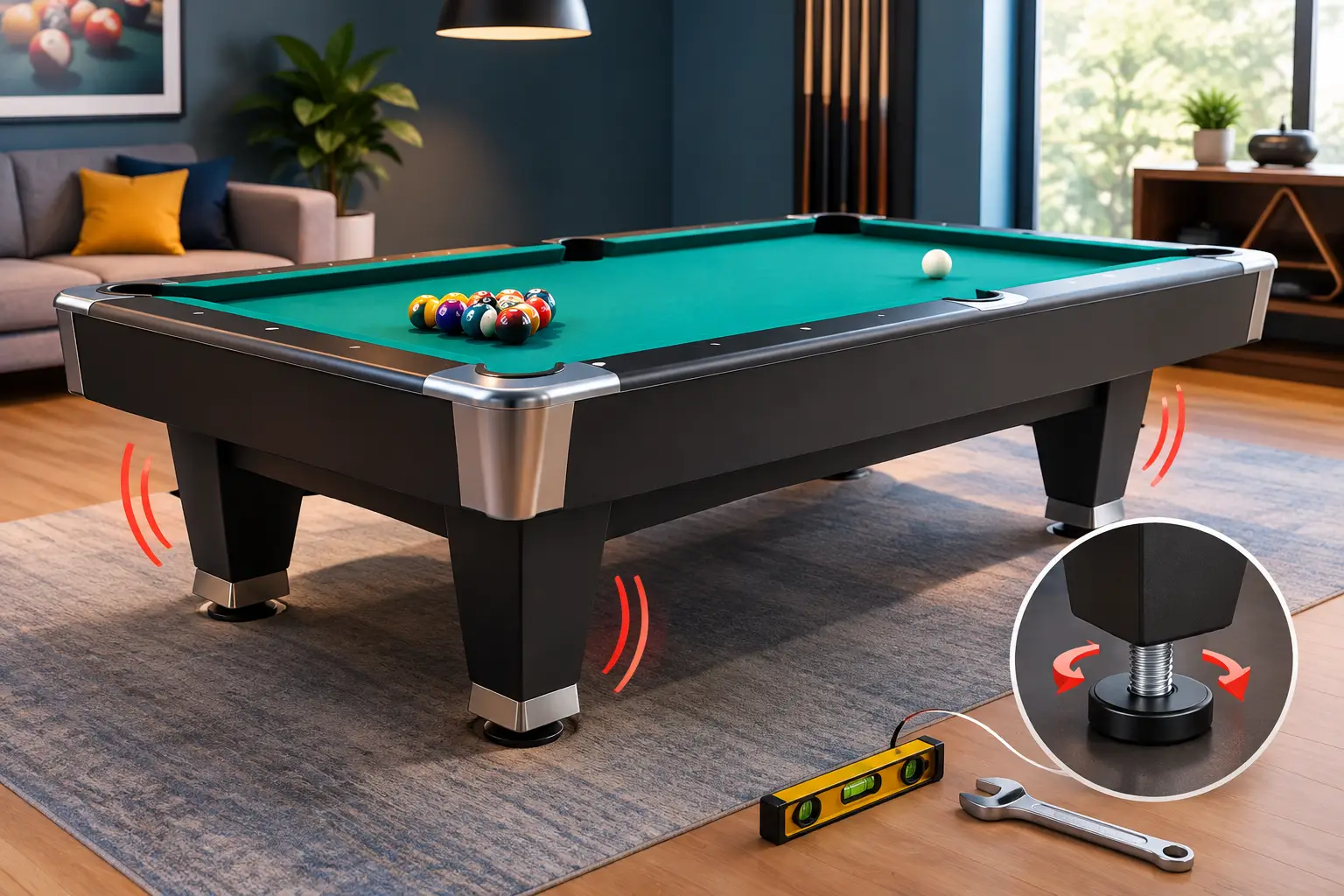
A pool table should feel planted, solid, and predictable. If you are asking, “why does billiard table wobble,” do not ignore it as a minor annoyance. A table that shifts under a lean, rocks when a ball hits the rail, or causes balls to drift can affect every game – and may point to an installation, floor, or structural issue that deserves a proper look.
The good news is that most wobbling pool tables can be corrected. The right fix depends on whether the movement comes from the floor, the legs, the frame, or the slate itself. Before anyone starts turning leg levelers or sliding shims underneath, it helps to identify exactly what is moving.
Why Does a Billiard Table Wobble?
A billiard table wobbles when all four legs are not carrying weight evenly. That simple explanation can have several very different causes. On a lightweight entry-level table, the culprit may be a flexing cabinet or weak leg connection. On a quality slate table, it is more often an uneven floor, a settling home, or a table that was moved without being professionally releveled.
A table can be level and still wobble. It can also be stable but not level. Those are two separate problems, and both matter. Stability keeps the table from shifting; levelness makes sure a ball rolls true. Professional installers check for both because correcting one does not automatically correct the other.
An Uneven or Settling Floor
Arizona homes are built on a wide range of floor systems, from concrete slabs to second-story wood subfloors. Concrete can have subtle high and low areas, especially in converted garages, additions, and rooms with decorative flooring installed over an existing slab. Wood floors can flex slightly under the substantial weight of a slate table.
Even a small variation beneath one leg can create a noticeable rock. You may feel it when you place a hand on a rail or when someone leans into a shot. In some cases, the table was stable when first installed, but flooring, framing, or the home itself has settled over time.
A Table Moved Without Proper Reassembly
A serious pool table is not furniture you simply lift, relocate, and set back down. A three-piece slate table must be disassembled, transported correctly, reassembled, seam-filled, and precision leveled in its new location. Moving it in one piece can stress the frame, loosen leg hardware, damage slate seams, or leave the table unsupported on one corner.
This is one of the most common reasons a table begins wobbling after a move. The table may look fine at a glance, yet the cabinet is no longer square or the slate is no longer supported as intended. A quick fix at the leg can hide the symptom while leaving the underlying issue unresolved.
Loose Leg Hardware or Frame Connections
Over years of play, especially on tables that are moved or bumped frequently, bolts and brackets can loosen. A loose leg may allow the cabinet to shift slightly before it settles. You may hear a creak, notice a small gap at the leg joint, or find that the wobble changes depending on where pressure is applied.
Solid hardwood legs and a well-built cabinet are designed for long-term strength, but even premium construction needs correct assembly. Tightening hardware may solve the issue, but only if the table is supported correctly first. Tightening a connection while the table is twisted or rocking can lock stress into the frame.
A Weak Cabinet or Damaged Support Structure
Not every pool table is built to support the weight of slate for decades. Particleboard cabinets, thin cross members, plastic levelers, and lightweight legs can flex or deteriorate. Moisture, a previous water leak, or years in a garage can weaken materials that looked acceptable when new.
This is where the difference between a furniture-grade game table and a professional-grade home pool table becomes clear. A table built with solid hardwood construction, properly engineered center beams, and one-inch Brazilian slate has the structural foundation needed for stable play. That does not make it immune to an uneven floor, but it gives a skilled installer a far better platform to level precisely and keep level over time.
How to Tell Where the Wobble Is Coming From
Start with a gentle test. Place one hand on the top rail near each corner and apply light downward pressure. Do not climb on the table, sit on the rails, or force it to rock. Notice whether the movement occurs at one specific corner or whether the entire table seems to flex.
Next, look at the legs and floor contact points. A visible gap under one leg is a strong sign that the floor is uneven or the table has shifted. If every leg appears to touch the floor but the cabinet moves, inspect the leg joints and frame for looseness. If the wobble is most noticeable in the middle of the long rail, the cabinet or floor may be flexing rather than a single leg being unsupported.
Then test the roll of a ball. Roll a clean cue ball slowly across several paths, including lengthwise, crosswise, and near the rails. A ball that consistently drifts is evidence of a leveling issue. It does not necessarily identify the source of the wobble, but it confirms the table needs attention.
Avoid using a phone app as the final word on table level. It can provide a rough indication, but professional billiard leveling relies on precision instruments and repeated ball-roll testing across the slate. The goal is not simply a number on a screen. The goal is true, consistent play.
When a Simple Adjustment Is Enough
If the table is otherwise sound, recently installed, and only rocks slightly on one corner, a qualified technician may be able to correct the issue with careful support adjustment and leveling. Some tables have integrated leg levelers, while others require a more specialized approach beneath the cabinet or frame.
A small adjustment can be appropriate when the slate seams are intact, the frame is square, and the flooring is stable. This is not a job for random cardboard, folded paper, or loose wood scraps. Improvised shims compress, slide, absorb moisture, and can make the table less stable over time.
It also matters where support is added. Supporting only a decorative outer leg without accounting for the cabinet and slate can create unwanted stress. A professional will assess how the table was designed to carry its load before making any adjustment.
When to Call a Pool Table Professional
Call for service if the table was recently moved, the wobble is getting worse, balls are rolling off-line, the legs or frame are loose, or you see separation at slate seams. You should also bring in a professional if the table has been exposed to water, sits on an upper floor, or has a cabinet that visibly bows or flexes.
A proper service visit should go beyond making the table stop rocking. The technician should inspect the frame, leg attachments, slate support, seams, cloth condition, and overall level. If the issue requires disassembly and re-leveling, that is the time to address worn cloth, damaged cushions, or other maintenance needs rather than paying for multiple service calls.
For homeowners who want the table right the first time, professional delivery and installation are part of protecting the investment. The Billiard Broker provides statewide Arizona delivery, precision leveling, table moving, repair, and maintenance because a premium table is only as good as the setup beneath it.
Preventing Your Pool Table From Wobbling Again
The best prevention begins before installation. Choose a location with a stable floor, enough clearance for comfortable cueing, and protection from direct moisture or extreme environmental changes. A table should not be dragged across the room after it has been leveled. If your flooring is replaced, plan to have the table professionally disassembled and reinstalled rather than working around it.
Once installed, keep an eye on changes. A newly developed wobble may be a sign that a leg connection has loosened, a floor has settled, or someone has shifted the table while cleaning or rearranging the room. Catching the issue early is easier on the table and on your game.
A pool table should invite the family to play, not make every shot feel questionable. If yours rocks, drifts, or no longer feels solid under the rail, schedule a professional inspection before a small adjustment becomes a larger repair. A stable, accurately leveled table protects the craftsmanship you paid for and brings back the confidence every good game deserves.