
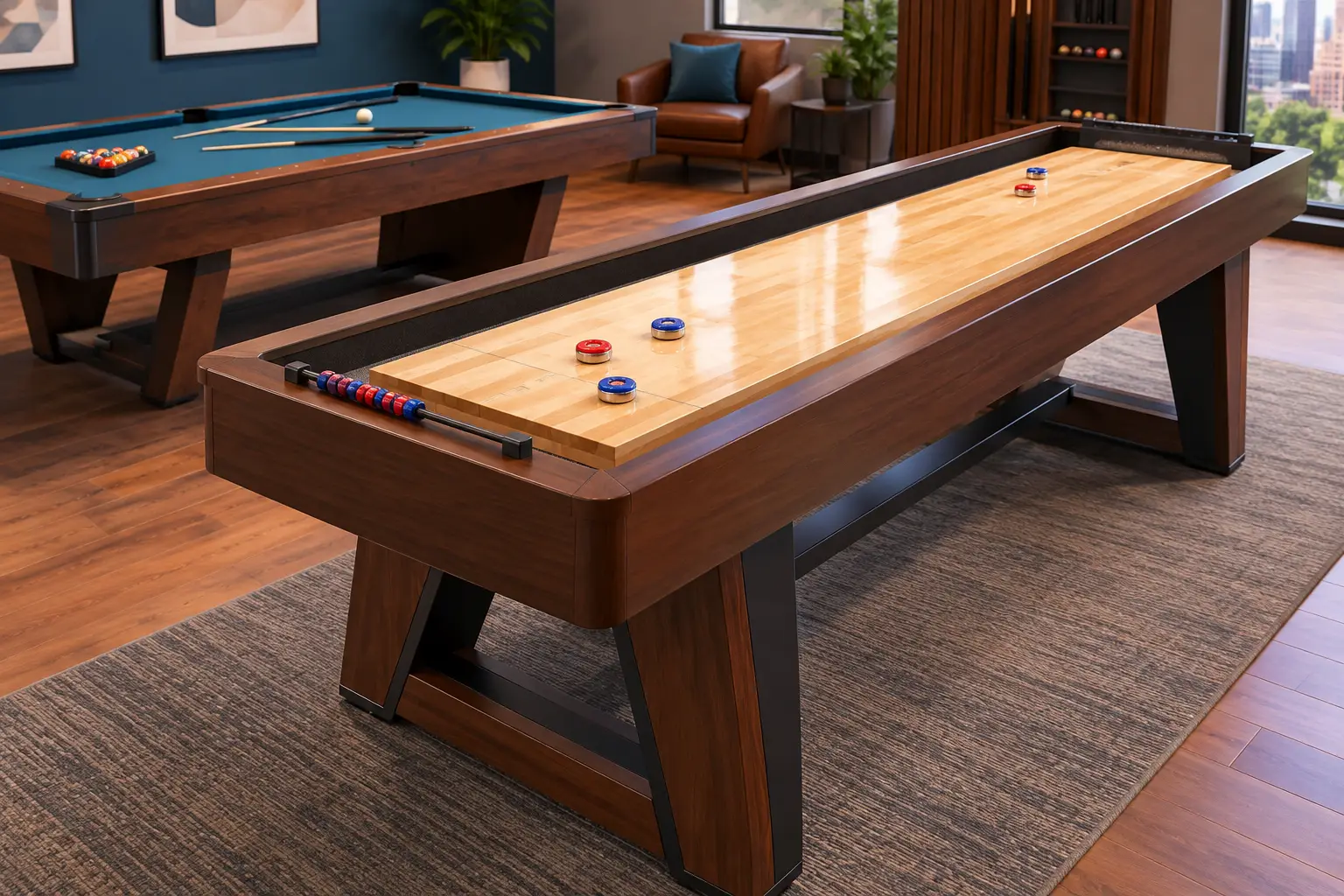
A shuffleboard table can look impressive in a game room and still play poorly six months later. The difference is usually not the logo on the cabinet. It is in the top shuffleboard table features you cannot always judge from a quick photo: the playing field, climate control, cabinet construction, and the quality of the installation.
For Arizona homeowners, that distinction matters even more. Our dry heat, seasonal temperature swings, and air-conditioned interiors can expose shortcuts in wood, finishes, and leveling. A well-built table becomes a centerpiece for family gatherings, game-day entertaining, and years of competitive play. A cheaply built one can become a large, frustrating piece of furniture that needs constant adjustment.
The Playing Field Is the Feature That Matters Most
The playing surface determines how a table plays, how long it lasts, and whether it remains enjoyable after the newness wears off. Look for a thick, solid hardwood playing field, typically maple, rather than a thin laminated surface or particleboard core. Maple is dense, stable, and smooth enough to support consistent puck speed.
Thickness matters. A quality home shuffleboard table should have a playing field of at least 1 3/4 inches, while premium models often reach 3 inches thick. That additional mass helps the field stay flat and gives the table a more substantial, professional feel. Thin fields are more prone to movement and may telegraph imperfections over time.
The finish also deserves close attention. Most quality tables use a durable polymer or epoxy finish that creates a glass-smooth surface while protecting the wood beneath. You want a finish that is hard enough to resist normal play but can be professionally refinished if years of use eventually take their toll. A surface that looks glossy in a showroom is not automatically better. Ask what it is made of, how thick it is, and whether it is repairable.
Know the Difference Between Playfield Size and Cabinet Length
A 12-foot shuffleboard table is not necessarily a 12-foot playing field. The cabinet length includes end caps and decorative elements, while the actual area where pucks travel may be shorter. This does not make a table inferior, but it does affect the game.
For a home game room, 9-foot and 12-foot tables are popular because they provide satisfying play without taking over the room. A 14-foot, 16-foot, or 18-foot table offers more of the long, controlled experience serious players enjoy. The right choice depends on the room, not bragging rights. Leave enough clearance around the table for players to stand comfortably, retrieve pucks, and avoid brushing walls or furniture on every shot.
Climatic Adjusters Protect Your Investment
A shuffleboard table is made from wood, and wood responds to its environment. Climatic adjusters are one of the top shuffleboard table features because they allow a professional to correct minor crown or dip changes in the playing field as conditions shift.
These metal adjustment bars are mounted beneath the field. By tightening or loosening them carefully, a technician can bring the surface back toward level. Without climatic adjusters, a field that changes with the seasons may be much harder to correct.
This feature is particularly valuable in Arizona. Even in a climate-controlled home, tables may be delivered through extreme heat, installed near patios or large windows, or moved between homes with different humidity levels. Climatic adjusters do not excuse poor construction or improper placement, but they give a quality table a practical service advantage over the long term.
Solid Cabinet Construction Keeps the Table Stable
The cabinet is more than decorative furniture surrounding the field. It carries a tremendous amount of weight and must support the playing surface without twisting, sagging, or shifting.
Look for solid hardwood construction or furniture-grade hardwood components in the areas that provide structural support. A well-built cabinet should feel substantial, with strong legs, a rigid frame, and quality joinery. Veneers are not automatically a problem when they are used properly over a stable hardwood substrate, especially for achieving a specific designer finish. The concern is low-grade particleboard or lightweight materials used where strength is needed.
A heavy table is generally a good sign, but weight alone is not the full story. The cabinet needs a sensible support system under the entire field. Long tables should have enough legs and cross-bracing to prevent flexing in the middle. If a seller cannot explain what supports the field, that is worth questioning before you buy.
Choose a Finish That Belongs in Your Home
A shuffleboard table can be traditional, rustic, transitional, industrial, or clean-lined and contemporary. This is where customization has real value. The cabinet finish should complement the flooring, cabinetry, pool table, bar, and other furniture already in the room.
The smartest buyers separate construction decisions from style decisions. First, make sure the table has the playing field, adjusters, cabinet strength, and hardware to perform. Then select the stain, paint color, leg profile, scoring style, and details that make it feel designed for your space. You should not have to settle for a generic finish just because that is what a conventional showroom has on the floor.
Leg Levelers and Professional Installation Are Non-Negotiable
Even a premium shuffleboard table will not play correctly if it is not properly leveled. Quality tables use heavy-duty, adjustable leg levelers that allow fine corrections during installation. These are not a minor convenience. A table that is slightly off can send pucks drifting, change scoring, and make every game feel inconsistent.
Professional installation is part of protecting the table and the experience. The table needs to be assembled, positioned, leveled, and checked under real playing conditions. Floors are rarely perfectly level, especially in upstairs bonus rooms, converted garages, and older homes. An experienced installer knows how to correct for the floor while keeping the cabinet stable and the playfield true.
At The Billiard Broker, white-glove delivery and precision installation help ensure the table plays the way it should from day one. That is a meaningful value difference from curbside delivery, where a homeowner is left with a heavy, technical piece of furniture and no clear plan for getting it right.
Do Not Overlook the Accessories and Scoring Details
Accessories should support the quality of the table, not feel like an afterthought. A complete setup typically includes weighted pucks, shuffleboard wax or powder, a board sweep, and a cover. Better tables may include a built-in abacus scoring system or an electronic scorer, depending on the style of the room and how you prefer to play.
The most useful accessories are the ones that preserve the playing surface. The right shuffleboard wax helps pucks glide consistently, while regular sweeping removes dust and debris before it can scratch the finish. A fitted cover is especially worthwhile in multipurpose rooms, homes with pets, or spaces that are not used every week.
Avoid treating wax as a one-size-fits-all purchase. Faster and slower formulas create different playing conditions, and the right choice can depend on table length, room temperature, and player preference. A knowledgeable seller should help you start with an appropriate speed rather than handing you a generic canister and sending you home.
Consider Serviceability Before You Buy
The best shuffleboard table is not simply the one that looks best on delivery day. It is one you can maintain, move, and enjoy for decades. Before purchasing, ask who will service the table if it needs re-leveling, finish care, repair, or relocation. Ask whether replacement pucks, climatic adjuster service, and moving support are available locally.
This is where dealer-direct buying can be a better long-term decision than ordering from a distant website. Savings matter, but so does having an ownership partner who understands the product after installation. A table may need professional attention after a move, a flooring renovation, or years of family use. Planning for that service before buying protects both the table and the investment.
What Features Should You Prioritize?
If your budget requires choices, prioritize the elements that affect play and longevity first: a thick solid hardwood field, a durable finish, climatic adjusters, a rigid cabinet, and professional leveling. Those are difficult or expensive to add later.
Finish options, scoring upgrades, and decorative hardware can be selected around your style and budget. There is nothing wrong with choosing a simpler cabinet design if it lets you buy a better playing field and stronger construction. A beautiful table should play beautifully, too.
Before committing, measure your room carefully, think about how often you will play, and consider where the table may live five or ten years from now. Then schedule a private showroom appointment, see the construction up close, and ask direct questions. One well-chosen shuffleboard table can bring more people into the room than any screen on the wall.