
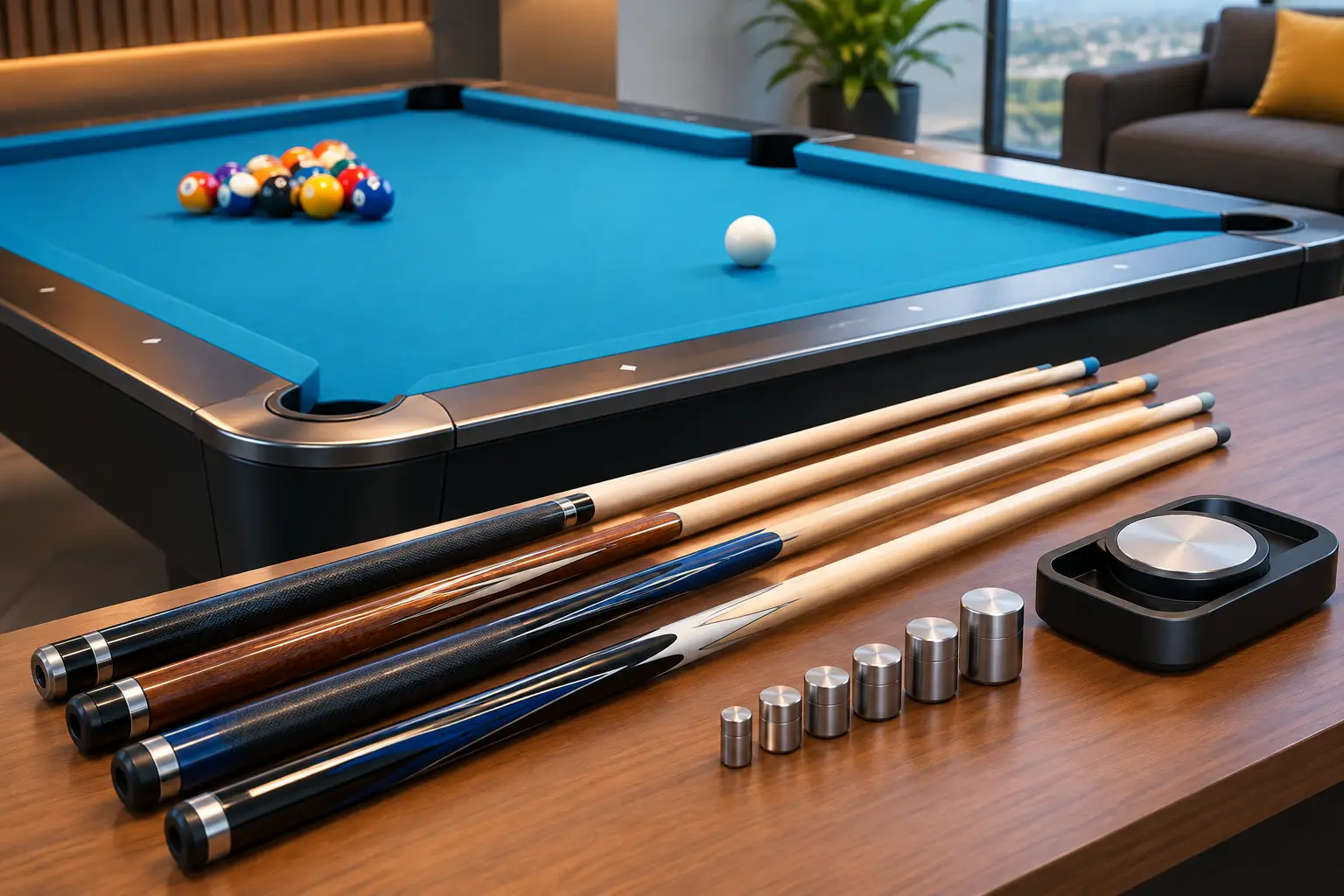
A cue that feels perfect for one player can feel awkward in another player’s hands after three racks. That is why learning how to choose billiard cue weight matters more than copying the cue your friend uses or buying the heaviest model on the rack. The right weight should help you deliver a relaxed, repeatable stroke – whether you are teaching the kids eight-ball in the game room or settling into a competitive weekly match.
For most home players, the best answer is not complicated: start with a 19-ounce cue, then adjust only if your stroke gives you a clear reason to do so. Weight affects feel, speed, control, fatigue, and confidence. It does not replace sound fundamentals, a quality cue tip, or a professionally leveled table, but it can make the game more enjoyable from the first break to the last shot.
Start With the Most Common Cue Weight
Standard pool cues typically range from 17 to 21 ounces, with 19 ounces sitting squarely in the middle. There is a good reason it has become the default. A 19-ounce cue gives most adults enough mass to make a stable, confident stroke without feeling slow or tiring over a long session.
If you are buying one cue for a new home pool table, 19 ounces is the practical place to begin. It works for a wide range of players, games, and shot types. It also gives guests an immediately familiar feel, which matters when your table is the center of family gatherings or game-day entertaining.
There is no prize for choosing the heaviest cue or the lightest one. The goal is to find the weight that lets your cue move straight through the ball with as little tension as possible.
How to Choose Billiard Cue Weight by Playing Style
Cue weight should support the way you naturally deliver the cue, not force you to redesign your stroke. Think about where your current cue feels difficult: Does it seem to drift on soft shots? Does your arm tire? Do you overhit routine position shots? Those answers point you in the right direction.
Choose a lighter cue for touch and a freer stroke
A 17- or 18-ounce cue can be a comfortable choice for players with a naturally smooth, quick stroke. Many players like a lighter cue for finesse shots, soft draws, and delicate cue-ball control because it feels easy to accelerate without much effort.
The trade-off is that a light cue can expose a jabby or inconsistent stroke. If you tend to rush the forward motion, a lighter cue may feel too lively and make it easier to hit the cue ball harder than intended. Lighter is not automatically more precise. It is precise only if you can keep the cue moving smoothly.
Smaller-framed adults, younger players, and anyone who finds a standard cue tiring may also prefer an 18-ounce model. Comfort is a legitimate performance factor. If your shoulder and forearm stay loose, you will generally make better decisions and better shots.
Choose a heavier cue for a steadier feel
A 20- or 21-ounce cue can feel more planted during the stroke. Some players enjoy that extra presence on firm stop shots, long straight shots, and breaks. If your current cue feels as if it is getting knocked off line by your own hand movement, a slightly heavier option may help you settle down.
The trade-off is speed and fatigue. A heavier cue requires more effort to accelerate and decelerate. Over several hours, it can make your grip tighten or your elbow drop. It can also tempt players to rely on weight instead of a clean, controlled stroke.
Do not choose a 21-ounce cue simply because you want a stronger break. Break power comes primarily from timing, a level cue, body mechanics, and a square hit. A heavier cue may suit your break, but it will not fix a rushed or off-center one.
Your Height Matters Less Than You Might Think
Many buyers assume taller players need heavier cues and shorter players need lighter ones. In most cases, cue length and balance are more relevant than weight. A standard 58-inch cue fits the vast majority of adult players, including many people well over six feet tall.
What matters is whether you can bridge comfortably, keep your back hand in a relaxed position, and swing the cue without feeling cramped. If you are especially tall, very short, or buying for a child, test the length first. Then refine the weight.
A cue that is balanced correctly can also feel lighter or heavier than its listed ounce weight. Two 19-ounce cues may play very differently if one carries more weight toward the butt and the other has a more forward balance. This is why holding a cue is more useful than relying on specifications alone.
Test the Cue Without Falling for the First Impression
When possible, take several practice strokes before making a decision. Do not judge a cue based only on a single hard break. A cue can feel impressive on a powerful shot and still be tiring or difficult to control during normal play.
Start with a few soft stop shots, then shoot a medium-speed draw shot and a long follow shot. Pay attention to whether you are gripping the cue tighter than usual. Notice whether the cue feels like it wants to travel in a straight line or whether you have to guide it.
Then hit a few firmer shots. If the cue feels stable without making your arm work, you are close to the right range. If it feels sluggish, try dropping an ounce. If it feels jumpy or insubstantial, move up an ounce.
For a household cue collection, variety is often the smartest move. Instead of buying every cue at the same weight, keep a selection of 18-, 19-, and 20-ounce cues available. That gives family members and guests a better chance of finding a comfortable option without turning the game room into a technical fitting studio.
Do Not Ignore Tip, Shaft, and Table Conditions
Cue weight is only one piece of the feel equation. A hard tip transfers energy differently than a soft tip. Shaft taper, diameter, wrap material, and balance point all influence control. Even the playing conditions matter.
On a properly installed table with tournament-grade wool felt and responsive K66 gum rubber cushions, the cue ball gives honest feedback. You can judge your stroke and cue choice more accurately. On a table that is out of level, has worn cloth, or has inconsistent rails, players often compensate without realizing it. They may blame the cue when the table is the real issue.
That distinction matters for homeowners investing in a premium table. A solid hardwood table with one-inch Brazilian slate is built to provide a dependable playing surface for years, but it still needs professional leveling during installation and occasional attention after a move or major flooring change. Good equipment should work together, not make you fight the game.
A Simple Buying Rule for Homeowners
If you are unsure, choose a 19-ounce cue with a comfortable wrap and a standard 58-inch length. Play with it for several sessions before deciding you need a change. Most players need time to recognize whether they are reacting to the cue itself or simply adjusting their technique.
Move down to 18 ounces if you value a lighter, more effortless feel or find yourself tiring during longer games. Move up to 20 ounces if you prefer more stability and can still produce soft shots without forcing the cue. Reserve the extremes for a specific preference developed through experience, not a marketing claim.
At The Billiard Broker, the best game rooms are designed around how a family will actually use them. A custom table, professional installation, and a thoughtful cue selection make the room feel complete from day one – without paying conventional showroom markups for details you did not need.
The best cue weight is the one you stop thinking about once the game starts. Take a few honest practice strokes, choose comfort over ego, and let a relaxed, repeatable stroke do the work.