
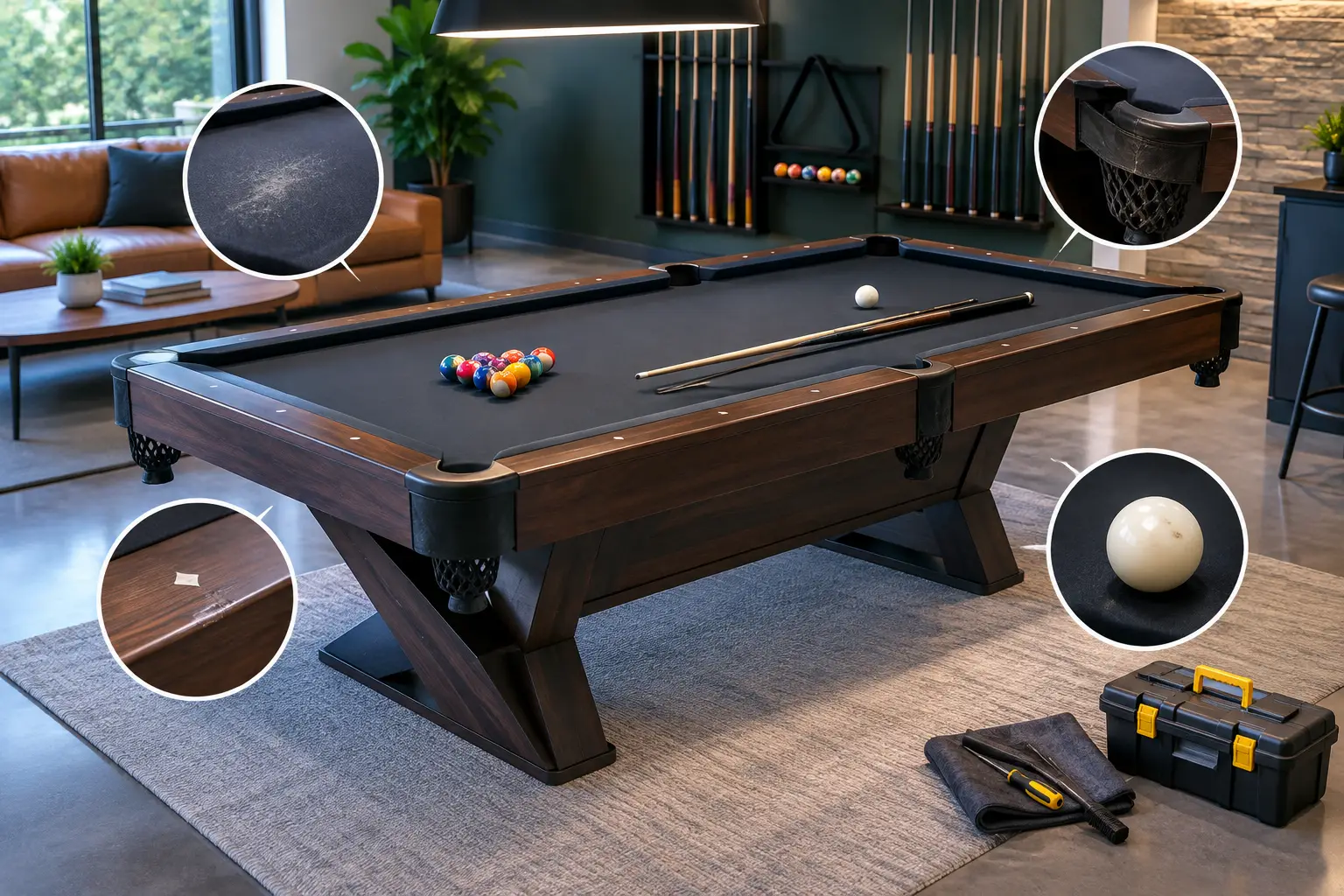
A pool table can look perfectly fine from across the room while quietly losing the qualities that made it worth owning. A ball that drifts on a slow roll, a rail that plays dead, or a table that suddenly feels unsteady are not small annoyances to ignore. They are often the five signs table needs service before a minor adjustment becomes a more expensive repair.
A quality table is built to last. One-inch Brazilian slate, solid hardwood, K66 gum rubber cushions, and tournament-grade wool felt can provide decades of family play when the table is installed and cared for correctly. But even premium equipment needs attention after a move, a room renovation, years of use, or exposure to Arizona’s dry climate and shifting home conditions.
1. Balls Drift or Roll Off Line
The clearest sign of a leveling problem is a ball that rolls away from a straight path on a slow, gentle shot. Do not judge the table from one fast break or one hard shot. Speed can disguise a minor slope. Instead, roll a cue ball slowly along several directions of the playing surface and watch whether it consistently bends toward the same area.
A table may need leveling because a floor has settled, a leg leveler has shifted, or the table was moved without being professionally reassembled. In some cases, the table itself is level but the slate seams or individual slate pieces need correction. That is why placing a household level on the rail is not a reliable diagnosis. The playing surface is what matters.
A precision service appointment addresses the entire table: leg adjustments, slate alignment, seam condition, and the final roll of the ball. For homeowners who invested in a custom table for a game room or entertaining space, this is not cosmetic work. Accurate leveling protects the way the table plays and keeps every game fair.
2. The Rails Feel Dead, Inconsistent, or Too Lively
Good cushions return the ball with a predictable response. When you shoot into a rail, the ball should rebound cleanly and consistently. If one side feels soft, a certain spot produces a dull thud, or the ball dies near a pocket, the cushion system deserves a closer look.
Rubber cushions can dry out over time, especially in rooms with heat exposure or inconsistent climate control. Adhesives can also fail, and rail bolts may loosen. On an older or lower-quality table, the issue may be worn rubber that has hardened beyond adjustment. On a better-built table, the repair may be more straightforward, such as securing hardware or correcting a rail installation issue.
Do not assume every unusual rebound means the rubber needs replacement. The type of shot, the condition of the cloth, and even a loose rail can change ball behavior. A professional can identify whether the problem is the K66 cushion rubber, rail alignment, pocket-facing material, or something else entirely. Replacing parts that are not actually failing is an easy way to spend money without solving the problem.
3. The Felt Is Worn, Loose, or Developing Tears
Cloth takes the most visible abuse on any pool table. Chalk, drinks, pets, direct sunlight, and frequent play all leave their mark. A little lint or a faint chalk line is normal. Tears, loose areas, burn marks, deep stains, or cloth that has pulled away from the rails are not.
Worn felt affects more than appearance. Balls may roll slower, pick up more unexpected movement, or snag on a damaged area. Loose cloth can create wrinkles that interfere with play and eventually tear further. If the table is a centerpiece in your home, tired cloth can also make an otherwise beautiful hardwood table look neglected.
Recovering a table is a good opportunity to make a purposeful design choice. You may want to return to a traditional tournament green, coordinate a new color with a remodeled game room, or choose a higher-performance wool cloth for more consistent play. The right material depends on how you use the table. A casual family table may call for durability and easy care, while serious players often prefer faster tournament-grade wool felt.
4. The Table Wobbles, Shifts, or Makes Noise
A pool table should feel solid. It should not rock when someone leans against the rail, creak during a shot, or shift slightly under normal use. These are safety concerns as well as performance concerns, particularly in homes where children and guests gather around the table.
The cause could be as simple as an adjustment at the legs. It could also involve loose frame hardware, weakened cross members, a problem created during a prior move, or an uneven floor. A heavy slate table should never be treated like ordinary furniture. Trying to force it into position, shim it randomly, or drag it across the floor can damage the frame, flooring, slate, or all three.
This is one area where professional service offers real protection for your investment. A technician can safely inspect the cabinet, frame, legs, and slate support system before making the needed corrections. If a repair is required, you will know what is happening and why, rather than guessing at the source of the movement.
5. Pocket Liners, Leather, or Hardware Are Breaking Down
Pockets receive constant impact, and their components naturally wear. You may notice a torn drop pocket, cracked plastic liner, loose leather shield, missing screws, or a ball that catches where it should fall cleanly. These issues can seem minor until a sharp edge damages the cloth, a loose part creates a safety concern, or a pocket fails during a game.
Pocket repairs vary widely based on the table. Some tables use leather drop pockets, others use plastic ball-return components, and many custom models have decorative shields or fringe that require matching materials. A quality repair should preserve the look of the table rather than leaving it with mismatched parts or a temporary-looking fix.
If the table has sentimental value or was selected to complement your home’s finishes, ask about repair options before replacing the entire table. New pockets, liners, or hardware can often restore both function and appearance at a fraction of the cost of a replacement.
What Professional Pool Table Service Should Include
The right service depends on the symptom, but it should start with a real assessment rather than a one-size-fits-all recommendation. A qualified technician checks the cabinet and frame, evaluates slate and seams, tests the playing surface, inspects rail response, and reviews cloth and pocket condition. From there, you can decide whether the table needs a simple leveling, a recover, rail work, pocket repair, or a more involved restoration.
Be cautious with bargain service that promises a fast fix without asking questions about table size, slate construction, access to the room, or the issue you are experiencing. A three-piece slate table requires careful handling and precision assembly. The lowest quote is not always the best value if it leaves you with uneven seams, poor cloth installation, or damage to a table that should last for generations.
For Arizona homeowners, service is especially worth scheduling after a relocation, flooring project, major remodel, or long period of disuse. It is also smart to have the table inspected before hosting frequent gatherings or teaching a new generation of players. A properly maintained table invites people to use the room. A table that plays unpredictably usually becomes expensive furniture.
The Billiard Broker provides professional table moving, maintenance, repair, and precision installation for homeowners who want their table handled correctly from the start. Whether your table needs a straightforward adjustment or a full refresh, getting an informed assessment helps you protect the craftsmanship already in your home.
A pool table does not need to be falling apart to deserve service. Address the first change you notice, while the repair is still simple, and your next rack will feel like the table you bought it to be.