
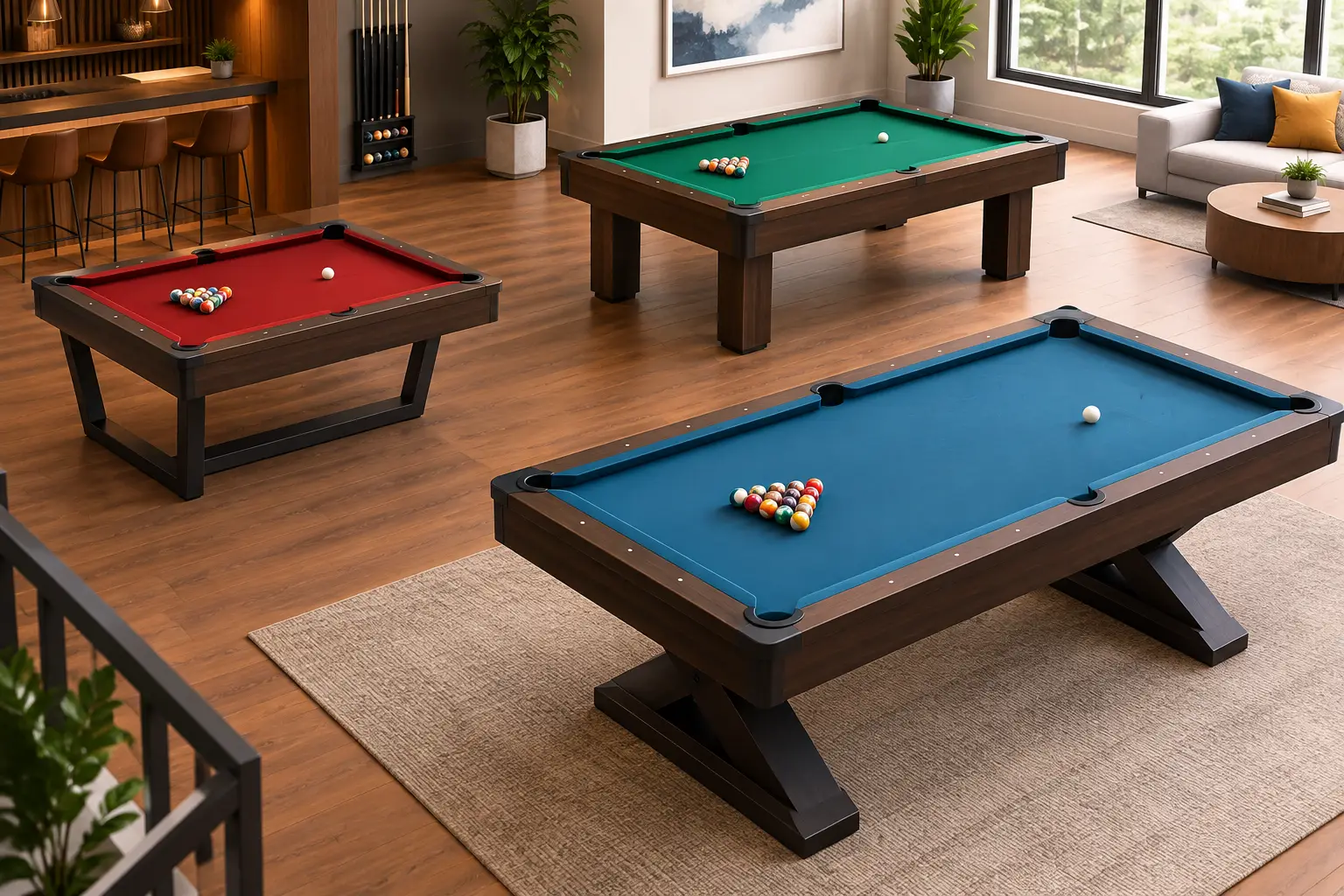
A pool table can look perfectly proportioned in a showroom and feel oversized the moment it reaches your game room. The question is not simply what pool table size fits inside the room. It is what size gives your family and guests enough space to make a full, comfortable shot from every angle.
That distinction protects your investment. A table that is too large for the available cue clearance creates frustrating play, scuffed walls, and a game room people use less than they expected. A table that is too small may leave a beautiful space feeling under-furnished or limit a player who wants a more serious experience. The right answer balances room dimensions, how you play, how you entertain, and the look you want your home to carry for years.
Start With the Playing Surface, Not the Outside Frame
Pool tables are described by the dimensions of their playing surface, not their overall exterior footprint. The cabinet, rails, and decorative legs add several inches around the perimeter, which matters for delivery and furniture placement. For determining whether you can shoot comfortably, however, the playing surface is where the math starts.
A typical 7-foot table has a 39-by-78-inch playing area. An 8-foot table is 44 by 88 inches, while an oversized 8-foot table, often called a pro 8, measures 46 by 92 inches. A 9-foot table has a 50-by-100-inch playing surface and is the traditional tournament size.
For most Arizona homes, an 8-foot table is the sweet spot. It offers a more substantial playing experience than a bar-size 7-footer while fitting more rooms than a 9-foot table. It also looks at home in a dedicated game room, bonus room, basement, or larger open-concept entertainment area.
What Pool Table Size Fits With Full Cue Clearance?
The standard calculation assumes a 58-inch cue, which is the full-length cue most adults prefer. Add roughly five feet of clearance to every side of the playing surface. This allows room for the cue and a natural stroke, rather than forcing players to jab at the ball with the butt of the cue against a wall.
These are practical minimum room sizes for unobstructed play:
- A 7-foot pool table generally needs about 13 feet 3 inches by 16 feet 6 inches.
- An 8-foot pool table generally needs about 13 feet 8 inches by 17 feet 4 inches.
- An oversized 8-foot table generally needs about 13 feet 10 inches by 17 feet 8 inches.
- A 9-foot pool table generally needs about 14 feet 2 inches by 18 feet 4 inches.
Those dimensions describe playable clearance, not merely whether the table can physically be carried into the space. If the room is exactly at the minimum, the table can work, but the room will feel purpose-built for billiards. If you want lounge seating, a bar, spectator space, or a shuffleboard table in the same room, plan beyond the minimum.
A useful rule is to measure the open rectangle around the future table location, then account for everything that intrudes into it. Built-in cabinetry, fireplaces, columns, open doors, sofas, accent chairs, and bar stools all affect cue movement. A room may be 14 by 18 feet on paper yet play like a much smaller room once furniture is in place.
Measure the Room the Way You Will Actually Use It
Start by identifying where the center of the table will sit. This is especially important in multipurpose rooms, where homeowners sometimes push a pool table against one wall to preserve walking space. That decision often creates one unusable side of the table.
Measure wall to wall, then measure again from the proposed table location to obstacles at cue height. A low console may not interfere with a cue, but a tall media cabinet will. A doorway is not automatically a problem if it opens away from the shot area, while a closet door that swings into the clearance zone can become a daily annoyance.
Ceiling height rarely limits a pool table, but lighting can. A billiard light should sit high enough that tall players can shoot comfortably without striking it, while still bringing focused light to the playing surface. In rooms with ceiling fans, make sure the table location does not place a player directly under the fan blades during a shot.
It also pays to think about traffic. If family members must pass behind a shooter to reach the patio, kitchen, or hallway, a technically correct room size may still feel cramped during a gathering. The best layouts leave a circulation path outside the cue-clearance zone whenever possible.
Choose a Size Based on How Your Household Plays
A 7-foot table is a smart choice for compact game rooms, lofts, casitas, and spaces where entertaining takes priority over formal practice. It is familiar to many casual players because it is common in bars and neighborhood pool halls. Shorter shots make it approachable for children and guests, though skilled players may find it plays faster and tighter than expected.
An 8-foot table is the most versatile home size. It gives beginners room to develop proper stroke mechanics and provides experienced players with a more balanced game. If your household wants one table that serves family game nights, visiting friends, and genuine practice, an 8-footer is usually the practical recommendation.
A 9-foot table is for the homeowner with both the room and the intention. It is an outstanding choice for serious players who want tournament-style proportions at home, but it should not be selected simply because it sounds more impressive. In a room that is too tight, a 9-footer delivers a compromised experience that an 8-footer would avoid.
Short cues can solve an occasional tight shot. They should not be the plan for an entire side of the table. A 52-inch or 48-inch cue is handy for a room with one unavoidable obstruction, but routinely using a short cue changes stroke length and takes away from the pleasure of owning a quality table.
Leave Room for the Table You Want to Live With
Pool tables are furniture as much as they are game equipment. A solid hardwood table with a tailored finish, leather pocket options, and tournament-grade felt can become the visual center of a room. Giving it enough breathing room makes that design statement stronger.
Consider what surrounds the table at the same time you consider the table itself. A wall-mounted cue rack and a few stools require far less floor space than a sectional sofa and full bar setup. If you want a dining conversion top, allow room to pull chairs back without blocking play. If the table is going beneath windows, consider sun exposure and how window treatments will coordinate with the finish and felt color.
Arizona homes also bring a few local considerations. In rooms with large glass doors or strong afternoon exposure, climate control and window coverings help protect felt and wood finishes over time. For outdoor living areas, a standard indoor pool table is not the answer. Humidity swings, dust, and heat call for a table built specifically for that environment.
Do Not Let Price Push You Into the Wrong Size
Homeowners occasionally buy a smaller, lighter table because it appears to be the budget-friendly option, only to replace it after a few years. Size is only one part of the ownership decision. The table’s slate, cabinet construction, cushion rubber, cloth, and installation determine whether it plays true and remains level.
A quality table built with one-inch Brazilian slate, solid hardwood, K66 gum rubber cushions, and tournament-grade wool felt can be customized around the room you already have. That means choosing a scale that works, then choosing the finish, felt color, pocket style, and design details that make it belong in your home. It is a better approach than forcing a table into a room because it was available quickly or displayed at a retail markup.
Professional delivery and leveling matter just as much. A three-piece slate table is heavy, precise equipment. Proper installation includes positioning the table correctly, assembling and leveling the slate, sealing the seams, stretching the cloth, and confirming consistent roll. If you are moving into a new home or finishing a renovation, plan the table location before final furniture placement whenever possible.
Get a Real Room Recommendation Before You Order
Bring your room dimensions, a few photos, and a simple sketch of doors, windows, and fixed features to a private consultation. An experienced billiards specialist can tell you where an 8-foot table will play beautifully, where a 7-foot table is the wiser choice, and where a larger table deserves a dedicated room.
The Billiard Broker helps Arizona homeowners make that decision without the pressure of a conventional retail showroom. A made-to-order table should fit the room, the way your family plays, and the level of craftsmanship you expect – not just the space left after everything else has been installed. Schedule an appointment before you commit, and let the room tell you which table will earn its place in it.