
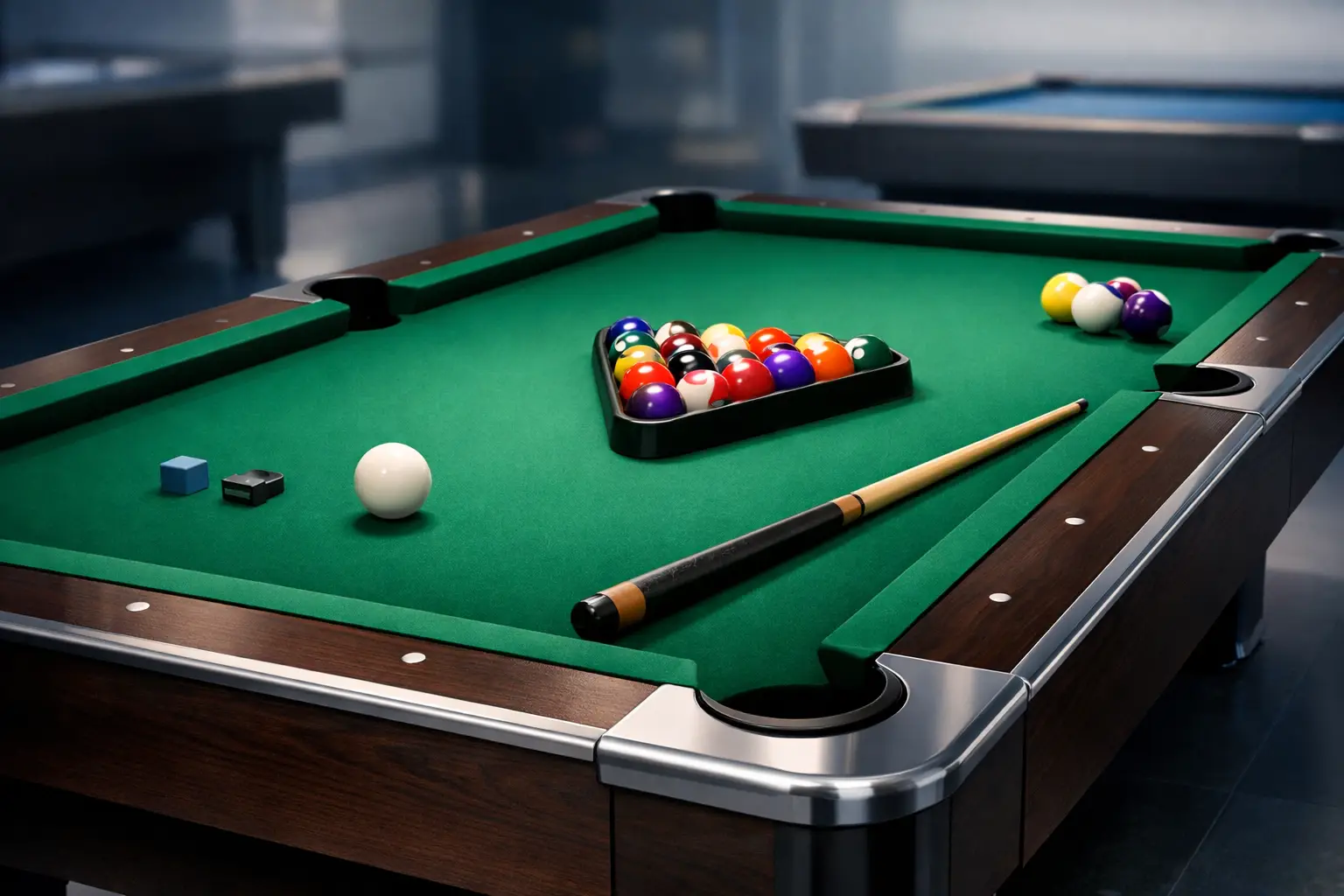
A pool table can have beautiful hardwood rails, one-inch slate, and custom leather pockets, yet still disappoint the first time you break a rack. The reason is often the playing surface. Tournament grade pool table felt determines how quickly balls travel, how consistently they roll, how much spin transfers, and whether your table feels like a serious piece of equipment or a piece of furniture with pockets.
For Arizona homeowners investing in a premium game room, cloth deserves more attention than it usually gets. It is the surface every shot touches. Choosing the right material protects the performance of your table and makes family games, league practice, and entertaining feel better from day one.
What Tournament Grade Pool Table Felt Really Means
“Felt” is the term most people use, but it does not describe every type of billiard cloth accurately. Traditional woolen cloth has a soft, fuzzy nap. It is common on entry-level tables because it costs less and has a familiar look, but it plays slower and can show tracks, wear, and ball burn more quickly.
Tournament-grade cloth is typically a tightly woven worsted wool fabric, often blended with nylon for added strength. Instead of a fuzzy surface, it has a smooth, flat weave. That construction lets the cue ball roll more freely and predictably. Players notice the difference on longer cuts, speed control shots, and any shot requiring side spin.
The phrase “tournament grade” is not a universal certification. Two products can use that language while delivering very different results. A reputable seller should be able to explain the fiber blend, weave, durability, and intended use rather than relying on a label alone.
Why Better Pool Table Felt Changes the Game
A quality cloth does more than make a table look polished. It changes the table’s response in ways that matter to beginners and experienced players alike.
First, the balls roll truer. On a tight, even weave, there is less surface resistance to push a ball off line. That does not make every shot easier, but it makes misses more honest. You are responding to your stroke and aim, not fighting inconsistent cloth.
Second, speed becomes more predictable. Worsted tournament cloth generally plays faster than basic napped felt, so a light stroke can send the cue ball farther than a new owner expects. That is a trade-off, not a flaw. Casual players may need an adjustment period, while experienced players often prefer the cleaner response and better cue-ball control.
Third, better cloth holds up under real use. A busy home table sees chalk dust, drinks nearby, kids learning the game, and plenty of breaks. A durable wool-and-nylon blend resists pilling and reduces the visible wear that can make inexpensive cloth look tired early. It also tends to recover better after normal brushing and cleaning.
Finally, the right cloth brings the whole table together. Premium cloth paired with K66 gum rubber cushions and precision-leveled Brazilian slate gives you a table that plays consistently rail to rail. Those components should work as a system. Great felt cannot compensate for warped wood, poor cushion rubber, or slate that was not professionally leveled.
Woolen vs. Worsted Cloth: Which Fits Your Home?
There is no one answer for every household. The right choice depends on who will play, how the room is used, and what you expect from the table over the next decade.
Woolen Cloth for a Softer, Slower Game
Woolen cloth has more texture and generally slows the balls down. Some homeowners prefer that forgiving pace for casual games with children or guests who have not played much. It can also be the lower-cost option when restoring an older table or working within a tight budget.
The downside is maintenance and longevity. The nap can develop directional tracking, and the surface is more likely to pill or show worn areas over time. It may be perfectly acceptable for light use, but it is not usually the first recommendation for a premium, made-to-order home table.
Worsted Cloth for Tournament-Style Performance
Worsted cloth is the better fit when performance, durability, and a refined appearance matter. It is smooth, fast, and designed for accurate ball movement. This is the cloth style most serious players recognize from quality poolrooms and competitive play.
Its faster pace may expose poor fundamentals at first, and it can show chalk more readily in certain colors. Still, those are manageable realities. With proper care and professional installation, worsted cloth offers the long-term playing experience most buyers expect from a premium table.
Color Is a Performance and Design Decision
Green remains classic for good reason, but it is no longer the only appropriate choice for a high-end game room. Navy, charcoal, burgundy, camel, tournament blue, and black can make a table feel tailored to the room rather than dropped into it.
Think beyond the swatch. Dark cloth creates a dramatic look and can coordinate beautifully with modern finishes, but chalk marks and lint may be more noticeable. Very light colors can brighten a room, though they demand more attention around food, drinks, and everyday traffic. Medium greens and blues often provide the best balance of traditional style, visual contrast, and practical care.
The table’s wood finish, pocket style, wall color, and lighting all matter. In a private showroom appointment, seeing finish samples and cloth colors together is far more useful than choosing from a small online image. A custom pool table should complement the home, not compete with it.
Installation Matters as Much as the Cloth
Even the best tournament grade pool table felt will not play correctly if it is installed poorly. Cloth must be stretched evenly across the slate without wrinkles, loose spots, or excessive tension. The rails need to be covered and reassembled precisely, with pocket openings aligned and cushion response checked.
This is why professional delivery and installation are part of protecting your purchase, not an optional add-on. A three-piece slate table must be assembled, leveled, and seam-filled on site. The cloth goes on after the playing surface is made true. When this process is rushed, owners can end up with slow rolls, visible seams, loose cloth, or balls drifting off line.
Arizona homes add another consideration: climate. Dry conditions, sun exposure, and major temperature changes can affect wood, rubber, and cloth over time. Keep the table away from direct sun when possible, use a fitted cover when it is not in use, and maintain stable indoor conditions. For outdoor living spaces, choose a table specifically built for that environment rather than placing standard indoor cloth outside.
How to Keep Premium Cloth Looking and Playing Better
Good cloth does not require complicated upkeep, but neglect shortens its life. Brush gently in one consistent direction using a billiard brush, especially around the rails and pockets where chalk collects. Vacuuming can be helpful if done carefully with a low-suction upholstery attachment, but aggressive vacuuming can pull at fibers.
Address spills immediately by blotting, never rubbing. Avoid household stain cleaners unless they are specifically safe for billiard cloth. Rubbing can spread the stain and disturb the weave. Keep food and drinks off the rails, use clean balls, and do not let players jump balls directly into the cloth unless the table and game call for it.
Replace cloth when it has heavy pilling, burns, tears, permanent stains, or inconsistent wear that affects play. Depending on use, a premium home table may go many years before recovering is needed. When the time comes, have a professional inspect the cushions, pockets, and level at the same visit. It is the efficient way to refresh the entire playing experience.
Buy the Table, Not Just the Sales Pitch
Some retailers use “professional” and “tournament” language to justify a high price while cutting corners where homeowners cannot immediately see them. Ask what kind of cloth is included, whether it is worsted wool, how the slate is supported, what cushion rubber is used, and who handles installation after delivery.
At The Billiard Broker, buyers can choose a made-to-order American-made table with one-inch Brazilian slate, solid hardwood construction, K66 gum rubber cushions, and tournament-grade wool felt without paying conventional showroom markups. That means you can put more of your budget into the table you want instead of a retail overhead structure you do not.
A private appointment also gives you time to compare cloth colors, finishes, and pocket options without a high-pressure sales floor. Bring room measurements, photos of your space, and an honest picture of how your family will use the table. The best cloth is not simply the fastest or the most expensive. It is the one that fits the way your home plays.
A well-built table with properly selected cloth becomes the place where guests linger after dinner, kids learn patience and geometry, and a quiet evening can turn into a few more racks. Schedule an appointment, see the materials in person, and choose a playing surface that will still feel right years after the first break.