
A pool table can look like a simple furniture purchase until it has to fit through a hallway, play true across every inch of felt, and hold up to years of family game nights. That is why the three piece versus single slate question deserves more than a quick answer. The right choice is less about a marketing label and more about construction, installation, access to your room, and how long you expect to own the table.
For most homeowners investing in a premium residential table, three-piece slate is the proven standard. A one-piece slate table has its place, particularly in commercial and coin-operated applications, but it can create real limitations when delivery day arrives.
What Three-Piece Slate Actually Means
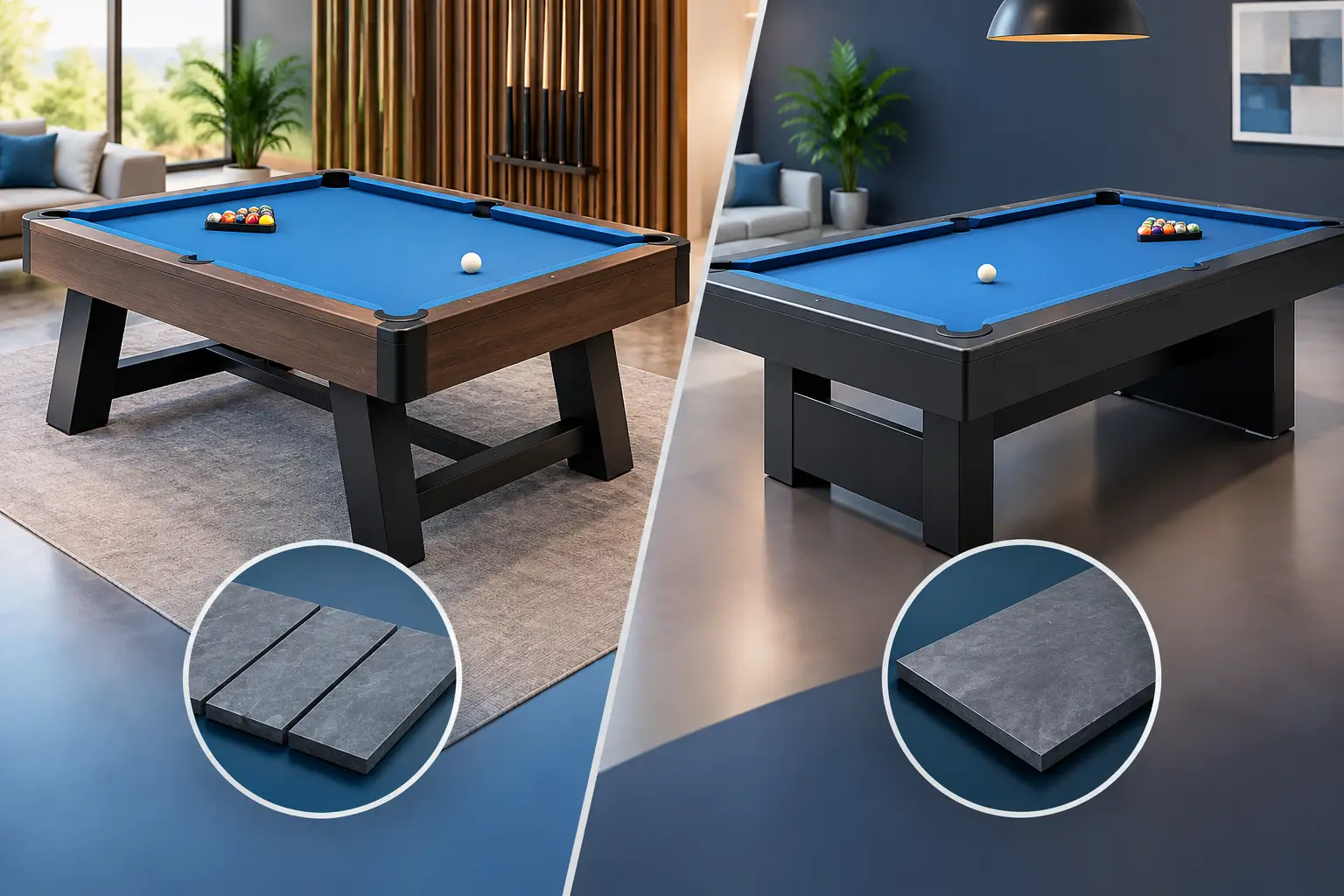
A three-piece slate table uses three precision-cut sections of slate to form the playing bed. On a quality 8-foot or 9-foot table, each section is supported by a rigid frame, carefully leveled, joined, and finished so the seams disappear beneath the cloth.
The concern some buyers have is understandable: if there are seams, will the ball roll differently? Not when the table is built and installed correctly. Professional installers level each slate section independently, secure the slate to the cabinet, fill the seams, and stretch the cloth over the finished surface. When that work is done properly, a ball does not know where one slate section ends and the next begins.
This construction is not a compromise. It is how most serious home and tournament-style tables are made because it allows the installer to create a truly level playing surface in the room where the table will live.
At The Billiard Broker, premium made-to-order tables are built with 1-inch Brazilian slate, solid hardwood construction, K66 gum rubber cushions, and tournament-grade wool felt. Those details matter far more to daily play than whether the slate arrived as one large slab or three manageable sections.
Three Piece Versus Single Slate: The Real Difference
A single-slate table uses one continuous piece of slate. It has no slate seams, which sounds like an automatic advantage. In practical terms, however, a one-piece slate must still be supported by a level cabinet, transported safely, and placed without twisting or stressing the frame.
The larger difference is logistics. A full one-piece slab for a regulation-size pool table is extremely heavy and awkward. It may be difficult or impossible to bring through a narrow entry, around a stairwell, into a basement, or upstairs to a bonus room. Even when access is possible, moving the slab carries greater risk to walls, flooring, the table, and the people handling it.
Three-piece slate solves that problem without sacrificing playing quality. Each section can be carried into the room separately, then professionally assembled and leveled on site. That makes it the more practical choice for most Arizona homes, from a Scottsdale game room to a second-floor media space in Peoria.
A Seam Is Not a Performance Problem
The idea that a single slate must play better comes from a reasonable instinct: fewer components should mean fewer variables. But a pool table is a system. Slate thickness, frame strength, cabinet construction, cushion quality, cloth, and installation all affect performance.
A poorly installed one-piece slate can be out of level. A well-built three-piece table with 1-inch slate and professional leveling can play beautifully for decades. The seam issue becomes relevant only when a table is installed carelessly, moved improperly, or built with lower-grade materials.
That is why a pool table should never be treated like boxed furniture. It needs experienced hands from delivery through final leveling.
Why Installation Matters More Than the Slate Count
A proper installation starts with the room, not just the table. Floors are rarely perfectly level, even in newer homes. Installers adjust the table and each slate section to create a consistent playing surface, then check the roll from multiple directions before the cloth and rails are finalized.
With a three-piece slate table, this process gives the installer exceptional control. Minor variations in the floor can be corrected at the table, allowing every section to align precisely with the next.
Professional installation also protects your investment. The slate needs to be secured correctly, seams need to be prepared properly, rails must be aligned, and cloth must be stretched with even tension. Rushed delivery crews and inexperienced movers can turn a quality table into a frustrating one.
For a table that plays the way it should, plan for white-glove delivery, in-home assembly, and precision leveling from the beginning. It is not an add-on. It is part of buying a real slate pool table.
Moving and Future Flexibility
Most homeowners do not plan to move their pool table when they buy it. Then a remodel, new flooring project, home sale, or room conversion changes the plan.
Three-piece slate is the clear winner when the table needs to be relocated. The table can be disassembled, each slate section can be moved safely, and the table can be reassembled and releveled in its new location. That does not make moving inexpensive or casual, but it makes it possible in homes where a one-piece slate simply will not clear the route.
This flexibility matters especially in homes with stairs, tight turns, elevated game rooms, or restricted access. A table is a long-term purchase, so it is wise to think beyond the day it arrives.
Single-slate tables are often favored in coin-operated bar tables because they are built as durable commercial units and may remain in one location for years. That use case is different from a custom hardwood home table selected to complement your flooring, cabinetry, wall color, and entertaining space.
Do Not Confuse One Piece With Better Quality
The most common mistake in this comparison is assuming that one solid slab automatically means a better table. It does not.
When comparing tables, ask about the actual components. Is the slate 1 inch thick? Is it Brazilian slate or a thinner imported material? Is the cabinet solid hardwood or particleboard? What type of cushion rubber is used? How is the table supported and leveled? Is professional installation included? What warranty stands behind the table?
These questions reveal whether you are buying a table designed for serious long-term ownership or a table built to hit a price point. A table with thin slate, weak rails, poor cushions, and rushed installation will not become premium simply because the slate happens to be one piece.
Likewise, a well-made three-piece slate table does not need a conventional retail markup to be a serious piece of furniture. Dealer-direct buying and a private showroom model can put a custom, professional-grade table within reach while avoiding the inflated pricing often found in traditional retail stores.
When a Single-Slate Table Can Make Sense
There are situations where single slate is a sensible choice. If you are buying a commercial coin-operated table for a business, want a compact bar-style table, or have guaranteed ground-level access and no expectation of moving it, a one-piece slate model may fit the project.
It can also appeal to buyers who simply prefer the construction for a specific commercial-style table. There is nothing inherently wrong with single slate. The key is to choose it for the right reasons, not because it was presented as the only path to a smooth, accurate game.
For a custom home table, three-piece 1-inch slate generally offers the better combination of performance, installation precision, design selection, and future serviceability.
Choose for Your Room, Not the Sales Pitch
Before selecting a table, measure more than the open floor area. Consider cue clearance, doorways, hallways, stairs, ceiling height, and the path from the truck to the final room. Then consider how the table should look in the space. A pool table can be the center of family entertainment, but it is also a major piece of furniture that should belong with the rest of your home.
A private showroom appointment gives you room to compare hardwood finishes, cloth colors, pocket styles, and table sizes without the pressure of a crowded retail floor. You can see the difference between a basic table and a properly built one before making a decision that should last for decades.
The best table is not the one with the simplest slogan. It is the one that can be delivered safely, leveled precisely, play consistently, and continue to serve your family long after the first rack is broken. Schedule an appointment, bring your room measurements, and choose the construction that protects both your home and your investment.