
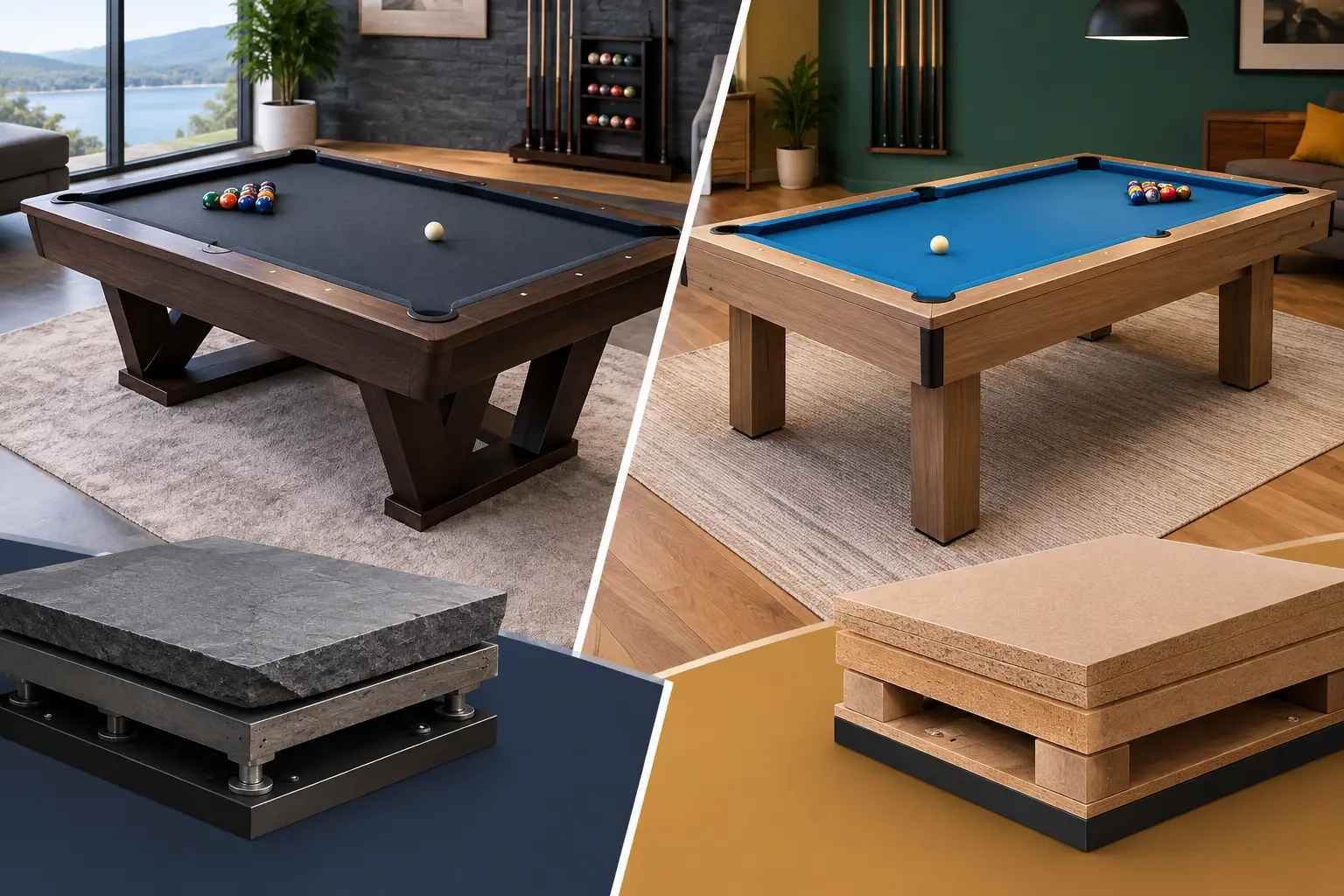
A pool table can look impressive from across the room and still disappoint the first time a ball rolls slowly toward a corner pocket. That difference often comes down to what sits beneath the felt. In the slate versus MDF decision, the playing surface is not a minor specification. It determines how accurately the table plays, how well it holds its level, how it handles years of family use, and what your investment is worth down the road.
For a serious home game room, slate is the standard for good reason. MDF can make sense for certain casual or temporary situations, but buyers deserve a clear explanation before they choose the lower initial price.
Slate Versus MDF: The Difference Under the Felt
Pool-table slate is a dense natural stone machined to create a flat playing bed. On quality home tables, that bed is commonly a 1-inch-thick, three-piece Brazilian slate system. Each piece is positioned, leveled, and sealed during professional installation so the finished surface plays as one continuous plane.
MDF, or medium-density fiberboard, is an engineered wood product made from compressed wood fibers and resin. It is used under felt on many entry-level tables because it is less expensive and much lighter than slate. Some manufacturers use names such as composite bed or Slatron for related materials, so it pays to ask exactly what is under the cloth rather than relying on a sales label.
The distinction matters because a pool ball reveals tiny imperfections. A surface that is only slightly uneven can change the path of a slow shot, make a ball drift, or create frustrating dead spots. A quality slate bed gives installers a stable material to level precisely. MDF begins flatter than many people expect, but it is less resistant to changes in moisture, heat, and long-term structural stress.
Why slate plays differently
Slate has the mass and rigidity needed for consistent play. It does not flex in normal use, and it supports the cloth without developing the subtle waves or low areas that can affect rolling accuracy. That is why commercial rooms, tournament settings, and well-built home tables have long relied on slate.
The slate itself is only part of the equation. A table also needs a solid hardwood frame, dependable cross supports, quality K66 gum rubber cushions, and careful assembly. Still, the bed is the foundation. Premium components cannot fully compensate for a playing surface that moves or changes shape.
A 1-inch slate table is also designed to be releveled. Floors settle, homes are remodeled, and tables are moved. A professional can assess the frame and make precise adjustments at the slate seams and leveling points. That serviceability is a major advantage for homeowners who expect their table to remain part of the house for decades.
Where MDF has limits
MDF is not automatically a bad choice. For a lightweight game table in a condo, a child’s recreation room, or a short-term rental, its lower cost and easier transport can be appealing. It is also often suitable for buyers who simply want an occasional game and have no expectation of tournament-style performance.
The trade-off is longevity. MDF can be affected by humidity and moisture exposure, and a spill that reaches the bed can be more consequential than it would be on slate. It may also sag or lose its true level over time, particularly when the table frame provides limited support. Releveling can help with a floor issue, but it cannot restore a bed that has permanently changed shape.
That concern is relevant even in Arizona. Most indoor spaces are climate controlled, but pool tables still live through monsoon humidity, open patio doors, garage moves, water leaks, and years of changing household conditions. A table placed in a covered outdoor living area needs especially careful material selection. Neither MDF nor traditional billiard cloth should be treated as maintenance-free in an exposed environment.
How Slate and MDF Affect Ownership
The best question is not simply, Which table is cheaper today? It is, What kind of ownership experience do you want five or ten years from now?
A slate table is heavy, often weighing several hundred pounds more than an MDF model. That weight is a benefit once installed because it contributes to stability, but it also means professional delivery and setup are not optional extras. The table should be carried in correctly, assembled on site, leveled with the proper equipment, and tested before the installers leave.
For an Arizona homeowner, that is valuable protection for both the table and the home. Tight stairways, tile floors, second-story bonus rooms, and large custom tables all require planning. When it is time to relocate, the table should be disassembled, transported, and professionally releveled at the new location. Treating a slate table like ordinary furniture is an expensive mistake.
MDF is easier to move because it weighs less, but easier is not always better. A lighter table can feel less planted during active play, and its lower price may not leave much room for professional service, future repairs, or replacement parts. If the table becomes frustrating to play on after a few years, the initial savings disappear quickly.
The Real Value Question: Initial Price or Long-Term Cost?
MDF tables usually win on the sticker price. They can be attractive when a homeowner is furnishing an entire room at once or testing whether the family will use a pool table regularly. But inexpensive tables are often built around additional compromises: thinner frames, lower-grade cushions, basic cloth, and limited customization.
A well-built slate table costs more because the materials, manufacturing, freight, and installation are more substantial. Yet that does not mean buyers should accept conventional retail markups. Dealer-direct pricing can put a premium American-made slate table within reach of families who assumed a professional-grade table was outside their budget. A table marked near $5,000 in a traditional showroom may be available closer to $2,495 through a lower-overhead model, depending on size, finish, and options.
That is the comparison worth making. Compare a complete table package, not just a low advertised number. Confirm the slate thickness, frame construction, cushion profile, felt quality, delivery, installation, warranty, and future service support. A low price without professional leveling is not a bargain if the table never plays correctly.
When MDF Is the Right Choice
MDF can be the sensible option when the table is intended for light, temporary use, the room cannot support the weight of a slate table, or the budget has a firm ceiling that cannot move. It may also work well for a younger family that wants a casual activity table now and plans to upgrade later.
Just make that choice with clear expectations. An MDF table is a recreational furnishing, not typically a lifetime billiard table. If you care about bank shots responding consistently, want a table that can move with you, or are designing a finished entertainment space around it, slate is usually the better fit.
What to Ask Before You Buy
Before choosing either surface, ask the seller whether the bed is genuine slate, how thick it is, and whether it is one piece or three pieces. Ask what supports the bed underneath, whether the frame is solid hardwood or engineered material, and what cushion rubber is used. Those answers reveal far more than a product photo ever will.
Also ask who delivers and levels the table, what happens if it needs service later, and whether the company can move it without damaging the finish, rails, or slate. A premium pool table should come with a knowledgeable ownership partner, not a delivery truck and a phone number that stops answering after the sale.
At The Billiard Broker, a private showroom appointment gives homeowners time to compare table construction, finishes, pocket options, and cloth colors without the pressure of a crowded retail floor. You can see how a 1-inch Brazilian slate table fits your room, your playing style, and your long-term budget before making a decision.
A pool table should invite people to stay in the room a little longer. Choose the playing surface that supports that experience, then have it installed well enough that every slow, careful shot tells you that you made the right call.