
A pool table can look fine from across the room and still play poorly the moment the first rack breaks. A slow roll, a ball drifting toward a rail, loose pockets, faded cloth, or a cushion that has gone dead all change the game. Pool table repair and refelting are not cosmetic afterthoughts. Done properly, they protect a substantial home investment and bring back the consistent, tournament-quality play your table was built to deliver.
For Arizona homeowners, the decision is rarely just whether a table needs attention. The real question is whether the work will be handled with the same care required to install a slate pool table correctly in the first place. A quality table can serve a family for decades, but only when its cloth, rails, slate, and hardware are serviced by people who understand how each component affects the finished play.
When Does a Pool Table Need Professional Service?
Felt is usually the first issue people notice. Tournament-grade wool cloth is durable, but it takes regular contact from balls, chalk, hands, and cues. Over time, the surface may develop burn marks, thin spots near the break end, stains, snags, or a noticeably slower roll. If brushing and careful cleaning no longer improve the appearance or speed, refelting is often the right move.
Cloth replacement is also a smart choice after a table move. Even when the existing felt looks usable, it must be removed to access the slate seams and leveling points. Reusing old cloth can be possible in limited situations, but it carries risk. Older felt may not stretch evenly after being lifted, and a small wrinkle or weak spot becomes far more obvious once the table is reassembled.
Other warning signs point to repair beyond the cloth. Balls that consistently roll off line may indicate a leveling issue, shifting slate, or a problem with the subframe. A rail that sounds dull or fails to return the ball with proper speed can signal hardened cushion rubber. Loose pocket irons, cracked leather, damaged rail sights, and stripped hardware should be addressed before they become more expensive repairs.
It depends on the table, its age, and how it has been used. A lightly played table in a climate-controlled bonus room may go many years between refelts. A busy game room table used by kids, guests, and serious players may need cloth sooner. The condition of the playing surface matters more than a calendar date.
What Pool Table Repair and Refelting Should Include
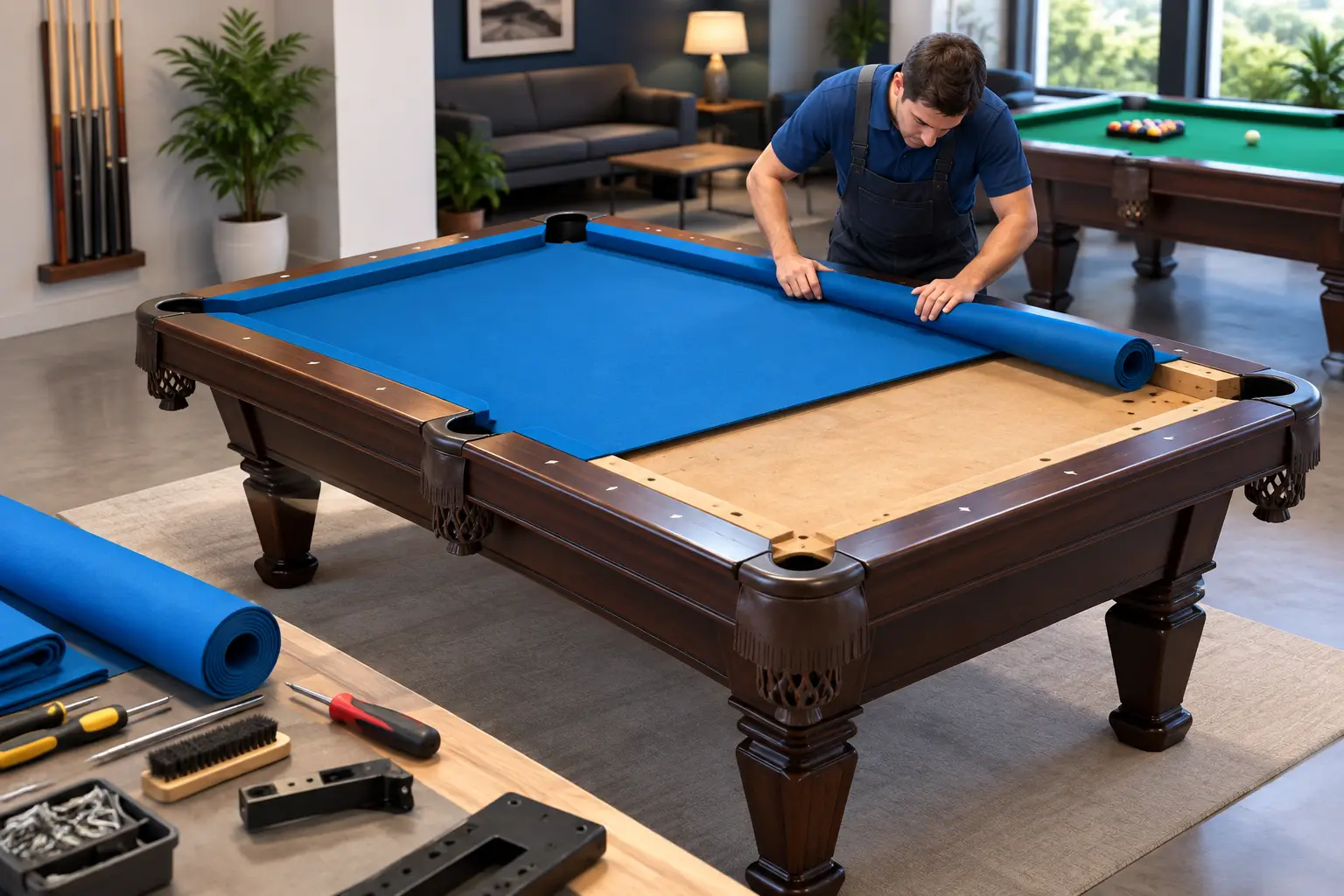
A professional refelt is not simply pulling fabric tight and trimming the edges. The finished surface depends on preparation, proper cloth direction, accurate stretching, and a table that is level before the final rails are secured.
First, the technician removes the rails and old cloth, then inspects the slate and backing. Slate seams are checked for movement or deterioration, and any old seam material is removed as needed. The slate sections are leveled precisely, because a new cloth cannot correct an uneven playing surface. It will only make the problem more visible when balls drift.
The new cloth is then fitted across the bed and attached with controlled tension. Too little tension leaves wrinkles and slows the table. Too much tension can distort the fabric, affect the rails, and shorten the life of the cloth. Pocket openings must be cut cleanly, with no loose edges that will eventually pull away.
Rail cloth requires equal attention. Each rail is covered so the weave runs correctly and the fabric is tensioned consistently from end to end. Once the rails are reinstalled, the technician checks pocket alignment, rail bolts, playing speed, and final level.
Quality service should also include an honest inspection of items that may affect your table’s performance, including cushion response, pocket condition, rail alignment, and leg or frame stability. Not every table needs every repair. A trustworthy billiards professional explains what is necessary now, what can wait, and what replacement options make sense for the table you own.
Cloth Choice Is About Play, Not Just Color
Color is one of the most visible decisions in a refelt, especially when the pool table is a centerpiece in a finished game room. Traditional green remains popular, but championship blue, charcoal, burgundy, tan, and custom colors can better suit a home’s design.
The material itself is more important than many homeowners realize. Standard woolen cloth is forgiving, durable, and often a practical choice for casual family play. It has a slightly slower, softer feel. Worsted tournament cloth has a tighter weave and faster roll, making it a favorite for experienced players who want cleaner speed and more predictable cue-ball action.
There is a trade-off. Faster cloth rewards good technique but can expose inconsistent strokes. It also deserves more careful maintenance. For a table that will see frequent family use, the best choice may be a durable premium wool felt rather than the fastest cloth available. The goal is a table your household will enjoy using, not a spec sheet that looks impressive but does not match how you play.
Repairs That Should Not Be Ignored
A refelt is the right time to handle repairs that are difficult to reach once the table is assembled. Ignoring them to save a small amount now can mean paying for another teardown later.
Dead cushions are a prime example. Quality K66 gum rubber cushions should provide a lively, consistent rebound. Rubber eventually hardens, especially on older tables or tables exposed to heat and dry conditions. If one rail plays differently than another, or balls die before reaching a pocket, cushion replacement may be warranted.
Slate damage deserves careful evaluation as well. One-inch Brazilian slate is exceptionally stable and can often be restored after a move, but cracks, chipped edges, or separated seams require a technician who knows how to repair and level slate correctly. Particleboard tables and thin, non-slate surfaces are a different proposition. Some can be improved, but major repair may not be the best value compared with upgrading to a properly built slate table.
Frame and leg problems matter because the table’s structure supports every leveling adjustment above it. A table cannot stay true if its cabinet is flexing, legs are unstable, or hardware is loose. Professional repair starts at the foundation, not at the felt.
Why Professional Work Protects Your Investment
A pool table is not ordinary furniture. Three-piece slate tables are heavy, precisely built, and dependent on exact assembly. The slate alone can weigh hundreds of pounds. Trying to move, disassemble, repair, or refelt one without the correct tools and experience can damage the slate, rails, finish, floors, or the people attempting the work.
The cheapest quote is not always the lowest cost. A rushed refelt may leave loose cloth, uneven pockets, visible seams, or a table that rolls out of level within weeks. A professional service team brings the right equipment, understands how different manufacturers assemble their tables, and takes responsibility for the details that determine whether the table plays right.
This is particularly valuable when the table has sentimental or financial value. Maybe it is a family table that has followed you through several homes. Maybe it is a custom solid-hardwood table selected to match cabinetry, flooring, and a carefully designed entertainment space. Either way, proper service preserves the table rather than treating it as disposable.
Keep New Felt Looking and Playing Better
After refelting, basic habits make a meaningful difference. Brush the cloth gently in one direction, use a proper pool-table cover when the table is not in use, and avoid eating or placing drinks on the rails. Chalk carefully, preferably away from the table, since excess chalk dust settles into the fibers and dulls the surface over time.
Keep direct sunlight off the cloth whenever possible. Strong Arizona sun can fade color and increase heat around the table, particularly in rooms with large windows or indoor-outdoor layouts. A cover and sensible window treatments help preserve both the felt and the table finish.
If your table has developed slow rolls, worn cloth, weak rails, or moving damage, do not wait until a small issue affects every game. The Billiard Broker provides professional service across Arizona for homeowners who want their table handled correctly, from precise leveling and repairs to a clean, properly fitted refelt. Schedule a private appointment or call Mark to discuss what your table needs. One careful service visit can restore the reason your family gathered around the table in the first place.