
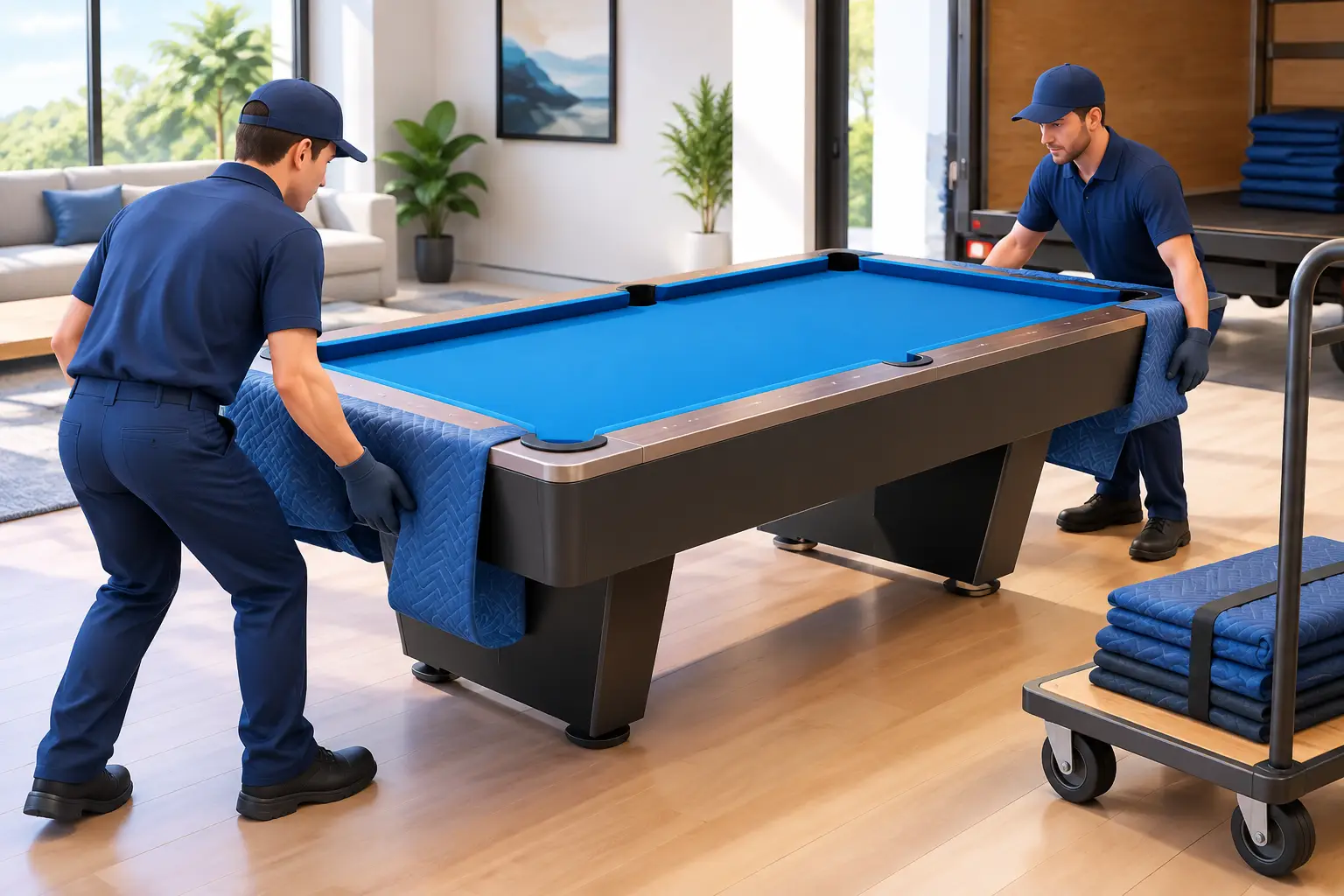
A pool table is not furniture you slide across a room, strap to a dolly, and hope for the best. Proper pool table moving means protecting a precision game surface built from heavy slate, hardwood, rubber cushions, and carefully stretched cloth. One rushed move can turn a table that played beautifully into one that rocks, rolls balls off line, or carries permanent finish damage.
For Arizona homeowners moving into a new home, redesigning a game room, or relocating a table across town, professional service is usually the less expensive choice. The real cost is not simply getting the table from Point A to Point B. It is avoiding a cracked slate seam, warped cabinet, torn felt, damaged stairway, or a setup that never plays correctly again.
Why pool table moving requires more than muscle
A full-size slate pool table commonly weighs 700 to more than 1,000 pounds. That weight is not concentrated in one solid piece. Most residential tables use a three-piece slate bed, supported by a cabinet and legs that were engineered to hold the table level after installation. The slate, frame, rails, pockets, and cloth all need to be handled in the correct order.
Trying to move a table fully assembled puts strain on the legs and frame, especially at doorways, stairs, tight hallways, and truck ramps. The table may look sturdy, but legs are designed to support weight vertically, not absorb side pressure while the table is tilted or carried. That is why a table can arrive at its destination with no obvious exterior damage yet still have loose joints, a shifted frame, or slate that will not level properly.
There is also a playability issue. A quality table with 1-inch Brazilian slate and tournament-grade cloth deserves better than a quick relocation. Even a slight change at a slate seam can affect ball roll. A pool table is a precision piece of equipment, and moving it should be treated that way.
What professional pool table moving includes
A professional move begins with an inspection. Before anything comes apart, the technician checks the table’s construction, access points, stair conditions, and the new room. This matters because a ground-floor move through wide doors is very different from a second-story game room with a turn in a narrow staircase.
The standard process includes careful disassembly, protected transportation, reassembly, and final leveling. The rails and pockets are removed first. The cloth is handled according to its condition and whether the customer plans to reuse or replace it. Then the slate sections are detached, individually protected, and moved with the proper equipment. The cabinet and legs are wrapped to preserve the finish and prevent dings during loading.
At the destination, the process is reversed with much more attention than simply putting bolts back in place. The base is assembled and positioned, the slates are installed, seams are filled, and the playing surface is precision leveled. Rails are aligned and secured, then the cloth is installed or re-stretched as needed. The final check should include ball roll, rail response, pocket alignment, and table stability.
That last stage is where professional service earns its value. A table can look level to the eye while still being noticeably off during a straight shot.
The cloth question: reuse or replace?
Many homeowners ask whether the existing felt can be used after a move. The answer depends on the cloth’s age, condition, and how it was originally installed. If the fabric is newer, clean, and free of worn spots, a skilled installer may be able to reuse it. However, cloth can show its age after removal, particularly around the rails and pockets.
Moving is often the ideal time to upgrade. Fresh tournament-grade wool felt can transform the look and speed of an older table, while a new color may better match the new home’s design. This is also the best time to inspect cushions, pocket liners, rail bolts, and leveling hardware, since the table is already disassembled.
The risks of a DIY pool table move
There is a reason general movers often exclude pool tables from standard household moving quotes. They can move boxes, sofas, and dining tables efficiently, but billiard tables require a specific process and specialized knowledge. A well-intentioned moving crew may be strong enough to lift the weight, yet still lack the tools to protect slate edges, mark rail positions, or re-level a three-piece slate surface.
The most common DIY mistakes are predictable:
- Moving the table while fully assembled, which stresses the frame and legs.
- Carrying slate without edge protection, increasing the risk of chips or cracks.
- Mixing up rails, bolts, shims, and hardware during disassembly.
- Reassembling without precision leveling tools or experience.
- Stretching old cloth too aggressively and creating wrinkles, tears, or uneven play.
A cracked slate is the problem everyone worries about, but it is not the only costly outcome. Cabinet damage can be difficult to repair on a solid hardwood table. A scratched finish may stand out in a carefully designed entertainment space. Improper installation can also create a frustrating table that family and guests simply do not enjoy using.
Plan the new room before moving day
The table may fit in a room, but that does not automatically mean the room works for pool. You need enough cue clearance around every side, not just enough floor space for the cabinet. A 7-foot, 8-foot, or 9-foot table has different room requirements, and shorter cues can help in challenging layouts, though they are a compromise rather than an ideal solution.
Measure doorways, halls, stair landings, ceiling heights, and the final room before scheduling service. Tell the moving team about elevators, gates, steps, long carries, or tight turns. In Arizona homes, garage access can make a move easier, while upstairs lofts and bonus rooms often require more advance planning.
Also consider sunlight and climate in the new location. Direct sun can fade cloth and finishes over time. Outdoor living spaces require tables specifically built to withstand changing temperatures and moisture. A traditional indoor hardwood pool table should not be placed on an exposed patio simply because the area is covered.
When a move becomes a restoration opportunity
If a table has been in the family for years, relocation can reveal maintenance needs that were easy to overlook. Cushions eventually lose responsiveness. Pocket leather can dry out. Cloth collects wear, chalk residue, and small pulls. Leveling can drift as a home settles.
Rather than paying for a basic move now and scheduling repairs later, consider handling the work in one service visit. It reduces repeated disassembly and gives the table a fresh start in its new room. For an older table with good bones, new cloth, properly tuned cushions, and professional leveling may deliver more enjoyment than replacing it with an entry-level alternative.
Choosing a pool table mover in Arizona
Price matters, but an unusually low quote should prompt a few questions. Ask whether disassembly and reassembly are included, whether the slate will be individually protected, and whether precision leveling is part of the final setup. Confirm that the company regularly works on slate pool tables rather than treating them as another heavy household item.
It is also wise to ask about service after installation. If the table settles or a customer notices an issue shortly after the move, a qualified billiard specialist should be able to address it. Clear communication before moving day protects everyone involved, especially when access is complicated or the table has custom finishes, antique details, or sentimental value.
The Billiard Broker provides statewide Arizona billiard service with the same care expected for a premium custom table: proper disassembly, protected transport, professional installation, and precision leveling. Whether the table is moving from Peoria to Scottsdale or simply from one room to another, the goal is the same – preserve the investment and make sure it plays the way it should.
Before the first box is packed, schedule the pool table separately from the rest of the move. A professional assessment can identify access challenges, help you decide whether to refresh the cloth, and ensure your table is ready for the first break in its new home.