
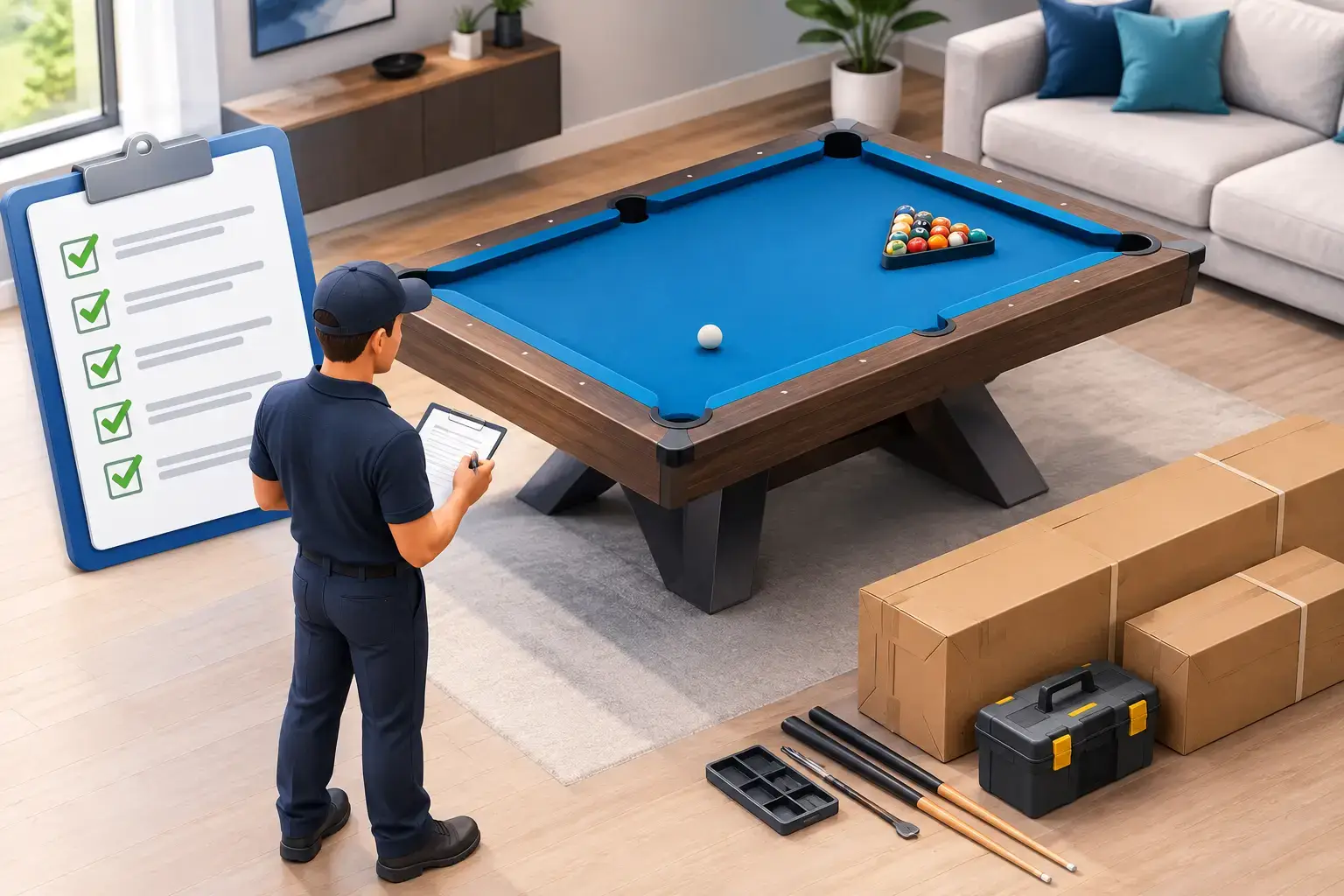
A premium pool table does not arrive like a boxed piece of furniture. It arrives in carefully handled components, then becomes a precision playing surface in your home. This pool table delivery checklist helps you prepare for that process before the installers are at your door, so your investment gets the access, care, and professional setup it deserves.
For Arizona homeowners, planning ahead matters. A great game room may be upstairs, through a courtyard, or beyond a tight hallway turn. The right delivery team can solve many access challenges, but clear information and a prepared path prevent delays, protect your home, and help installation day stay focused on one thing: building a table that plays true.
Why Professional Delivery Is Part of the Purchase
A quality pool table is not simply placed in a room and called finished. A solid hardwood cabinet, 1-inch Brazilian slate, cushions, rails, and cloth are handled separately so the table can be assembled, leveled, and finished correctly in its final location. That is especially important with a table built for long-term ownership rather than a lightweight, mass-market model.
Professional installation protects both performance and value. Slate must be positioned accurately, the frame must be leveled, seams need proper treatment, and tournament-grade wool felt needs to be stretched with care. A table can look fine to the eye while still rolling poorly if those details are rushed.
White-glove delivery also reduces the risk that comes with asking general movers to handle a billiard table. Pool tables are heavy, awkward, and mechanically precise. The savings from a cheap move disappear quickly if a slate section chips, a cabinet is scratched, or the table needs to be rebuilt correctly afterward.
Pool Table Delivery Checklist: Confirm the Room First
Before delivery day, stand in the room as if you are about to take a shot from every side of the table. The table footprint is only part of the equation. You also need cue clearance around the entire playing area.
A 7-foot table generally needs a room around 13 feet 6 inches by 16 feet 6 inches for standard 58-inch cues. An 8-foot table typically needs about 14 feet by 18 feet, while a 9-foot table is most comfortable in a room around 14 feet 6 inches by 19 feet. Those figures are practical starting points, not rigid rules. Shorter cues can make a tighter space workable, but they change the shooting experience and should be a deliberate compromise.
Measure from the outside edge of the planned table location to walls, built-ins, fireplaces, bars, and furniture. Do not assume a room that fits a table will fit active play. A beautiful custom table deserves enough space for your family and guests to enjoy it without constantly adjusting a shot or bumping a cue into a wall.
Also confirm the room is ready for assembly. Flooring should be complete, major painting should be finished, and large furniture should be out of the way. If you are adding an area rug, discuss it before installation. The table needs a stable, level base, and the rug size and thickness can affect planning.
Measure the Delivery Route, Not Just the Game Room
The most common surprise on delivery day is not the final room. It is the path leading to it. Walk the route from the driveway or garage to the installation space and measure every tight point.
Your delivery notes should cover these practical details:
- Width and height of exterior doors, interior doors, gates, and garage openings
- Hallway widths and ceiling height at low points, including light fixtures
- Tight turns, staircases, landings, elevators, and narrow courtyards
- Steps from the street or driveway to the entry, plus uneven walkways
- Obstacles such as parked vehicles, landscaping, art, mirrors, or fragile furniture
Take clear photos of anything that looks tight, especially turns and stairs. A straight 36-inch doorway may be fine, while a sharp turn immediately behind it may require a different handling plan. Sharing that information before delivery is not overthinking it. It gives the installers a chance to bring the right crew, equipment, and protection for your home.
If your table is going upstairs, be direct about it early. Stairs do not automatically rule out a pool table, but the configuration matters. A professional team can assess the route and explain what is realistic before your installation date is locked in.
Protect Your Home and Clear the Work Area
Delivery teams need room to work safely. Clear the route of shoes, planters, benches, toys, and loose décor. Move wall art or mirrors near tight corners, and secure pets in a comfortable separate room. This protects your belongings and keeps the crew from having to navigate unnecessary hazards while carrying heavy materials.
Inside the game room, remove furniture from the assembly area and leave open space around the planned table location. If you have a newly finished home, tell the delivery team about delicate flooring, fresh paint, custom millwork, or other areas that need extra attention. Professional installers are used to working in high-end homes, but they need to know where special care is required.
In Arizona, consider the route from the truck to the house as well. During summer heat, a shaded staging area and accessible parking can make the day easier for everyone. The table components are built to last, but a clean, direct route helps the crew work efficiently and minimizes time moving materials outdoors.
Verify Access, Parking, and Building Rules
If you live in a gated community, condominium, or neighborhood with controlled access, arrange entry before the crew arrives. Give the gate code or contact procedure to the delivery coordinator, and confirm whether the community has delivery-hour restrictions.
For townhomes and condos, check elevator reservations, loading-zone rules, parking permits, and insurance requirements well in advance. Some buildings limit large deliveries to certain times, and some require protective pads in elevators. A few minutes spent confirming building policy can prevent a frustrating reschedule.
Reserve the closest practical parking area for the delivery vehicle. The shorter and clearer the carry, the safer the installation. If street parking is restricted or the driveway is unusually steep, mention it during scheduling so there are no surprises.
Decide the Exact Table Position Before Arrival
A pool table is not something you want to slide around after it has been leveled and clothed. Mark the intended location with painter’s tape if helpful, then step back and review the room from the doorways, seating area, and bar or entertainment wall.
Think about more than cue clearance. Consider sightlines, lighting, traffic flow, and where players will set down drinks. A centered table often looks right, but it may not be the best choice if it blocks the natural path through the room. The best layout balances design with playability.
Lighting deserves special attention. A dedicated billiard light should illuminate the playing surface without creating glare or hanging so low that it interferes with taller players. If electrical work is still pending, finish it before installation whenever possible. Your installer can help confirm a sensible fixture height, but an electrician should handle wiring changes.
Prepare for a True Professional Setup
On installation day, plan to be available for a final walkthrough. Confirm the room, the finish, the cloth color, and the table position before assembly begins. This is also the right time to point out any access concerns or flooring details that came up after scheduling.
Once the table is assembled, the installers should level the frame and slate precisely, address slate seams, install the cloth and rails, and check the finished play. Do not judge leveling by whether a bubble level appears close enough on the cabinet. A professional billiard setup is about how the table performs across the entire surface.
Afterward, ask how long the room should remain clear, how to care for the felt, and what to avoid when moving furniture nearby. Never attempt to shift a pool table by pushing it across the floor. Even a small move can affect leveling and place stress on the frame or slate.
Keep the Delivery Details Handy
Have your delivery contact information, access instructions, and chosen table specifications available on your phone. If someone else will be at the home, make sure they know the final room location and have authority to approve access and placement decisions.
For a made-to-order table, this is the payoff for every choice you made: the hardwood finish that suits your home, the pocket style, the cloth color, and the playing surface built for years of family games. A prepared home lets the installation team give those details the attention they deserve.
A private showroom appointment with The Billiard Broker is a smart place to start if you want help planning the table, room size, delivery route, and installation as one coordinated purchase. One call before delivery can protect your home, your table, and the first rack you play on it.