
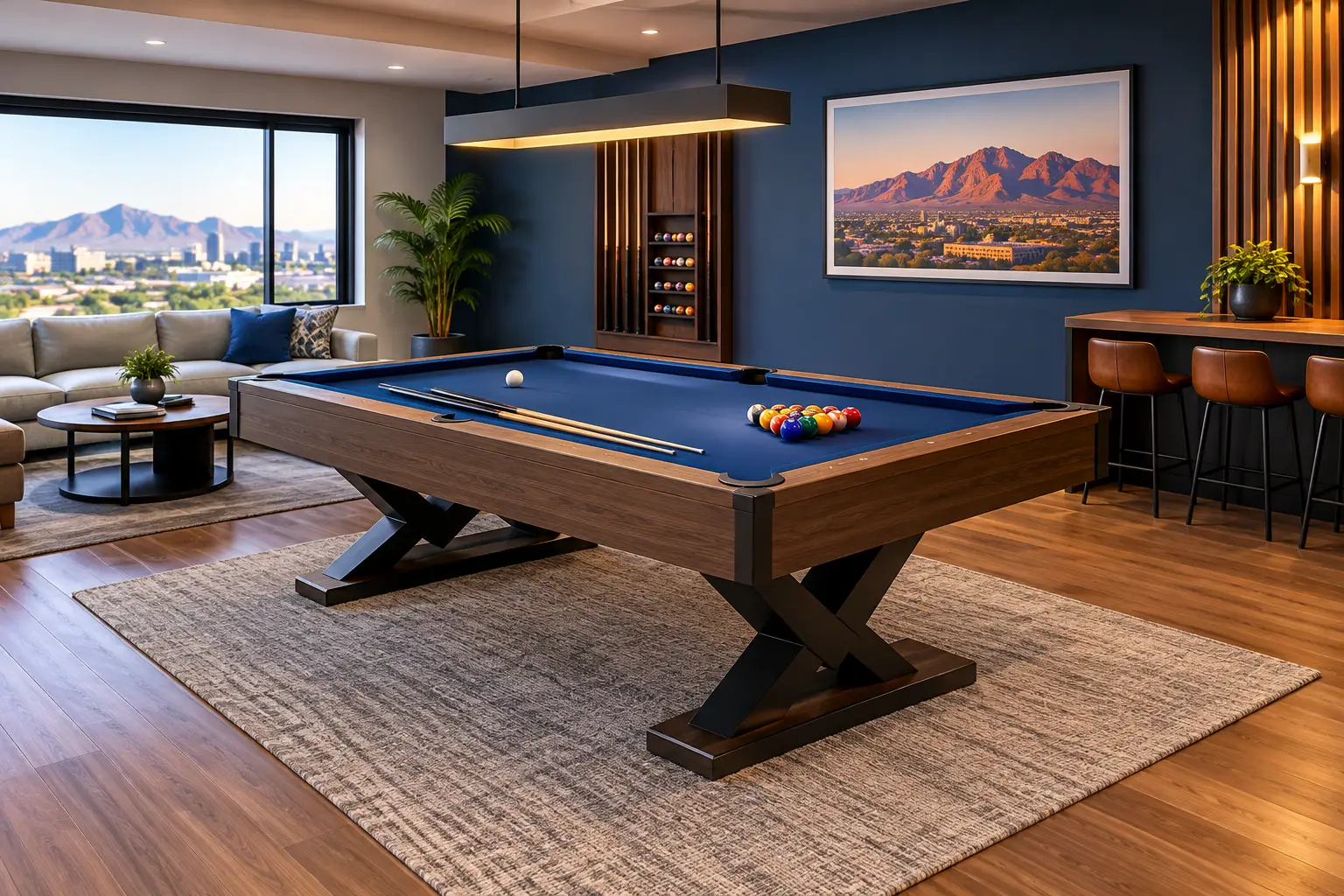
A great Peoria room makeover does not start with a paint chip or a throw pillow. It starts with deciding how the room will actually be used. If you want a space that brings people together after dinner, keeps teenagers off their screens for a while, and gives guests a reason to stay longer, a pool table can be the feature that makes the entire room work.
The mistake many homeowners make is treating the table as an afterthought. They finish the flooring, buy furniture, hang a television, then try to force a pool table into whatever space remains. That usually creates a room that looks polished but plays poorly. Start with the table, its playing clearance, and the traffic flow around it. The design choices become much easier from there.
Start Your Peoria Room Makeover With the Right Size
A regulation 8-foot table is the most popular choice for a home game room because it offers a serious playing experience without requiring the footprint of a 9-foot tournament table. But the right size depends on more than the room’s measurements. It depends on how you play, who will use the room, and whether you are willing to use shorter cue sticks along one wall.
For comfortable play with standard 58-inch cues, an 8-foot pool table generally needs a room around 13 feet 10 inches by 17 feet 4 inches. A 7-foot table needs less space and can be an excellent fit for a bonus room, converted den, or smaller entertainment area. A 9-foot table delivers the most tournament-style experience, but it demands a larger, dedicated room.
Do not guess at this stage. Measure walls, door swings, built-ins, windows, ceiling fans, and pathways into the house. A professional can verify the usable playing area before you order, which is far less expensive than discovering a clearance problem after the table arrives.
Plan for More Than the Playing Surface
The pool table should have breathing room, but so should the people around it. Leave space for a cue rack, a compact seating area, and a place to set down drinks without balancing them on the rail. If the room will also serve as a movie room, position seating so it can face the television without blocking shots.
In Arizona homes, open-concept layouts are common. A pool table can define a game-room zone within a larger great room, especially when paired with a rug, statement lighting, and a complementary bar or shuffleboard table. The goal is to make the table feel intentional, not like a large object parked in the middle of the house.
Make the Table the Design Anchor
A quality pool table is furniture. It should look at home with the cabinetry, floors, and finishes already in your Peoria residence. That is why made-to-order customization matters more than buying a boxed table in a limited color selection.
Start with the wood finish. A warm walnut or espresso finish works naturally with traditional interiors, leather seating, and darker cabinetry. Weathered gray, driftwood, and lighter natural finishes can suit modern desert palettes, contemporary tile floors, and brighter open spaces. Black is a strong choice for a clean, architectural look, particularly in a media room with darker walls.
Then consider the felt color. Traditional green remains timeless, but tournament-grade wool felt is available in colors that can either blend in or make a statement. Charcoal, navy, burgundy, camel, and deep blue can coordinate with the room without making it look like a commercial pool hall. A bolder cloth color is often best when the table is the central feature and the rest of the room is more restrained.
Pocket details matter too. Leather shield pockets bring a classic furniture look, while more streamlined pockets can better fit transitional or contemporary spaces. These choices are not cosmetic trivia. They determine whether your investment still looks right after the room evolves over the next decade.
Build for Family Use, Not a Short-Term Fix
A room makeover should add lasting value to your home life, not create another maintenance project. That is where construction separates a real home pool table from lighter, mass-market alternatives.
Look for a table built with solid hardwood, a one-inch Brazilian slate bed, K66 gum rubber cushions, and tournament-grade wool felt. These are not simply premium talking points. Slate gives the table a stable, level playing surface. Solid hardwood supports that weight over time. Quality rubber cushions produce a consistent rebound, so bank shots behave the way they should instead of dying unpredictably on the rail.
A table with inexpensive particleboard framing, thin slate, or synthetic cushions may look acceptable on a showroom floor. Over time, especially through moves, seasonal changes, and years of family use, those shortcuts show up in poor play and costly repairs. Buying once is usually the better value when the table is meant to stay in the home.
There is also a practical financial difference between premium construction and conventional retail pricing. Traditional furniture and game-table stores often carry substantial overhead, commissions, and retail markups. A dealer-direct model and private showroom can put a custom, American-made table within reach without asking homeowners to compromise on the components that matter. A table commonly priced around $5,000 at conventional retail can be available around $2,495, depending on the model and options.
Do Not Overlook Delivery and Installation
A pool table is not a curbside delivery purchase. It is a precision piece of equipment that can weigh hundreds of pounds and needs careful assembly, leveling, and cloth installation. The quality of the installation directly affects how the table plays.
Professional crews bring the table into the room, assemble it correctly, level the slate in place, install the felt, and make final adjustments. This protects your floors, walls, table, and investment. It also avoids the familiar problem of a table that looks level to the eye but sends every slow ball drifting toward one corner.
For homeowners finishing a remodel, timing is worth discussing early. Ideally, the flooring is complete, dust-producing work is finished, and the room has enough access for delivery. If you are placing the table upstairs or in a tight bonus room, measuring stairwells, turns, and entry points ahead of time prevents surprises on installation day.
The relationship should not end after setup, either. Tables eventually need refelting, releveling after a move, pocket repairs, or careful relocation to a new home. Working with a billiards specialist that can handle the full ownership cycle gives you a dependable resource instead of a one-time transaction.
Create a Room People Want to Use
The best game rooms are comfortable enough for everyday life. Choose lighting that illuminates the table evenly without creating glare. A dedicated billiard light centered over the playing surface is ideal, but recessed lighting and dimmers can work well when the room has multiple uses. Keep the fixture high enough to protect sightlines and low enough to light the rails.
Select seating with purpose. Counter stools work near a bar, while a small sofa or two lounge chairs make the room inviting for spectators. Avoid oversized sectionals that consume cue clearance. Storage should be practical and attractive: a wall-mounted cue rack, concealed accessory drawer, or built-in cabinet keeps balls, chalk, and bridges organized.
If children will play, choose durable materials and establish a simple house rule: no food or drinks on the table. A fitted cover protects the cloth between games and lets the room serve other purposes when needed. For homes that entertain frequently, this small addition earns its keep quickly.
A Private Showroom Makes Better Decisions Easier
Photos can help narrow your preferences, but they cannot show the difference between a solid hardwood cabinet and a lower-grade imitation. They cannot let you test the rail response, compare finishes in person, or see how felt colors change under real lighting.
A private, appointment-only consultation gives you time to ask practical questions without high-pressure sales tactics. Bring room dimensions, photos of the existing finishes, and any design samples you are considering. At The Billiard Broker, homeowners can compare custom options, understand the construction behind the table, and choose a model that fits both the room and the budget.
A smart room makeover is not about filling every wall. It is about giving your home one more reason to be the place where family and friends choose to gather. Start with the way you want the room to feel on a Friday night, then build the space around a table made to be played for years.