
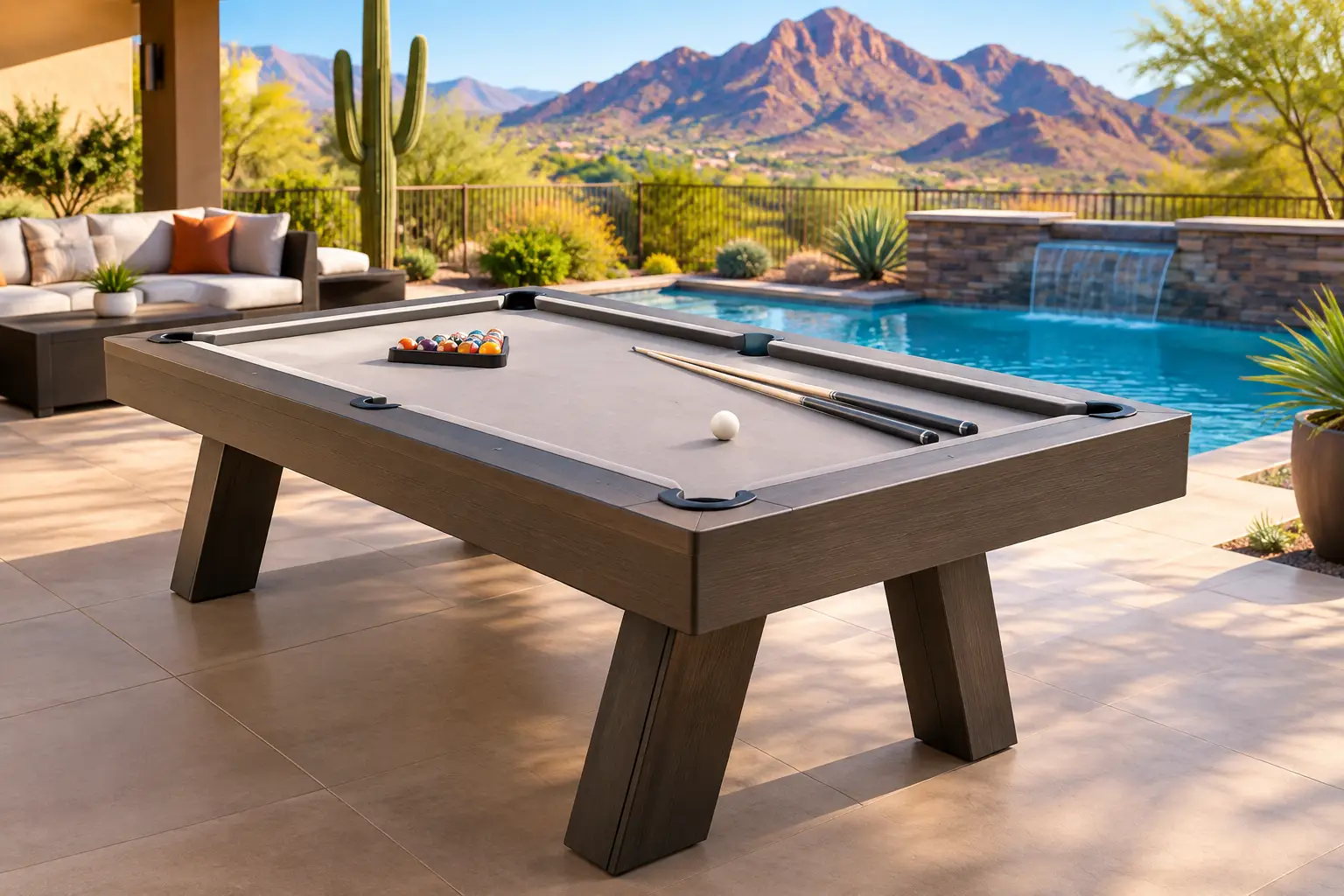
A covered patio can look like the perfect place for a pool table right up until Arizona sun, wind, dust, and summer heat start testing every material. An outdoor pool table can be an outstanding addition to a backyard entertainment area, but it must be selected for the environment, not simply moved outside because there is room for it.
That distinction protects your investment. A beautiful indoor table with solid hardwood, tournament cloth, and slate playing surface belongs in a climate-controlled room. A purpose-built outdoor table is engineered differently, with weather-resistant components that can handle changing temperatures and occasional moisture while still giving your family a game worth playing.
Do Not Put an Indoor Pool Table Outside
This is the most expensive mistake homeowners make. A standard indoor pool table may be built with premium materials, but those materials are not intended to live on a patio. Wood can expand, contract, fade, and eventually warp. Traditional wool felt absorbs moisture and collects dust. Cushion performance can change with extreme heat, while exposed metal hardware can corrode over time.
Even a covered patio is not the same as an indoor game room. Shade helps, but it does not eliminate airborne dust, wind-driven rain, humidity during monsoon season, direct afternoon heat, or large temperature swings. A cover offers protection between games, but it cannot turn an indoor table into an outdoor model.
If you want true outdoor play, start with a table designed specifically for that job. If you want the classic feel, precision, and furniture-level beauty of a 1-inch Brazilian slate table with solid hardwood construction, create a protected indoor game space instead. Both can be excellent choices. They simply serve different environments.
What an Outdoor Pool Table Should Be Made Of
The quality of an outdoor table is determined less by its finish and more by what is underneath it. Look past a glossy product photo and ask direct questions about the frame, playing bed, rails, fasteners, and cloth.
A well-built outdoor pool table generally uses an aluminum frame or another corrosion-resistant structural material rather than standard hardwood. Aluminum is lighter than a slate-and-wood table, but it stands up well to moisture and does not react to temperature changes the way wood does. Powder-coated finishes add another layer of protection and should be inspected for chips or weak points before installation.
The playing surface is equally important. Outdoor tables commonly use a weather-resistant composite bed instead of natural slate. Slate remains the gold standard for an indoor table because of its stability and playability, but it is exceptionally heavy and requires a cabinet designed to support it. For an exposed or semi-exposed setting, a composite surface is usually the smarter trade-off.
Outdoor cloth should be synthetic and made to resist fading, mildew, and moisture. It will not play exactly like tournament-grade wool felt. That is not necessarily a flaw. It is the practical compromise that allows the table to remain usable outside. Quality outdoor cloth can still provide a consistent roll, especially when the table is professionally assembled and leveled.
For a quick construction check, confirm that the table includes:
- A corrosion-resistant frame and hardware
- A weather-rated composite playing bed
- UV-resistant outdoor cloth
- Outdoor cushions and pockets designed for heat and moisture
If a seller cannot clearly explain these components, treat that as a warning sign. Outdoor furniture is not automatically outdoor billiard equipment.
Arizona Placement Matters as Much as Construction
Where the table sits will determine how much enjoyment you get from it and how much maintenance it requires. The ideal location is a covered, shaded area with good airflow and a firm, level floor. A fully exposed section of the yard may seem open and inviting, but it leaves the table vulnerable to UV exposure, debris, and weather from every direction.
Avoid placing the table where late-afternoon sun hits the playing surface. Beyond the discomfort of playing in direct heat, harsh sun can fade cloth, heat the rails, and create glare that makes aiming frustrating. A patio cover, pergola with substantial shade, or screened outdoor room is usually a better setting.
Leave enough room to play properly. The table itself is only part of the footprint. You need cue clearance on every side, plus circulation space for guests. As a practical rule, measure the playing surface and add the length of a standard cue to each side. If the area is tight, shorter cues can help, but they are a compromise rather than a substitute for proper room planning.
Flooring also deserves attention. Pavers, decorative tile, and textured concrete can all work, provided the table can be leveled correctly. The surface does not need to be perfectly level before delivery, but it must be stable. An experienced installer can make precise adjustments at the table legs. They cannot fix a patio that shifts, sinks, or slopes dramatically.
A Cover Is Necessary, Not Optional
Every outdoor pool table needs a fitted cover. Not a loose tarp, not a patio-furniture cover that catches wind, and not an old sheet thrown over the rails. A proper cover should fit securely, resist UV exposure, and keep dust, leaves, insects, and wind-driven moisture away from the table.
Use the cover whenever the table is not in use, including under a covered patio. Arizona dust finds its way into every open space, and fine grit on the cloth affects play quickly. Before covering the table, brush away loose debris and make sure the surface is dry. Trapping moisture under a cover creates the very conditions you are trying to avoid.
A cover extends the table’s life, but it does not eliminate maintenance. Plan on routine cleaning, occasional hardware checks, and periodic leveling. If the table has been through a particularly intense monsoon season or has shifted after patio work, a professional inspection is a worthwhile safeguard.
Choose the Right Size for How You Entertain
Outdoor tables are often selected for family play and casual entertaining rather than serious league practice. That makes a 7-foot or 8-foot model a practical fit for many patios. A 7-foot table needs less room and works well for younger players, while an 8-foot table offers a more traditional home-table experience.
A 9-foot table can be impressive, but it demands significant space and should not be chosen just because the patio looks large. Measure first, account for columns, grills, seating, ceiling fans, and sliding doors, then decide. The best table is the one your family and guests can actually play around comfortably.
Think about the rest of the outdoor living area, too. A pool table should complement the space rather than block the path between the kitchen, pool, and seating area. Many homeowners get the best result by creating a dedicated game zone under the most protected part of the patio, then keeping dining and lounging areas nearby but separate.
Be Honest About the Playing Experience
An outdoor pool table is built for durability first. It can be a lot of fun, look sharp in a well-designed backyard, and become the center of family gatherings. But it will not duplicate the exact response of a premium indoor slate table with K66 gum rubber cushions and tournament-grade wool felt.
Wind, temperature, cloth type, and the composite playing bed all influence the game. For casual play, that is usually a reasonable trade-off. For a player who cares deeply about shot consistency, speed control, and tournament-style action, an indoor table in a conditioned game room remains the better long-term investment.
This is where a no-pressure conversation can save money. Rather than forcing one table to do everything, some homeowners choose a dedicated outdoor game table for patio use and reserve their premium billiard table for indoors. That approach protects both experiences instead of compromising either one.
Plan for Delivery, Leveling, and Long-Term Care
Outdoor tables may be lighter than slate models, but they still need professional handling. Delivery teams must navigate gates, steps, narrow patio access, and uneven exterior surfaces without damaging the table or your property. Once in place, precise leveling makes a major difference in how the table plays.
The Billiard Broker helps Arizona homeowners evaluate table placement, coordinate delivery, and protect their investment with professional installation and ongoing billiard service. That matters when a table needs to fit a specific patio layout, a move requires careful disassembly, or years of use call for maintenance.
Before you buy, take photos and measurements of the intended space. Note access points, ceiling height, shade coverage, and nearby obstacles. Then schedule an appointment, ask practical questions about the table’s weather-rated construction, and choose the model that fits the way your family will really use the space. One careful decision now can keep your patio game-ready for years.