
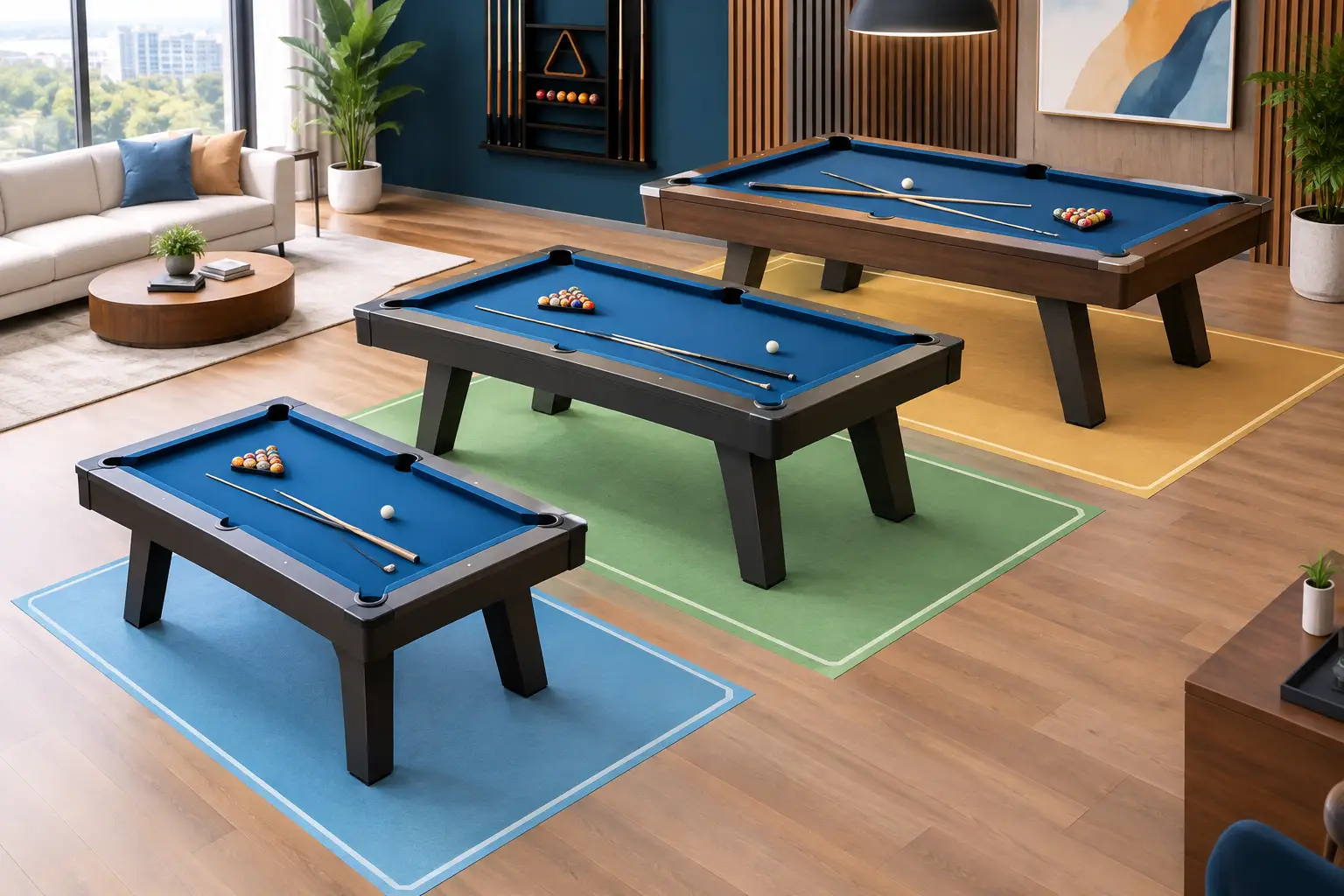
A pool table can look perfectly proportioned in a showroom and become frustrating the moment a cue hits the wall at home. That is why understanding the official pool table size means more than picking between a 7-, 8-, or 9-foot label. You need to know the actual playing surface, the finished outside dimensions, and the space required to play every shot comfortably.
For most serious players, a 9-foot table is the tournament standard. For many Arizona homes, however, an 8-foot table delivers the better balance of playability, room fit, and furniture layout. The right answer depends on your room, who will use the table, and whether the goal is casual family games, competitive practice, or a centerpiece built for a high-end entertainment space.
What Is the Official Pool Table Size?
In professional pool, the official standard is generally a 9-foot table with a playing surface measuring 100 inches long by 50 inches wide. The playing surface is the area inside the cushion noses where the balls actually roll. It follows the required 2-to-1 length-to-width ratio used across regulation pool tables.
That 100-by-50-inch playing field is what makes a table a true 9-footer. It is not the same as the table’s overall footprint. Once you add solid hardwood rails, aprons, legs, and corner construction, a typical 9-foot home pool table measures roughly 112 inches by 62 inches on the outside. Exact dimensions vary by model and rail design.
The word “official” can create confusion because different leagues, bars, homes, and tournaments use different table sizes. A 9-foot table is the professional tournament benchmark, but 7-foot and 8-foot tables are also regulation-size tables when their playing surfaces maintain the proper proportions and construction standards.
Common pool table playing-surface sizes
| Table size | Playing surface | Best fit | | — | — | — | | 7-foot | 78 x 39 inches | Bars, tighter game rooms, league-style play | | 8-foot | 88 x 44 inches | Most home game rooms and family spaces | | Oversized 8-foot | 92 x 46 inches | Players wanting a step up from a standard 8-foot table | | 9-foot | 100 x 50 inches | Tournament practice and large dedicated rooms |
A standard 8-foot table is the most popular home choice because it feels substantial without demanding the same room size as a 9-footer. An oversized 8-foot table, often called an 8-foot-plus or pro 8, is worth considering when you have the space but do not need a full tournament table.
Official Pool Table Size vs. the Space You Need
The table itself is only part of the measurement. A cue must travel behind the ball, and players need room to stand, bridge, and follow through without changing their stroke. Measuring only for the cabinet is one of the most expensive planning mistakes homeowners make.
For a comfortable room, add roughly 58 inches of clearance on every side for a standard 58-inch cue. That recommendation accounts for real play, not just whether the table can physically fit through the doorway.
A 7-foot table typically needs a room around 13 feet 2 inches by 16 feet 8 inches. An 8-foot table usually needs about 13 feet 6 inches by 17 feet 4 inches. A 9-foot table needs approximately 14 feet by 18 feet 4 inches.
Those are practical targets, not arbitrary showroom numbers. A room can be slightly smaller if you are comfortable using a shorter cue on occasional shots near a wall. That compromise is common in bonus rooms and converted spaces, but it should be a deliberate decision. If you want the table to play as beautifully as it looks, build in the full clearance whenever possible.
Also measure around obstacles, not just wall-to-wall. Fireplaces, columns, built-in cabinets, patio doors, stair rails, and oversized sectionals can affect usable cue space. In open-concept rooms, leave a clear path for people to walk through without crossing a player’s shooting line.
Why a 9-Foot Table Plays Differently
A 9-foot table is not simply a larger version of a home table. The longer shots, wider cue-ball travel, and more demanding position play make it the right choice for experienced players who want tournament-style practice. If you are working on patterns, speed control, or a more disciplined stroke, the extra surface reveals mistakes that a smaller table may forgive.
There is a trade-off. A 9-foot table requires a dedicated room and can overwhelm a space that also needs seating, a bar, or a media area. It may also be more table than a family needs if children and occasional guests are the primary players.
An 8-foot table remains a serious playing table. With quality slate, properly cut rails, responsive cushions, and precise installation, it delivers a fast, consistent game for years. For many homeowners, it is the smarter long-term choice because it gets played more often and leaves the room comfortable for entertaining.
A 7-foot table has its place too. It is the familiar bar-table size and a practical solution for compact rooms. The tighter layout creates its own challenge, with less distance but more congestion. It is not inferior by default, but it does play differently from a 9-foot tournament table.
Size Does Not Matter More Than Construction
Two tables may both be labeled 8-foot, yet feel completely different under a cue. Size establishes the playing field. Construction determines whether that field stays true.
A serious home table should start with 1-inch Brazilian slate. Slate provides the stable, flat foundation needed for accurate roll and dependable leveling. Lesser materials can warp, swell, or lose their shape over time, especially in Arizona homes where garage storage, moves, and temperature changes can expose furniture-grade tables to harsh conditions.
Look for solid hardwood construction rather than particleboard frames wrapped in a decorative finish. The cabinet supports the slate’s considerable weight, and the rails must hold their alignment through years of shots, rail contact, and routine recoveries. K66 gum rubber cushions are another key detail. Proper cushions return the ball predictably, while low-grade rubber can become hard, dead, or inconsistent.
Tournament-grade wool felt completes the playing experience. It should be properly stretched during installation, not simply laid over the slate. The installer then levels the table with precision, checks the seams, and confirms that each rail plays consistently. Buying a quality table without professional setup is like buying a luxury vehicle and skipping the wheel alignment.
Choose the Table Around How You Live
Start with a tape measure, then think honestly about the room’s purpose. If the space is a dedicated billiards room and you want serious practice, a 9-foot table makes sense. If the room needs to serve family game nights, holidays, and everyday entertaining, an 8-foot table often creates the better overall experience.
Next, consider style. A pool table is large furniture, not a piece of sporting equipment you can hide in a closet. The finish, leg profile, pocket style, and felt color should work with your flooring, cabinetry, lighting, and existing furniture. A made-to-order table lets you select those details without settling for a generic floor model or paying a traditional retail markup for a limited choice.
Finally, plan for ownership beyond delivery day. A slate table should be moved by billiard professionals who can disassemble it, transport the components safely, reassemble it, and re-level it at the new location. The same applies when replacing cloth, correcting a cushion issue, or preparing a table for a remodel.
At The Billiard Broker, private showroom appointments make it easier to compare table sizes side by side, review finishes against your home, and get straightforward guidance before you commit. You can see why a premium American-made table built with 1-inch slate, solid hardwood, and quality rubber is a better value than a heavily marked-up retail alternative.
Before you choose a table, measure the room, identify the shots your walls may interfere with, and picture how your family will use the space five years from now. The best pool table is not automatically the biggest one. It is the one that fits your room, plays true every time, and gives people a reason to gather around it.