
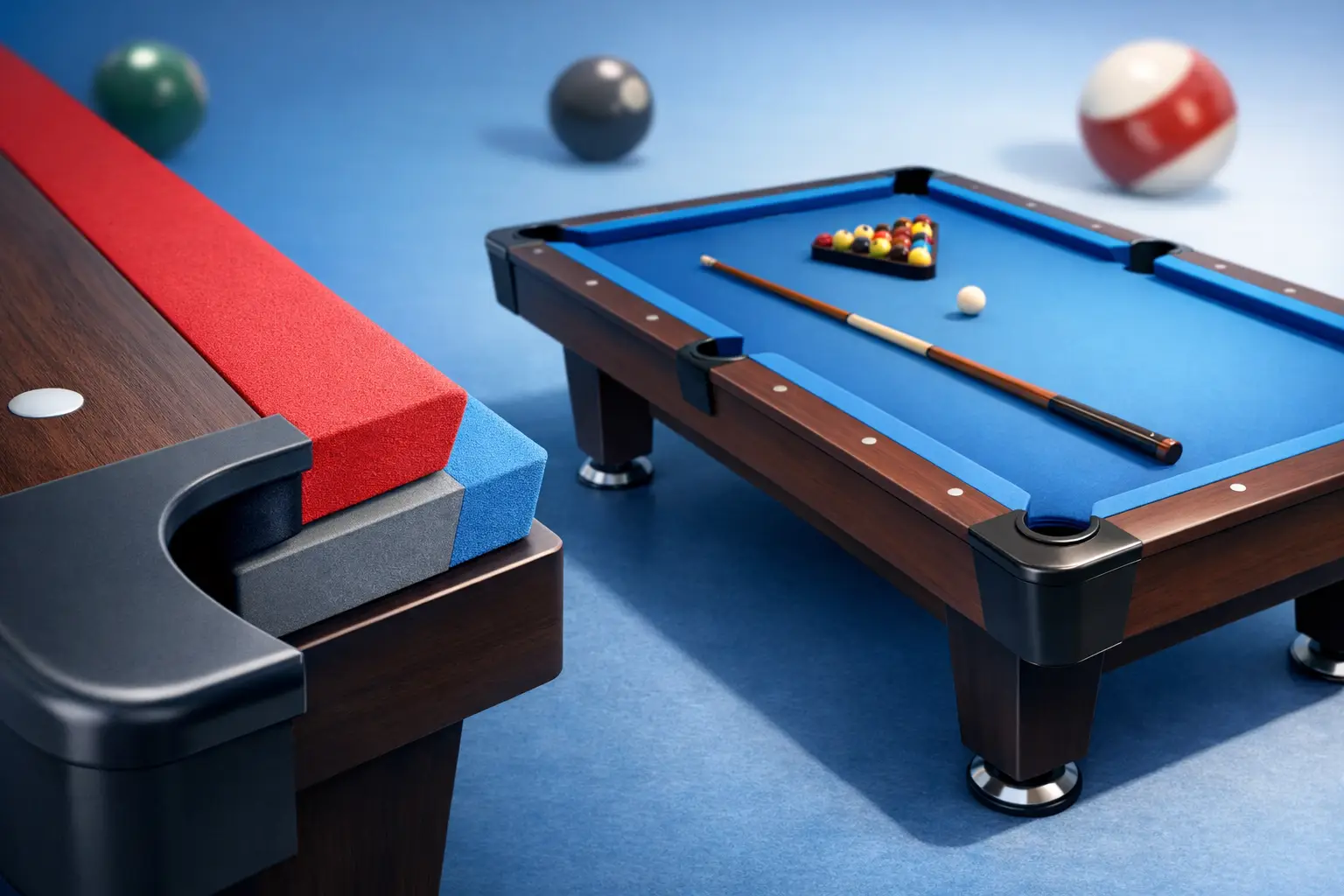
A pool table can have beautiful hardwood, premium felt, and a dramatic finish that anchors the room, yet still disappoint the first time a ball comes off the rail. That is why K66 pool table cushions matter. They are one of the components that determine whether your table plays like serious billiard furniture or simply looks like it belongs in a game room.
For Arizona homeowners investing in a table they expect to keep for decades, cushion quality should never be an afterthought. The rails are where casual family play becomes frustrating or where a well-struck bank shot responds exactly as expected. A properly built table with K66 gum rubber cushions gives players a consistent, lively, and dependable rebound without asking them to compensate for dead spots or unpredictable angles.
What Are K66 Pool Table Cushions?
K66 refers to a specific cushion profile used on many American-style pool tables. The profile is the shape of the rubber cross-section before it is installed on the rail. That shape, along with the rubber compound and the precision of installation, positions the cushion nose at the correct height for standard pool balls.
When a ball contacts a properly installed K66 cushion, it should rebound cleanly and consistently. The ball should not sink into the rail, hop excessively, or come off one section of the table noticeably faster than another. This is the playing character most homeowners recognize as smooth and professional, even if they have never studied rail construction before.
The word “K66” alone is not a guarantee of performance. Quality starts with genuine gum rubber, but the table builder must also use the correct rail design, subrail geometry, facing material, adhesive, and cloth installation. A good cushion installed poorly can still play poorly. That is why the full construction story matters more than a single line on a spec sheet.
Why Gum Rubber Makes a Difference
Gum rubber is valued because it retains a responsive, even rebound when it is properly manufactured and installed. Lower-grade rubber or aging synthetic materials can become hard, brittle, soft, or uneven over time. The result is a table that makes simple shots feel strangely unreliable.
On a quality home table, K66 gum rubber cushions help create the familiar response players expect from a well-maintained American pool table. That does not mean every table will play identically. Cloth speed, pocket size, table level, ball condition, and room temperature all affect the experience. But consistent rails give you a reliable foundation, which is where every good game begins.
How K66 Cushions Affect Real Play
A pool table does not need to be in a commercial billiard room to deserve accurate rails. In fact, dependable cushions often matter more in a home setting because your family and guests will play at different skill levels. When the rails respond consistently, beginners have a fairer experience and experienced players can trust their aim.
Bank shots are the obvious example. A ball struck at a controlled angle should return on a predictable path. But K66 cushions also affect position play, safety shots, kick shots, and the natural feel of a ball traveling around multiple rails. If the rebound varies from one end of the table to the other, players start adjusting without realizing it. The game becomes less enjoyable because the equipment is working against them.
Good cushions also make a table feel alive without making it wild. Excessively hard rails can send balls racing back with an unnatural response. Overly soft or worn rails absorb energy and leave shots short. The target is balanced speed and repeatable angles – the kind of play that rewards a good stroke instead of luck.
The Cushion Is Only as Good as the Rail System
This is where buyers should look beyond showroom appearance. Rail performance depends on how the entire assembly is built. Solid hardwood rails provide a stable platform for the rubber and help resist movement over years of regular use. Properly machined rail components, accurate pocket facings, and tournament-grade wool felt all contribute to how the ball enters a pocket and leaves a cushion.
The table must also be professionally leveled. Even the best K66 cushions cannot correct a table that is out of level, especially on a 1-inch Brazilian slate playing surface designed for long-term stability. A ball that drifts or favors one side may be a leveling issue rather than a rail issue. Either way, it deserves professional attention.
At The Billiard Broker, premium made-to-order tables pair K66 gum rubber cushions with solid hardwood construction, 1-inch Brazilian slate, and professional statewide delivery and installation. That combination protects the investment better than a lower-priced table that looks good at first glance but compromises on the components that control actual play.
How to Spot Cushion Problems on an Existing Table
If you already own a pool table, a quick test can tell you whether the rails deserve a closer inspection. Roll or lightly strike a ball into several sections of each rail using the same amount of force. You are looking for a similar rebound from rail to rail, not laboratory perfection.
Warning signs are usually easy to notice:
- A ball dies or rebounds weakly from one area of the rail.
- The ball hops off the slate after contacting a cushion.
- One end of the table plays noticeably faster or slower than the other.
- Rubber feels hardened, cracked, loose, or visibly separated beneath the cloth.
These symptoms can result from worn rubber, improper installation, loose rail hardware, old facings, or a table that needs leveling. A professional billiard technician can identify the real cause before you spend money on repairs that do not solve the problem.
In Arizona, placement and care matter. Direct sunlight, outdoor exposure, and extreme heat are hard on billiard materials. A climate-controlled interior game room is the best environment for preserving cloth, wood finishes, and cushion performance. For a covered patio or outdoor living area, choose a table specifically engineered for that setting rather than moving an indoor hardwood table outside and hoping a cover will be enough.
Buying a Table: Questions Worth Asking
A seller should be able to tell you what cushion profile the table uses, what the cushions are made from, and how the rails are constructed. If the answer is vague, the table may be relying on cosmetic details to distract from the parts you cannot see.
Ask whether the table includes genuine K66 gum rubber cushions and whether the rails are solid hardwood. Ask about the slate thickness, the installation process, and who services the table after delivery. These questions are practical because a pool table is not a boxed piece of furniture. It is a precision playing surface assembled in your home.
Price deserves context, too. A lower advertised price can become less appealing when delivery, stair carries, setup, leveling, accessories, and future service are separate costs. Conversely, a table built with professional-grade materials can offer outstanding value when bought dealer-direct rather than through a conventional retail showroom carrying heavy overhead and markup.
For many homeowners, the sweet spot is a fully customizable table with the construction features that matter most, without paying luxury-retail pricing simply for a familiar nameplate. You can select a finish and pocket style that suit the room while still prioritizing slate, hardwood rails, quality cloth, and K66 cushions underneath.
Protecting the Playability You Paid For
Once your table is installed, basic care goes a long way. Keep drinks away from the rails, brush the cloth with the proper billiard brush, use clean balls, and avoid sitting or leaning heavily on the table. If you move homes or renovate the room, have the table disassembled, transported, reassembled, and leveled by billiard professionals. Sliding or forcing a table across a floor is not a shortcut worth taking.
A quality pool table should invite people into the room for years, not become a decorative object everyone avoids using. When you are comparing tables in Peoria, Scottsdale, or anywhere across Arizona, hit a few shots. Listen to the rails. Feel whether the rebound is consistent. Then ask what is actually under the cloth.
The right table earns its place in the home every time a ball comes cleanly off the cushion. Schedule a private showroom appointment before you buy, and make sure the playability is every bit as convincing as the finish.