
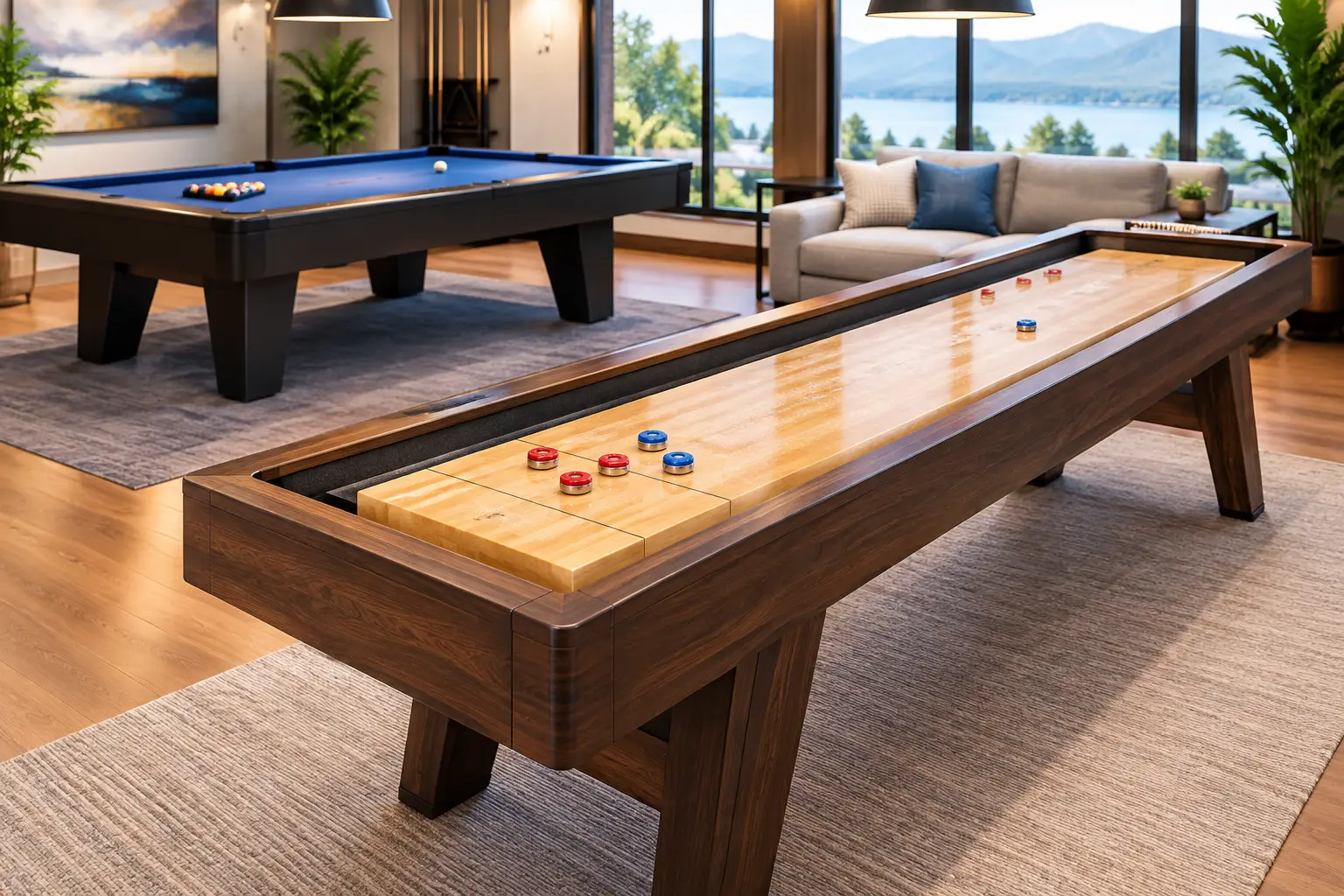
A shuffleboard table changes the way a room gets used. It gives guests something to gather around, gives kids and grandparents a game they can enjoy together, and brings the kind of relaxed competition that makes a bonus room, den, or covered patio feel finished. The right custom shuffleboard table for home is not simply a game table. It is a substantial piece of furniture that needs to fit the room, the people using it, and the look of the home for years to come.
That is why buying on appearance alone can be expensive. The best choice balances playability, construction, room clearance, finish options, and professional installation. Homeowners across Arizona also need to consider heat, dry air, and whether a table will live inside, under a covered outdoor area, or in a climate-controlled entertainment space.
Start With the Room, Not the Table
A shuffleboard table may look manageable in a showroom, then dominate a room once it arrives. Before selecting a length, measure the usable playing area rather than the room’s largest dimensions. You need space at both ends for players to stand, shoot, and walk around the table comfortably.
As a practical guideline, allow roughly 2 to 3 feet of clear space at each end beyond the table itself. Side clearance matters too, especially if the table sits near a bar, sectional, doorway, or pool table. A 9-foot table works well in many game rooms and lofts. A 12-foot or 14-foot model creates a more traditional shuffleboard experience without demanding the footprint of a commercial-length table. A 16-foot, 18-foot, or 22-foot table makes sense when the room was designed for entertaining and the game itself is part of the draw.
Longer is not automatically better. A table that feels cramped from day one will get less use than a slightly shorter model with room for people to move, laugh, and play. If your space also includes a pool table, theater seating, or a poker table, planning the full layout before ordering protects the investment.
What Makes a Custom Shuffleboard Table Worth Buying
The surface is where the game happens, but the cabinet is what determines whether the table remains stable, attractive, and level over time. A quality shuffleboard table should feel like furniture, not an oversized game-store purchase. Solid hardwood or furniture-grade cabinet construction provides the weight and rigidity needed for a table that will be played on for decades.
The playfield deserves just as much scrutiny. Look for a thick, kiln-dried maple playfield finished with a durable polymer coating. This surface should be smooth enough for controlled speed, tough enough to handle regular play, and properly sealed to resist moisture changes. On a well-built table, climate adjusters beneath the playing surface let a technician make fine corrections as the wood naturally responds to its environment.
That detail matters in Arizona. Even in a climate-controlled home, seasonal changes and dry conditions can affect wood. A table with proper construction and adjustability gives you a way to maintain consistent play rather than accepting a surface that slowly changes over time.
The Difference Between Furniture Grade and Disposable
Low-priced shuffleboard tables often make their savings visible in the wrong places: thin cabinets, lightweight legs, low-grade wood products, limited leveling hardware, and a finish that does not hold up to real family use. They may look good online, but they are difficult to correct once the surface develops a problem or the cabinet shifts.
A made-to-order table costs more than a mass-produced import, but it gives you control over the details that matter. You can choose a finish that complements existing cabinetry, select leg styles that fit the home, and invest in construction that can be serviced rather than replaced. Dealer-direct pricing is especially valuable here because traditional retail markups can push a premium table far beyond what the craftsmanship itself should cost.
Customize the Table to Belong in Your Home
Customization is not a gimmick when the table will be one of the largest visual pieces in the room. In a Scottsdale contemporary home, a clean espresso, charcoal, or natural wood finish may coordinate with modern flooring and dark metal accents. In a traditional Peoria game room, a warm oak, chestnut, or distressed finish can make the table feel established rather than newly added.
The most useful custom decisions usually come down to finish, cabinet style, leg profile, playfield graphics, and accessory storage. Some homeowners want their family name, a logo, or custom pinstriping on the playing surface. Others prefer a clean, classic look that lets the woodwork carry the design. Neither choice is wrong. The right option depends on whether the table is meant to be a centerpiece or a quiet complement to the rest of the room.
For covered outdoor living spaces, ask direct questions about where the table will sit. Shade alone does not always equal protection. Temperature swings, airborne dust, and moisture can all affect a standard indoor table. A specialist can help determine whether the location is appropriate and what protection or construction considerations are needed.
A Simple Way to Choose the Right Table
A private showroom appointment is useful because it turns a large purchase into a straightforward process. Instead of guessing from photos, you can see finishes in person, compare cabinet styles, and understand what different lengths feel like in real space.
The selection process should be simple:
- Bring room measurements, photos, and a rough layout of nearby furniture.
- Choose the table length that leaves comfortable shooting and walking clearance.
- Compare wood finishes, cabinet profiles, and playfield designs against your home’s style.
- Confirm delivery access, installation needs, and long-term service before placing the order.
This is also the time to discuss the real budget. Ask what is included in the price: delivery, setup, leveling, accessories, and warranty coverage. A low sticker price can stop being a bargain when freight, assembly, and service are added later. A clear, all-in conversation is the better way to buy.
Professional Installation Protects the Investment
Shuffleboard tables are not a curbside delivery item. They are heavy, precision-built pieces that need to be placed correctly, assembled carefully, and leveled after they settle in the room. Stairs, tight turns, elevators, and upstairs game rooms all change the delivery plan.
Professional installation ensures the cabinet is stable, the playfield is properly set, and the climate adjusters are checked. It also saves homeowners from trying to solve a frustrating problem after the fact, such as a table that looks level but plays inconsistently. For a premium table, white-glove delivery is part of the purchase, not an optional extra.
Long-term ownership matters as well. Tables may need periodic maintenance, wax and powder guidance, playfield adjustment, moving service, or repair after a remodel. Buying from a business that can support the table after installation is far different from buying a boxed product from a retailer that has no role once the truck leaves.
Get Better Value Without Settling for Less
A custom table should feel personal, but the buying process should not feel complicated or high-pressure. The Billiard Broker gives Arizona homeowners a private, appointment-only setting to compare American-made shuffleboard tables without the inflated overhead of a conventional retail showroom. That approach helps buyers put more of their budget into materials, craftsmanship, customization, and professional service.
The best table is not necessarily the largest model or the one with the most add-ons. It is the one that fits your room naturally, matches the home you have built, and plays beautifully whenever friends or family step up to the line. Measure the space, bring your design ideas, and schedule an appointment before making a decision. One thoughtful conversation can prevent an expensive compromise and give your home a game table people will actually use.