
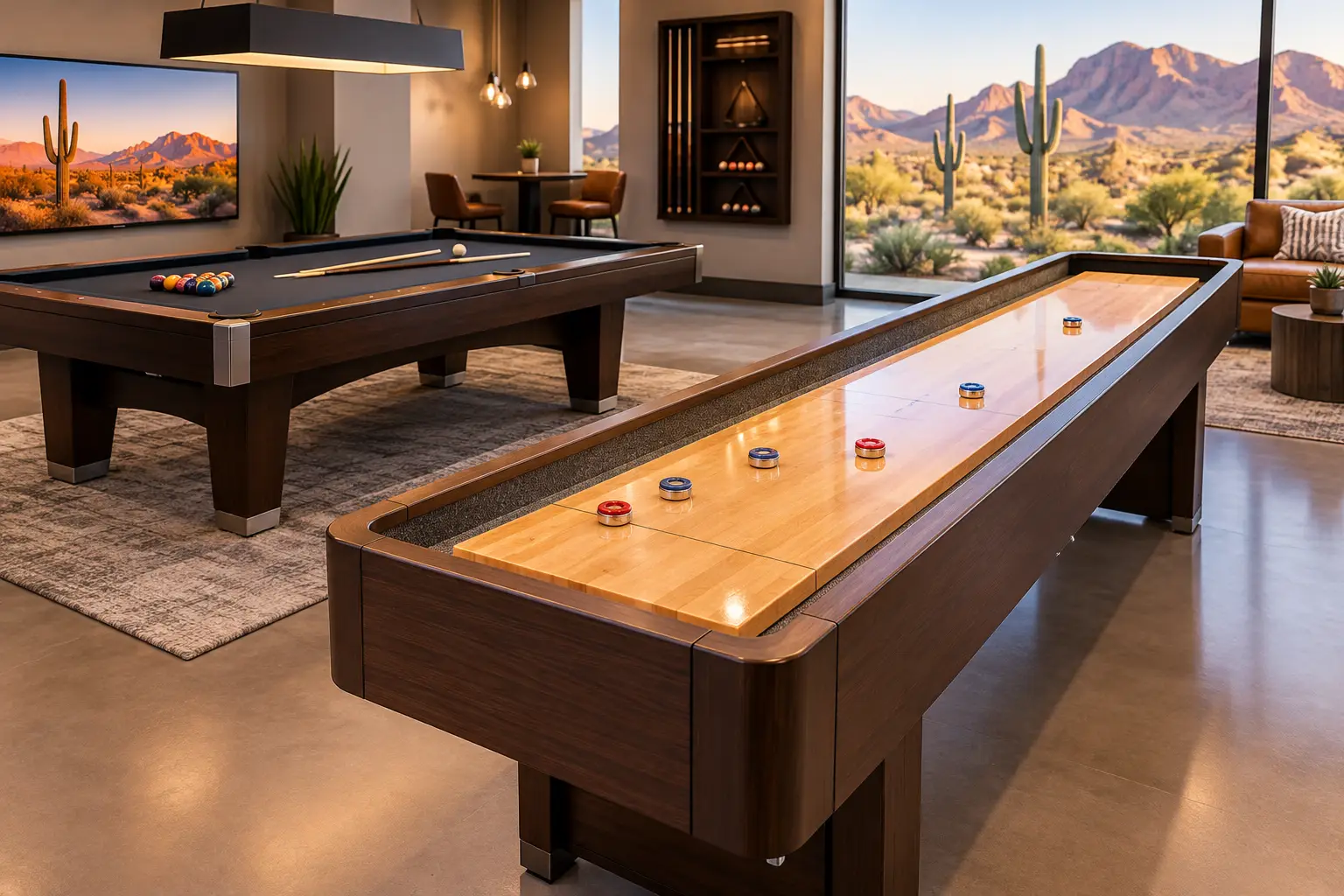
A shuffleboard table can look perfectly sized in a showroom and feel crowded the moment it reaches your game room. That is why a proper shuffleboard sizing guide starts with the room, not the table. The right length gives players space to shoot comfortably, walk around the cabinet, and enjoy the table as part of the room rather than work around it.
For Arizona homeowners building a game room, bonus room, basement, or covered entertainment space, the goal is simple: buy the largest quality table your room can genuinely support without sacrificing comfort. A well-fitted shuffleboard table becomes a gathering place for years. A table that is too large can make even a beautiful room feel tight.
Shuffleboard Sizing Guide: Start With Playing Clearance
Shuffleboard is played from both ends, so table length is only part of the measurement. Players need room behind each scoring end to stand, lean in, release the weight, and move past one another. As a practical rule, allow at least 3 feet of open space at each end of the table. If the room will host regular family games or entertaining, 3 1/2 to 4 feet at each end feels better.
For width, most home shuffleboard tables measure roughly 20 to 24 inches across the playing surface, with a cabinet width often near 30 inches. Plan for at least 30 inches of clearance on both sides. A 7-foot-wide room can work for a dedicated table, but 8 feet or more gives the space a more relaxed, finished feel.
Do not measure only wall-to-wall dimensions. Account for furniture, doors that swing into the room, low windows, built-in cabinetry, bar stools, and the path needed to carry a long table into the house. A shuffleboard table is a substantial piece of furniture. Protecting the installation route before ordering can prevent expensive surprises later.
Common Table Lengths and Room Requirements
Home shuffleboard tables are commonly available in 9-, 12-, 14-, 16-, 18-, 20-, and 22-foot lengths. The standard rule is to add about 6 feet to the table length for basic play clearance. Add 7 to 8 feet if you want a room that feels especially comfortable for guests.
| Table Length | Minimum Room Length | Better Room Length | Best Fit | |—|—:|—:|—| | 9 feet | 15 feet | 16-17 feet | Compact game rooms and flex spaces | | 12 feet | 18 feet | 19-20 feet | Most family game rooms | | 14 feet | 20 feet | 21-22 feet | Larger bonus rooms and media rooms | | 16 feet | 22 feet | 23-24 feet | Dedicated recreation rooms | | 18 feet | 24 feet | 25-26 feet | Serious home game rooms | | 20 feet | 26 feet | 27-28 feet | Large entertaining spaces | | 22 feet | 28 feet | 29-30 feet | Tournament-style home setups |
These are planning ranges, not rigid rules. A 16-foot table in a 22-foot room can be playable, but it will feel tighter than the same table in a 24-foot room. Conversely, choosing a 14-foot model for a 24-foot room can leave the table looking undersized unless the room includes a bar, pool table, seating area, or other entertainment features.
Which Shuffleboard Length Is Right for Your Home?
A 9-foot shuffleboard table is a smart answer when space is limited, not a compromise in quality. It can deliver a great casual game in a smaller den, converted bedroom, or multi-use room. Choose this size when preserving walkways and furnishing flexibility matters more than recreating a club-style playing experience.
The 12- and 14-foot sizes are often the sweet spot for homeowners. They provide enough length for satisfying play while fitting spaces where a full 18- or 22-foot table would dominate the layout. For many Arizona homes with a dedicated bonus room or game room, a 14-foot table offers the best balance of presence, playability, and room efficiency.
A 16- or 18-foot table makes a stronger statement and gives experienced players more of the long-table feel they want. These sizes work especially well in larger rooms where the table will be a centerpiece alongside a pool table, card table, or bar. If the room is dedicated to entertaining, the additional length is usually worth it.
A 20- or 22-foot table is for the homeowner who has the room and wants the closest experience to competitive shuffleboard. These tables have real visual weight, require thoughtful delivery planning, and deserve generous circulation space. They are impressive, but bigger is only better when the room supports it.
Measure the Room the Right Way
Start by measuring the usable rectangle where the table will sit. Do not include floor area blocked by a sectional, fireplace hearth, permanent bar, or door swing. Then measure the entry route from the exterior door to the final room. Tight turns, stairwells, narrow hallways, and low ceiling transitions all matter with long, heavy shuffleboard cabinets.
Next, place painter’s tape on the floor to outline the table footprint and playing clearance. This simple step answers questions a paper sketch cannot. Can someone pass behind a player? Does the table block a patio door? Will bar stools crowd the side? Can a guest walk through the room while a game is underway?
Ceiling height is rarely a concern for shuffleboard itself, but lighting placement is. A pendant or game-room fixture should illuminate the full playing surface without hanging so low that it interferes with sightlines. Avoid placing the table where direct afternoon sun hits the board for long periods, particularly near large west-facing Arizona windows. Heat and sunlight can be hard on wood finishes and climate-sensitive playing surfaces over time.
Room Layout Matters as Much as Table Length
A shuffleboard table needs a clear visual lane. Placing it along the longest wall usually creates the cleanest layout, but it should not become an obstacle between the room entrance and the rest of the home. Leave a natural path around it, especially in rooms used for parties and family gatherings.
If you are pairing shuffleboard with a pool table, avoid squeezing both games into one narrow room simply because the measurements technically work. Pool requires cue clearance on every side, while shuffleboard needs open shooting space at both ends. A room can quickly become frustrating when players have to pause one game so another can take a shot.
For a combined game room, establish separate zones. Give the pool table its full clearance first, then locate shuffleboard along a long wall or in an adjacent entertaining area. Seating, a bar, and display cabinetry can fill the remaining space without disrupting play.
Indoor, Covered Patio, or Outdoor Placement
Most premium shuffleboard tables belong indoors, where temperature and humidity are more stable. Arizona’s dry heat, dust, and intense sun can challenge wood cabinetry and the carefully finished playing surface. A covered patio may work only when the area is truly protected from direct weather, extreme temperature swings, and prolonged sun exposure.
If an outdoor entertaining area is your priority, discuss the intended location before selecting materials and finish. The cabinet design, wood species, protective cover, and maintenance expectations should match the environment. A beautiful table deserves more than being placed wherever there happens to be open floor space.
Do Not Let Retail Pressure Decide the Size
Some retailers push the longest table they can sell because larger sounds more premium. The better recommendation is the table that fits your room, your playing style, and the way your family actually entertains. A properly proportioned 14-foot table is a better long-term purchase than an 18-foot table that turns every game into a shuffle around furniture.
At The Billiard Broker, a private showroom appointment gives homeowners the chance to compare lengths, finishes, and cabinet styles without the typical retail pressure. You can see how a table feels in person, discuss delivery access, and match the table to the room before making a decision. Professional delivery, assembly, and precision leveling also matter because a table can only play as well as it is installed.
Bring your room measurements, a few photos, and a simple sketch of doors, windows, and furniture to your appointment. One careful conversation before you buy can save you from choosing a table that is impressive on paper but inconvenient at home.