
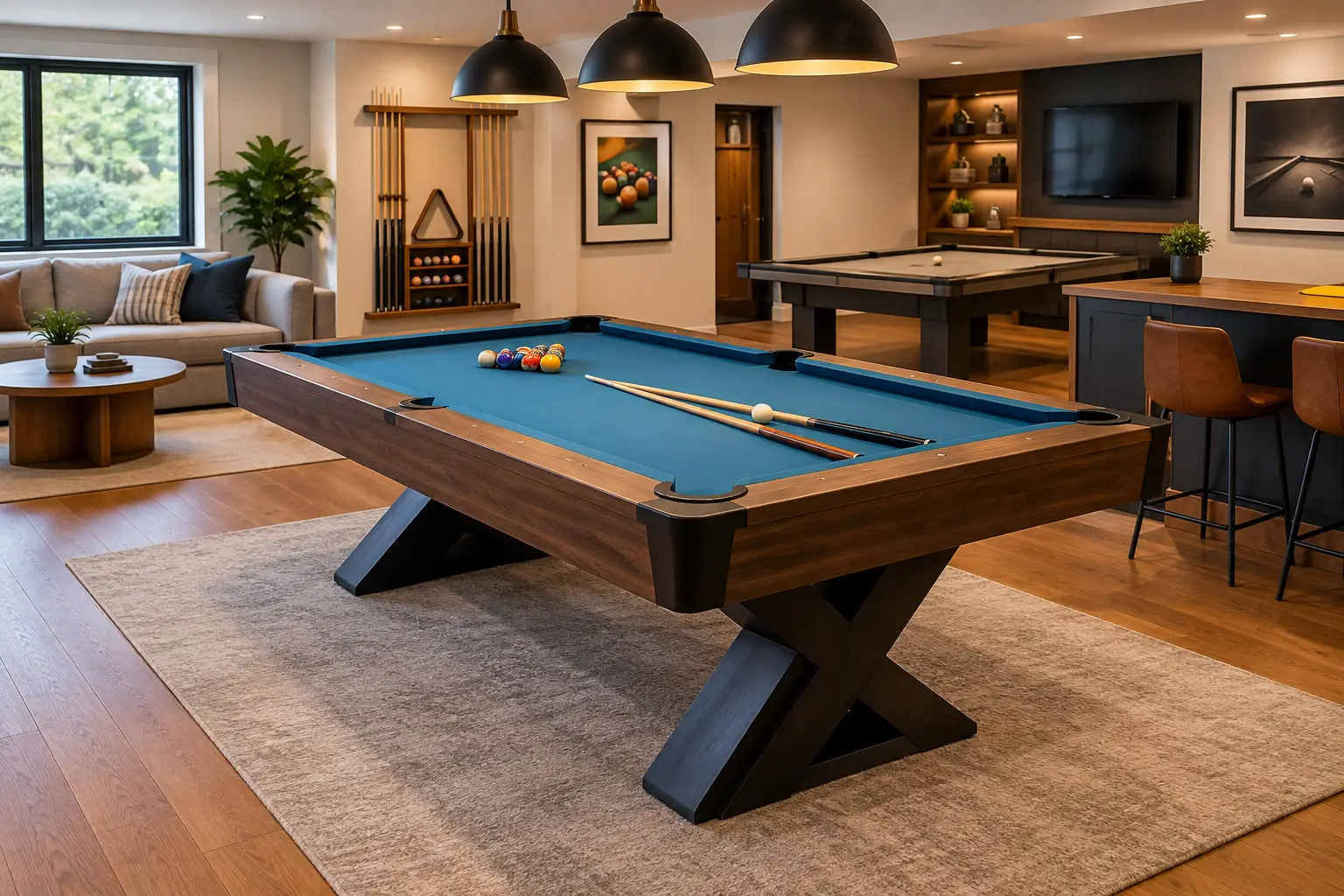
A bonus room can become the most used room in the house – or the place where a pool table looks great but rarely gets played. The difference usually comes down to planning bonus room billiards around the way your family actually lives: enough room for a full stroke, seating that does not crowd the table, lighting that works, and a table built to outlast the excitement of move-in day.
For Arizona homeowners furnishing a game room, the pool table is often the anchor piece. Choose it correctly, and the room becomes a destination for family nights, visiting friends, birthdays, and serious practice. Choose it by guesswork, and you may end up with tight shots, damaged walls, and a table that feels like an expensive compromise.
Start With the Room, Not the Table
The first question is not whether you want an 8-foot or 9-foot table. It is whether your bonus room gives players enough cue clearance on every side. A table can physically fit in a room while still being frustrating to play on.
A standard 8-foot pool table has a playing surface of roughly 44 by 88 inches. A 9-foot table measures about 50 by 100 inches. Add room for a standard 58-inch cue, a player’s stance, and a comfortable swing, and the recommended finished room size grows quickly.
For an 8-foot table, a room around 13 feet 10 inches by 17 feet 4 inches is a strong starting point. For a 9-foot table, plan for about 14 feet 4 inches by 18 feet 4 inches. These are practical dimensions for standard cues, not simply minimum measurements that force players to shorten every other shot.
If your room is slightly tight, that does not automatically rule out a pool table. Shorter cues can solve occasional wall-side shots, especially near a stairwell or built-in cabinetry. But if multiple sides are consistently restricted, moving down a table size is usually the better long-term decision. A table that plays well will get used more than a larger table that demands compromises.
Measure the Finished Space
Measure after considering baseboards, window ledges, wet bars, furniture, door swings, and built-ins. A bonus room may look open during construction, then lose valuable playing space once a sectional, media cabinet, and bar stools arrive.
Also consider the route into the room. Professional billiard installers can disassemble and reassemble a quality table when needed, but stair turns, low ceilings, and narrow hallways should be reviewed before delivery day. Planning ahead protects both your home and your investment.
Choose a Table Size for How You Play
An 8-foot table is the sweet spot for many home game rooms. It offers a serious playing experience without requiring the dedicated footprint of a 9-foot table. It is equally at home in a refined Scottsdale bonus room, a Peoria family game room, or a finished space above the garage.
A 9-foot table makes sense when the room is generous and the household includes experienced players who want tournament-style dimensions. It has presence, and it plays differently. Longer shots require more precision, while the larger surface rewards practiced position play.
A 7-foot table can be a smart solution for compact rooms, lofts, and casual entertainment areas. It is not automatically a lesser choice. The key is buying a well-built table with true slate, quality cushions, and professional installation rather than selecting a lightweight furniture-grade table simply because it is available at a big-box store.
Build Bonus Room Billiards Around Real Quality
A pool table is furniture, but it is also a precision playing surface. The construction hidden beneath the finish determines whether it remains level, plays consistently, and holds up through years of family use.
Look for a table with a 1-inch Brazilian slate bed, ideally in three pieces for precise installation and future service. Slate is the foundation of true roll. Lower-cost tables may use thinner slate, MDF, particleboard, or other substitutes that can sag, warp, or become difficult to level in Arizona’s dry climate and seasonal temperature changes.
The frame matters just as much. Solid hardwood construction provides the strength to support heavy slate without flexing. K66 gum rubber cushions deliver reliable rebound, while tournament-grade wool felt gives the table a fast, consistent playing surface that looks appropriate in a finished home.
These specifications are not just technical talking points. They are what separate a table that feels right from one that becomes difficult to enjoy after a few years. A well-built American-made table can be refinished, recovered, moved professionally, and kept in service for decades.
Make the Table Belong in the Room
The best game rooms do not look like a pool hall dropped into a spare bedroom. They feel intentional. This is where custom finishes, felt colors, leg styles, and pocket details make a major difference.
For a warm transitional bonus room, a medium walnut or weathered oak finish can tie into existing flooring and cabinetry. A black or espresso table brings definition to a contemporary space with lighter walls. Traditional homes often pair beautifully with carved legs, leather drop pockets, and classic green or burgundy felt, while modern rooms may call for clean lines, matte black hardware, and charcoal, navy, or camel felt.
Do not choose felt color from a small sample alone. Think about the room’s natural light, wall colors, and how often the space will be used. Bright red or electric blue can make a statement, but a more restrained color may remain appealing longer. If the pool table shares space with a large television, darker felt can also reduce reflected glare during movies and game days.
The Billiard Broker helps homeowners work through these choices in a private, no-pressure showroom appointment, where you can compare finishes and build a table that fits the room rather than settling for whatever is sitting on a retail floor.
Plan Lighting, Seating, and Storage Early
A billiard light should illuminate the entire playing surface without shining into a player’s eyes. Hang the fixture centered over the table and leave enough clearance for tall players to move comfortably around it. The fixture style can be traditional, industrial, or contemporary, but even, shadow-free light is the priority.
Seating works best at the perimeter of the room. A pub-height table, a few stools, or a compact lounge area lets guests socialize without blocking shots. Avoid placing deep sofas too close to the rails. You want a clear path around the table, especially when several people are playing.
Storage deserves a plan as well. A wall-mounted cue rack or freestanding floor rack keeps cues protected and prevents them from ending up against a wall where they can warp. Include a discreet place for chalk, brushes, balls, and a cover. Small details make the room easier to use and easier to keep looking finished.
Do Not Treat Installation as an Afterthought
A premium table can only play as well as it is installed. Professional installers assemble the frame, place and level each slate section, fill the seams, stretch the cloth, align the rails, and test the final playing surface. This is detailed work, not a quick furniture delivery.
A table should also be leveled on the floor it will live on, after construction is complete and before the room fills with furniture. In upstairs bonus rooms, this is especially important. Minor settling is normal over time, which is why working with a billiards specialist who also handles maintenance, repair, and moves gives you a practical ownership advantage.
Dealer-direct pricing matters here, too. Traditional showrooms often add layers of retail overhead that inflate the price without improving the table or installation. When you can buy a custom, solid-hardwood table with 1-inch Brazilian slate for far less than conventional retail pricing, you keep more of the budget available for lighting, seating, accessories, and professional service.
Give the Room a Reason to Stay Active
The most successful bonus rooms are flexible. Add a shuffleboard table if the dimensions allow, create a small beverage station away from the rails, or include a television positioned for viewing without distracting players. The goal is not to fill every inch. It is to create a room people naturally choose over separate corners of the house.
Before ordering, bring room measurements, photos, flooring samples, and a realistic picture of how the space will be used. A great pool table is not simply the largest model you can squeeze into the room. It is the right size, built with the right materials, finished for your home, and installed to play correctly from the first rack onward.
Schedule a private showroom appointment before you commit to a table. One careful conversation about your room can save you thousands in retail markup and years of wishing you had planned the space differently.