
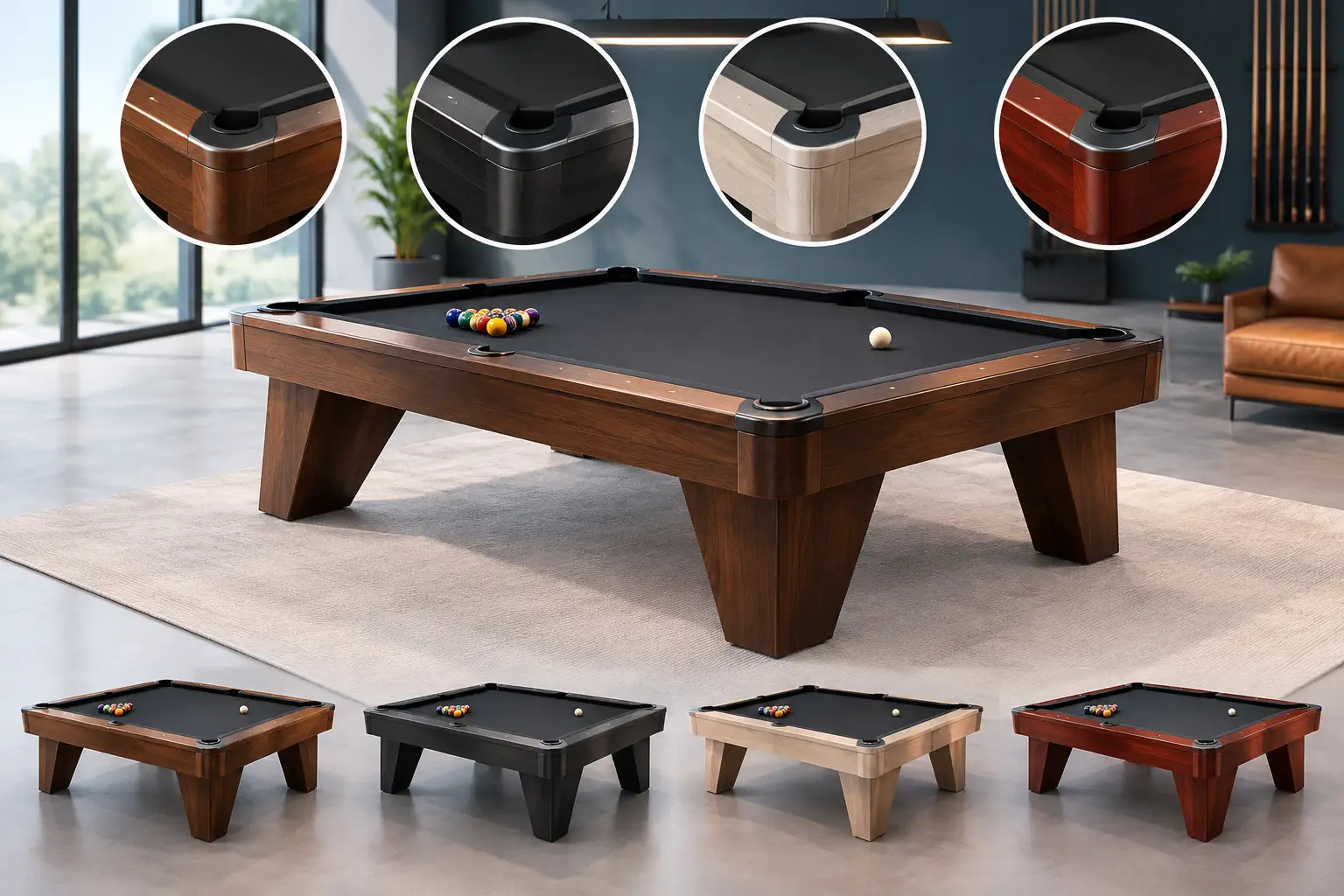
A beautiful pool table can anchor a game room for decades, but the wrong finish can look tired long before the slate, cushions, or cloth need attention. Homeowners asking which pool table finish lasts are usually asking two separate questions: Which surface resists everyday wear, and which color or style will still look right after years of family gatherings, rack-and-break weekends, and changing décor?
The straight answer is this: a professionally applied catalyzed lacquer or conversion-varnish finish on solid hardwood is usually the best long-term choice for an indoor pool table. It offers the right balance of hardness, repairability, color stability, and furniture-grade appearance. The color you choose matters, but the materials underneath it and the topcoat protecting it matter more.
Which Pool Table Finish Lasts Best?
For most Arizona homes, a catalyzed lacquer or conversion-varnish finish is the strongest all-around option. These are factory-applied finishes that cure into a durable protective film rather than simply drying on the surface. A quality finish resists minor scratches, hand oils, drink-ring accidents, and the routine contact that comes with playing pool and entertaining.
That does not mean every glossy table is equally durable. A high shine can look impressive in a showroom while revealing fingerprints and fine scratches more easily at home. A satin or low-sheen catalyzed finish often delivers the better ownership experience because it hides normal use without sacrificing a polished, upscale look.
A finish is only as good as the table beneath it. Solid hardwood frames, rails, and legs move less predictably and hold fasteners better than particleboard or thin veneer construction. On a premium table built around solid hardwood and a rigid, one-inch Brazilian slate playing surface, the finish is protecting a piece of furniture designed to remain in place for years, not disguising an entry-level build.
Why Catalyzed Finishes Outperform Basic Lacquer
Traditional nitrocellulose lacquer has been used on furniture for generations. It can look beautiful, and it is relatively easy to touch up, but it is softer and more vulnerable to moisture, heat, household chemicals, and repeated wear than modern catalyzed systems.
Catalyzed lacquer adds a hardener that creates a more durable finish after curing. Conversion varnish uses a similar approach and is known for excellent resistance to moisture and chemicals. Either can be a strong choice when applied properly in a controlled manufacturing environment.
The practical difference is simple. A basic finish may scuff when a cue case is set down or show dull spots where hands repeatedly rest on the rail. A properly cured catalyzed finish is better equipped to handle real family use. It will not make a table indestructible, but it gives you a much larger margin for normal life.
Finish Color Affects What You See, Not Just Style
There is no single stain color that physically lasts longer than all others. Dark walnut, espresso, natural oak, weathered gray, and black finishes can all perform well when they receive the same quality topcoat. What changes is how each finish shows wear.
Dark, high-gloss finishes create a dramatic luxury look, especially in formal game rooms and contemporary spaces. They also make dust, fingerprints, and fine surface scratches easier to notice. This is not a reason to avoid them. It is simply a reason to choose them knowingly.
Medium brown stains, warm walnut tones, and satin sheens tend to be the most forgiving. Their natural variation helps conceal light dust and everyday marks. They also coordinate easily with wood flooring, leather seating, and warm Arizona interior palettes.
Light natural finishes can remain timeless, particularly in modern, coastal, and transitional homes. However, pale wood shows dark scuffs more readily, while very dark finishes can show light scratches. If low-visibility maintenance is your priority, a medium-tone satin finish is usually the safe bet.
Painted finishes deserve a separate conversation. A professionally painted pool table can look exceptional in white, charcoal, navy, or custom colors. Yet paint is generally more likely than a penetrating wood stain to chip at edges if the table receives hard impacts. For a formal room with careful use, painted furniture can be a great design decision. For a heavily used family game room, stained hardwood with a durable clear topcoat is often the more forgiving investment.
Distressed Finishes Are Great at Hiding Life
A hand-rubbed, wire-brushed, weathered, or distressed finish does not necessarily have a tougher topcoat than a smooth finish. Its advantage is visual: it is designed with natural variation, texture, and character from the beginning. Small dings and minor scratches blend in instead of calling attention to themselves.
That makes a distressed finish especially practical for homes where the table will be played often by kids, teenagers, guests, and serious players. It can also work beautifully in rustic, farmhouse, western, and casual luxury spaces.
The trade-off is permanence of style. A distressed table is not as universally adaptable as a classic walnut or traditional espresso finish. If you plan to keep the table through several redesigns, choose a finish that complements the architecture and permanent features of the home, not only the current wall color or furniture trend.
The Biggest Threats to a Pool Table Finish
Most premature finish damage is preventable. Direct sunlight is one of the leading concerns in Arizona, where intense UV exposure can fade wood tones and dry out materials over time. A table near large windows should have blinds, shades, or UV-filtering window treatments when the room is not in use.
Heat and moisture matter too. Indoor climate control protects the wood, glue joints, cloth, and finish. Avoid placing a table directly under an HVAC vent, against a wall with significant temperature swings, or in an unconditioned garage. A standard indoor table is not an outdoor table, even under a covered patio.
Everyday habits also leave their mark. Drinks should stay on side tables, not rails. Avoid aerosol furniture polish, silicone sprays, and harsh all-purpose cleaners. These products can create a greasy buildup, affect sheen, or make future touchups more difficult. For normal cleaning, use a soft, slightly damp microfiber cloth, then dry the surface immediately.
Move accessories with care. A heavy rack dropped onto a rail, a sharp cue butt dragged across an apron, or a metal buckle rubbing along a corner can damage even a premium coating. Durable does not mean careless, but a high-quality finish makes normal ownership far less stressful.
Construction Matters as Much as the Finish
A pool table is not a dining table with pockets. It carries substantial weight, experiences repeated vibration from play, and must remain level to perform correctly. The finish will age better when the underlying cabinet, rails, and legs are built from stable materials and professionally assembled.
Solid hardwood gives a table the depth, grain, and long-term repair potential that veneer-heavy construction cannot match. It can be refinished or professionally restored if an accident occurs years down the road. Thin veneers may look convincing initially, but a deep scratch can expose the substrate beneath and leave fewer repair options.
Professional delivery and leveling also protect the table from day one. A slate pool table should never be treated like ordinary furniture during a move. Correct disassembly, transport, reassembly, and precision leveling protect the frame and prevent unnecessary stress on the cabinet, finish, slate seams, and rails.
Choosing a Finish for Your Home, Not a Showroom
The best finish is the one that matches how you will actually use the room. For a refined formal space with controlled light and adult use, a dark gloss or painted custom finish may be exactly right. For a busy family room, a medium-tone walnut or textured satin finish will often look better with less effort over the years.
At a private showroom appointment, The Billiard Broker can help you compare finish samples against your flooring, cabinetry, and furniture rather than asking you to guess from a small online image. That is especially valuable when selecting a made-to-order table, because the right finish should complement the room for the long haul, not just win the first impression.
If durability is your priority, ask specifically about the finish system, the hardwood species, the sheen level, and how the manufacturer handles future touchups. Then choose the color you will be happy to see every time you walk into the room. A well-built table in a practical finish becomes more than a game-room purchase – it becomes the place where people keep coming back together.