
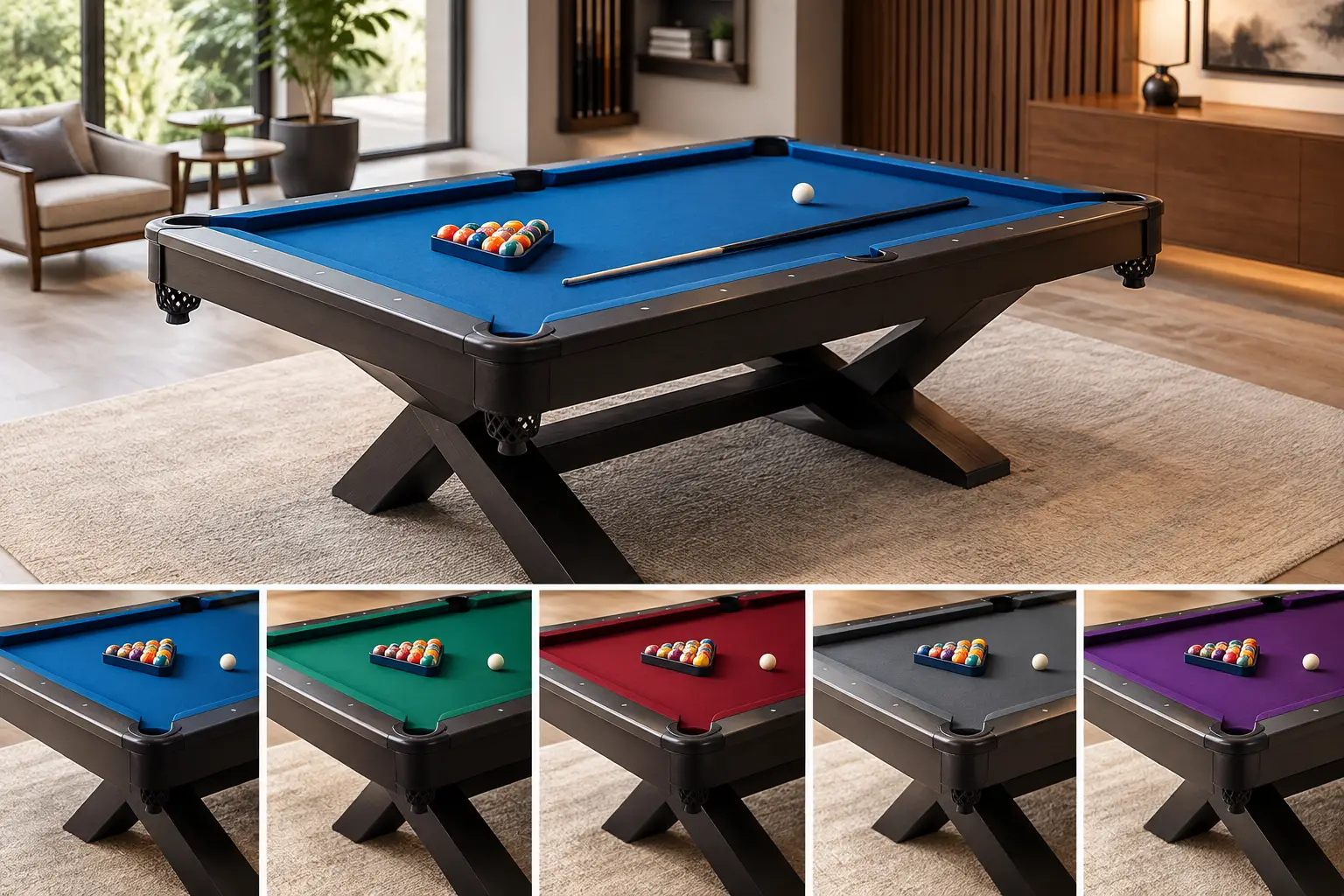
A pool table can be the centerpiece of a game room, but the cloth is what most people see first. The right color can make a traditional table feel tailored to a formal home, give a bonus room a clean modern look, or add personality to a space built for family gatherings. With so many pool table cloth color options available, the best choice is not always the color that looks best in a small fabric sample.
It should work with your table’s wood finish, the room’s lighting, how the table will be used, and the look you want to enjoy years from now. A well-built pool table with 1-inch Brazilian slate and solid hardwood construction deserves a cloth selection that feels equally considered.
Start With the Room, Not the Swatch
Cloth color is part of the room’s overall design. Before choosing it, look at the finishes that are already permanent or expensive to change: flooring, cabinetry, wall color, stone, leather seating, and lighting. A color that looks sharp under showroom lighting may read very differently under warm recessed lights, pendant fixtures, or natural Arizona sunlight.
For most homeowners, the safest approach is to decide whether the table should blend into the room or act as a focal point. A charcoal, taupe, camel, or classic green cloth can support the rest of the décor without competing for attention. Navy, wine, electric blue, or red creates more visual energy and gives the table a stronger presence.
There is no single correct answer. A dark cloth may be perfect in a bright open-concept entertainment space, while the same color could make a smaller room feel heavier. The table size, wall colors, and amount of natural light all matter.
Classic Green Still Has a Place
Traditional green remains one of the most popular pool table cloth color options for good reason. It has a familiar billiard-room look, works beautifully with oak, mahogany, espresso, and black finishes, and tends to feel timeless rather than trendy. Homeowners who want their table to look like a serious game table often start here.
Green also offers practical advantages. Mid-tone greens are forgiving with normal dust and chalk residue, especially compared with very dark or very light cloth. They provide strong visual contrast with most balls without feeling overly bright.
The trade-off is style. If your home leans contemporary, desert-modern, or minimalist, traditional green may feel more clubroom than custom furniture. A deeper emerald can bridge that gap, but it should be viewed alongside the table finish rather than selected on its own.
Tournament Blue for Players Who Want Visibility
Tournament blue has become a favorite among dedicated players and homeowners who want a clean, professional appearance. The color provides excellent contrast with object balls and is common on televised professional tables, so it immediately signals a more competitive feel.
It also works surprisingly well in modern homes. A medium or deeper blue pairs well with gray walls, white cabinetry, black accents, and natural woods. On a table with a dark walnut or black finish, tournament blue looks crisp without becoming too flashy.
For a household that plays frequently, blue is one of the most practical options. It is easy on the eyes during longer sessions and offers a polished look that does not depend on traditional game-room décor.
Modern Neutrals: Gray, Charcoal, and Taupe
Neutral cloth colors are often the right answer for homeowners who are investing in a custom table as furniture first and a game table second. Gray, charcoal, and taupe can make a pool table feel at home in a refined living area, high-end basement, or multipurpose bonus room.
Gray is particularly flexible. A lighter gray can complement contemporary interiors, while a medium slate gray adds contrast without the intensity of black. Charcoal has a dramatic, tailored appearance, especially with chrome or black hardware and dark-stained hardwood. It does, however, show light-colored chalk and dust more readily than mid-tone colors.
Taupe, camel, and tan work well with warm woods, stone floors, leather furniture, and Southwestern-inspired interiors. These colors are less common than green or blue, which is exactly why some homeowners choose them. They create a custom look without turning the table into a loud design statement.
If you are selecting a neutral cloth, ask to see it against your preferred wood finish. A cool gray beside a warm reddish wood can clash, while a greige or taupe may tie the entire piece together.
Rich Colors for a Statement Table
Burgundy, wine, red, and deep purple bring a formal, lounge-like quality to a pool table. They can look exceptional in a dedicated game room with dark cabinetry, leather seating, warm lighting, and traditional wood finishes. These colors are especially effective when the table is meant to feel substantial and luxurious.
The caution is that strong colors can date faster than neutrals. That does not mean you should avoid them. It means they should be a deliberate part of the room’s palette. If you already have a bold rug, patterned wallpaper, or bright art, a calmer cloth may give the room better balance.
Black is another statement choice. It looks sleek and upscale on the right table, but it is the least forgiving color for chalk marks, pet hair, lint, and dust. It can also reduce ball visibility in low lighting. Black makes sense for a carefully designed modern room, but it is rarely the best low-maintenance choice for an active family game room.
Match Cloth Color to Table Finish and Pockets
A pool table is a combination of materials, not just a playing surface. The frame finish, rail caps, pockets, sights, and cloth should look intentional together.
A natural, honey, or medium oak finish tends to pair well with classic green, camel, tan, navy, or burgundy. Dark walnut and espresso finishes have more flexibility: tournament blue, emerald, charcoal, gray, and wine all create a premium contrast. Black tables look sharp with blue, gray, charcoal, or a dramatic red, while weathered or rustic finishes often benefit from softer earth tones and muted greens.
Pocket style also affects the final look. Traditional leather drop pockets reinforce the warmth of green, burgundy, and tan cloth. Shield pockets or more contemporary pocket treatments can support a gray, blue, or charcoal design. Small details matter because they separate a table that simply has custom options from one that looks professionally specified.
Consider How You Will Actually Use the Table
A family table and a serious practice table may need different priorities. If children, guests, and frequent entertaining are part of the plan, select a color that will stay presentable between cleanings. Mid-tone green, blue, gray, and burgundy are generally more forgiving than white, cream, very light gray, or black.
For serious players, ball visibility should carry more weight. Tournament blue and traditional green remain proven choices because they create dependable contrast. You can absolutely play on gray or red cloth, but the experience is more personal than universal. Whenever possible, view full-size cloth samples under realistic lighting before making the final selection.
Cloth quality matters as much as color. Tournament-grade wool felt gives a table a better playing surface and a more refined appearance than thin, entry-level fabric. Proper installation matters too. Even premium cloth will not perform correctly if it is not stretched and fitted by professionals after the table has been precisely leveled.
Make the Color Decision Part of the Custom Process
Choosing cloth should come after you have narrowed down table size, style, and finish, not before. A seven-foot table in a casual family room may call for a completely different palette than an eight-foot or nine-foot table in a dedicated billiards room. The same is true for a rustic farmhouse table versus a clean-lined contemporary model.
At The Billiard Broker, a private showroom appointment gives Arizona homeowners the opportunity to compare table finishes, pocket treatments, and cloth samples together rather than guessing from an online image. That is how you avoid spending thousands on a table that is technically well made but visually wrong for your home.
Bring a few photos of your room, your flooring, and any furniture that will sit nearby. A phone photo is often enough to identify whether a warm, cool, traditional, or modern direction makes the most sense. Once the right combination is in front of you, the decision becomes much easier.
A pool table should invite people to play, but it should also earn its place in the room when no one is holding a cue. Choose the cloth color that makes you want to look at the table every day, then protect that investment with professional delivery, installation, and care from the start.