
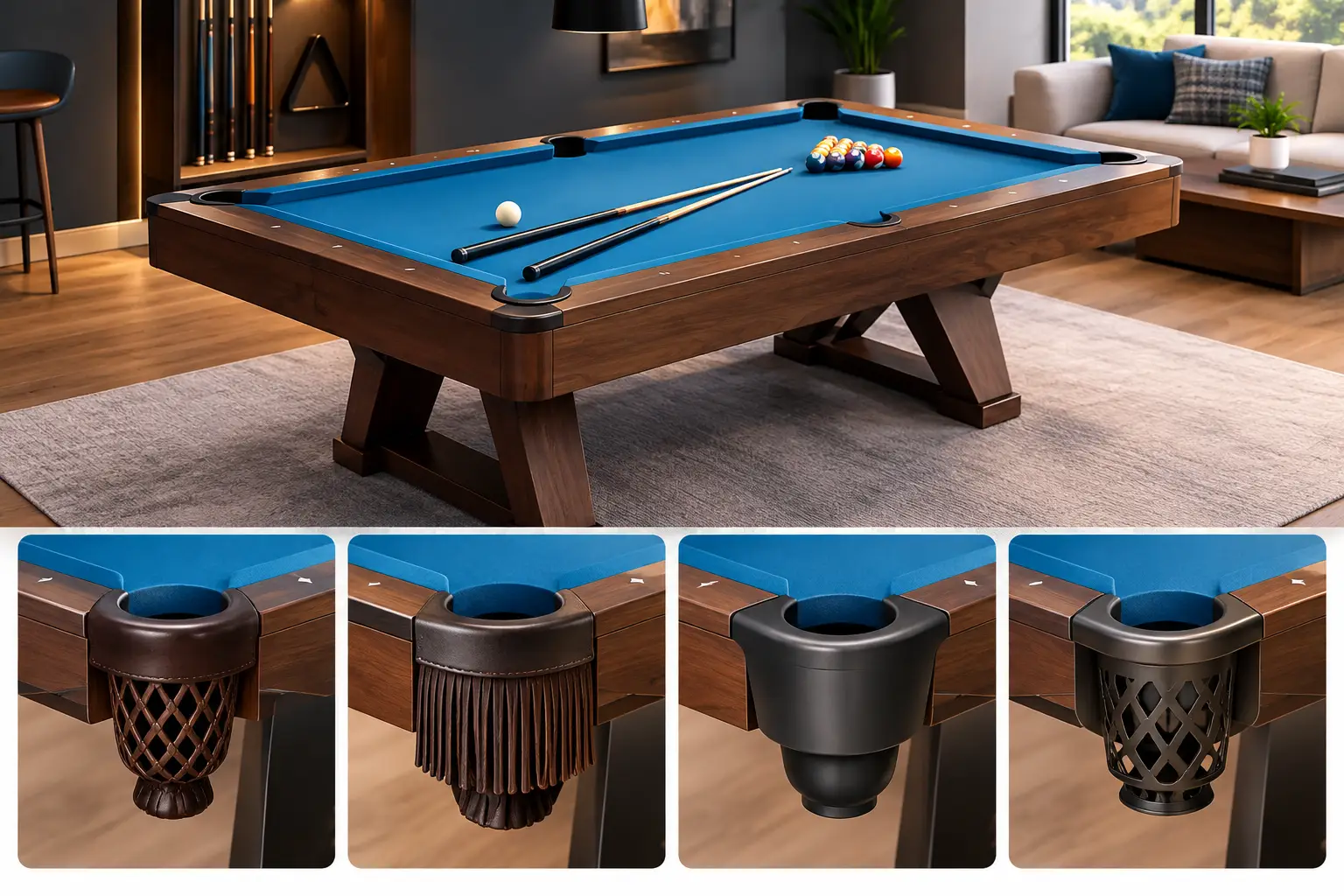
A pool table’s pockets are one of the first details guests notice and one of the details you will touch every time you play. Selecting pool table pocket styles is not simply a matter of choosing a color. The right pocket design helps define whether your table feels like a clean, contemporary centerpiece, a traditional furniture-grade heirloom, or a serious player’s table built for frequent games.
For Arizona homeowners designing a game room, great room, bonus room, or dedicated billiards space, pockets should coordinate with the table’s wood species, finish, felt, lighting, and surrounding furniture. They also need to stand up to years of balls dropping into them. That is why this small customization choice deserves more thought than a quick selection from a swatch book.
Start With How the Table Will Be Used
Before choosing a pocket style, consider who will be playing and how often. A table used for weekend family games has different priorities than one used by an experienced player practicing several nights a week. Both deserve quality, but the balance between decorative detail and everyday function may shift.
A household with young children or frequent guests often benefits from durable, easy-to-maintain leather pockets. A homeowner building a formal Western, rustic, or traditional game room may prefer the visual character of fringed pockets. If your goal is a more streamlined, updated room, clean leather drop pockets with simple shields generally make the strongest fit.
The feel of the room matters, too. A dramatic dark-stained solid hardwood table with burgundy felt can support richly detailed pockets. The same pockets may look overly busy on a light-finish table in a modern Scottsdale-style living space. Pocket selections should complement the table, not compete with it.
Selecting Pool Table Pocket Styles That Fit the Room
Most homeowners will choose among leather shield pockets, fringed pockets, and cleaner contemporary leather-pocket designs. Each has a place, and no single option is automatically better. The right choice depends on the look you want and the level of care you expect from the table.
Leather shield pockets: traditional without feeling dated
Leather pockets with decorative shields are a popular choice because they bridge classic billiard design and polished furniture styling. The shield is the shaped accent at the top of the pocket, often available in leather, metal, or coordinating finishes. It adds structure and visual definition at each corner and side pocket.
This style works especially well with traditional, transitional, lodge, and executive-office interiors. A darker leather pocket can add contrast against honey maple, oak, or weathered finishes, while a cognac or saddle leather can warm up a deep espresso table.
The practical advantage is durability. Quality leather wears in gracefully when it is properly made and maintained. Look for pockets that are securely fastened, have substantial stitching, and are paired with hardware that feels solid rather than thin or decorative only. A premium table should not have pocket components that look good at delivery but loosen after a year of family use.
Fringed pockets: more character, more commitment
Fringed pockets deliver an unmistakably traditional billiard-room look. They can be refined and elegant, especially on formal furniture-style tables with carved legs, detailed rails, and rich hardwood finishes. They also pair naturally with Old World, Victorian, rustic, and Western-inspired spaces.
There is a trade-off. Fringe creates visual texture, which is exactly why some homeowners love it, but it also makes a stronger design statement. In a minimalist space, it may feel too ornate. Fringe can also collect more dust than a simple leather pocket, particularly in homes with pets or game rooms that open to outdoor living areas.
Choose fringed pockets because they suit your room and your taste, not because they are assumed to be more upscale. A clean leather pocket on a beautifully built table can look every bit as premium – and may remain more versatile if you update the room later.
Clean leather pockets: the best fit for many modern homes
For a current, tailored appearance, simple leather drop pockets are often the strongest choice. They retain the familiar look and satisfying function of a traditional pool table while allowing the hardwood, rail profile, and felt color to do more of the visual work.
This is a smart direction for contemporary homes in Peoria, Paradise Valley, and across the Valley where open layouts and cleaner furnishings are common. Black, charcoal, chocolate, and neutral leather pockets tend to coordinate easily with both warm and cool wood finishes. They also work well when the pool table shares a space with a kitchen, media room, or formal living area.
A simple design is not a lesser design. In fact, restrained pocket detailing often makes the craftsmanship of a solid hardwood cabinet and precisely upholstered rails more visible.
Match Pocket Color to More Than the Felt
Many buyers naturally start by matching pocket leather to the felt. That can work, but it is not the only approach. The pockets should also relate to the wood finish, metal accents in the room, bar stools, cabinet hardware, and nearby upholstery.
Black leather pockets create crisp contrast on lighter woods and a refined tone-on-tone look on dark tables. Brown and saddle leathers bring warmth to rustic and traditional designs. Gray or charcoal options can feel more current, especially when the room includes black fixtures, iron lighting, or slate-colored finishes.
Avoid trying to match every element exactly. A dark leather pocket paired with championship green, graphite, or deep blue felt often looks more intentional than a close-but-not-quite match. The goal is coordination, not a room full of identical tones.
Pocket Style Cannot Fix a Poorly Built Table
A beautiful pocket attached to an entry-level table will not create a premium playing experience. Pocket style is the finish detail. The foundation is the table’s slate, frame, rail construction, cushion rubber, cloth, and professional installation.
For long-term ownership, start with a table built around 1-inch Brazilian slate, a solid hardwood cabinet, quality K66 gum rubber cushions, and tournament-grade wool felt. Those components affect roll, rebound, stability, and how the table performs through years of Arizona temperature changes and regular use.
The pocket opening itself also matters to players. Larger, more forgiving openings can make casual games more enjoyable. Tighter, more tournament-inspired pocket geometry adds challenge and rewards accuracy. Decorative pocket choices do not necessarily determine the opening size, so ask about playing specifications separately from the leather, fringe, or shield selection.
That conversation is particularly valuable for buyers upgrading from a lightweight recreational table. A serious home table should look like furniture, but it should play like billiard equipment.
Think About Installation and Future Service
A pocket choice should look right on day one and remain secure years later. Professional installation matters because the rails, pockets, slate seams, and leveling all work together. A table that is even slightly out of level changes the game, no matter how attractive the pockets look.
It also helps to buy from a company that can service the table after delivery. Whether you need new cloth, rail work, a move to another home, or a pocket repair after heavy use, specialized billiard service protects the investment you made in the first place.
At The Billiard Broker, a private showroom appointment gives homeowners the chance to compare pocket options against actual hardwood finishes and felt colors rather than relying on a small online image. You can see which combinations feel classic, which feel contemporary, and which belong in your home before the table is made.
Make the Choice in This Order
The easiest way to avoid an expensive design mismatch is to choose the table’s overall style first, then the finish, felt, and pockets. A carved traditional table usually calls for more decorative pocket options. A sleek, straight-line table is better served by cleaner leather pockets and understated shields.
Bring photos of your room, flooring, wall color, and nearby furniture to your showroom appointment. If you are unsure between two pocket styles, lean toward the one that fits the architecture and furnishings of the home rather than the trend of the moment. A well-built American-made pool table can stay in a family for decades, and the best pocket style is the one you will still be glad to see after thousands of games.
Schedule a private appointment, compare the materials in person, and choose pockets that make your table feel built for your home – not pulled from a retail floor.