
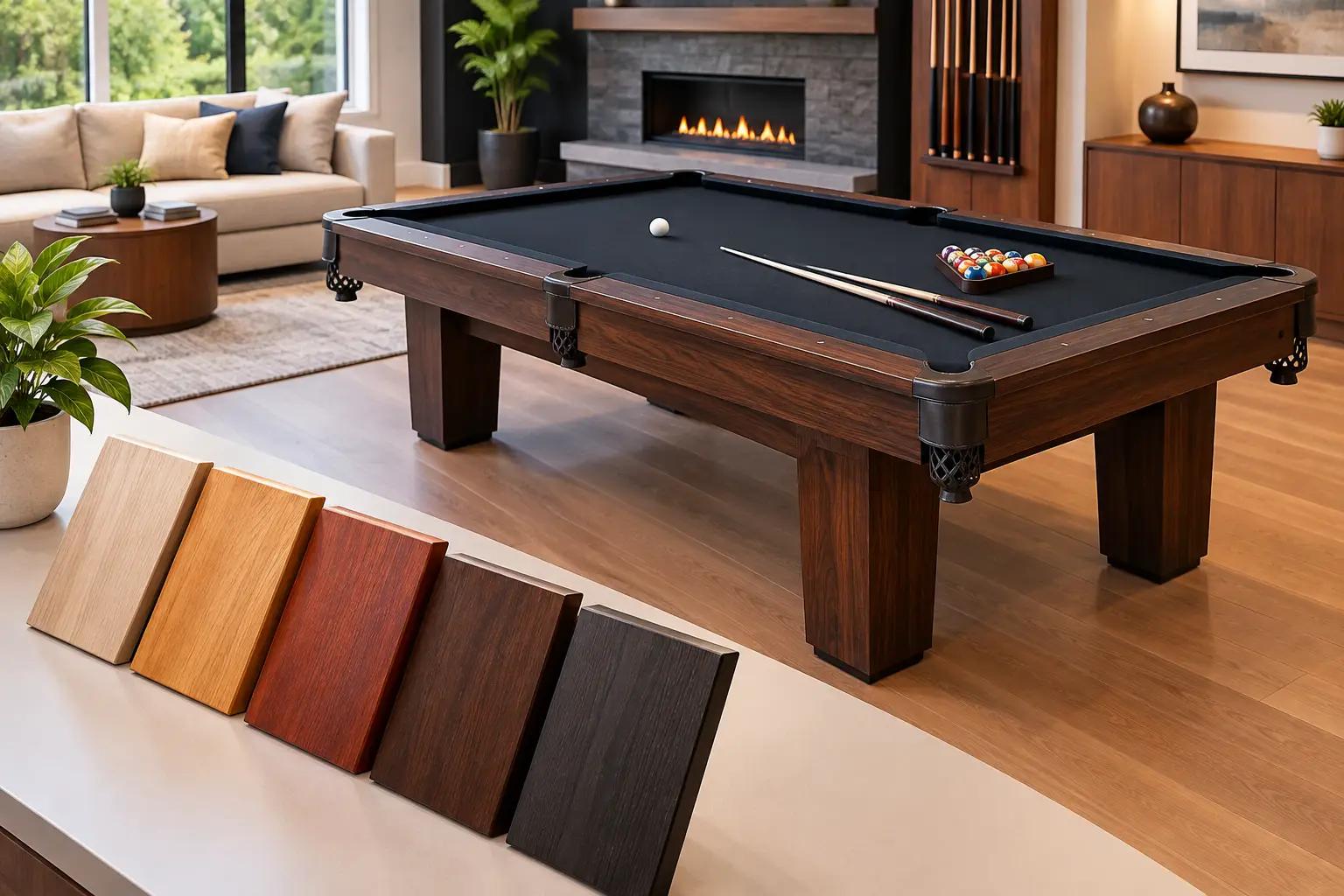
A pool table can be the best-looking piece in a game room or the one detail that makes the room feel disconnected. Learning how to match pool table stain is not about finding an identical wood color. It is about choosing a finish that works with your flooring, cabinetry, lighting, and the scale of the room – while still looking like a premium piece of furniture built to be played on.
For Arizona homeowners, this decision matters even more. Strong natural light, open-concept floor plans, and warm-toned interiors can change the way a finish reads from morning to evening. The right stain makes your table feel intentional. The wrong one can make a custom table look like it was added as an afterthought.
Start With the Wood You Are Matching
Before selecting a stain, identify the largest and most permanent wood surfaces in the space. In most homes, that means flooring, built-in cabinetry, exposed beams, fireplace mantels, or a large entertainment center. These elements set the visual direction of the room.
Do not assume every brown finish belongs together. Wood color has an undertone, and that undertone is usually what determines whether a room feels coordinated. A floor with red or orange undertones may fight a gray-brown table finish. A cool espresso stain can look sharp beside charcoal cabinetry but feel severe against honey oak flooring.
Look at the room in daylight, then again with the overhead and accent lighting turned on. Arizona sunshine can make warm stains appear lighter and more golden, while evening lighting often deepens dark finishes. A stain sample that looks perfect in a showroom may need a second look in the room where the table will live.
How to Match Pool Table Stain Without Making Everything Identical
The most common mistake is trying to match every wood surface exactly. Matching is difficult because hardwood species absorb stain differently, and age, grain pattern, finish sheen, and lighting all change the final color. Even two pieces made from the same wood can vary.
A better approach is coordination. Choose a pool table stain that is either within the same color family as your flooring or intentionally contrasts with it. If your floors are medium walnut, a slightly darker walnut or espresso table can create depth. If your floors are dark, a medium chestnut or weathered finish can keep the room from becoming too heavy.
The finish should share an undertone with the room whenever possible. Warm wood tends to work well with warm wood. Cooler, contemporary interiors often benefit from neutral brown, smoke, graphite, or black finishes. This gives the table presence without forcing an imperfect exact match.
There is one exception: when the table will sit directly beside built-in cabinetry or a bar. In that situation, a close match can look exceptional. Bring clear photos, cabinet samples, or a removable drawer front to your consultation so you can compare finishes accurately.
Choose the Stain for the Room, Not Just the Table
A pool table is substantial furniture. An 8-foot table often becomes the visual anchor of a bonus room, basement, or dedicated game room, so its finish influences how large, bright, or formal the space feels.
Light and medium stains are often the safer choice for smaller rooms or areas with limited natural light. They show the wood grain, feel more relaxed, and blend easily with desert contemporary, transitional, rustic, and casual family-room interiors. Medium walnut, chestnut, and natural finishes are especially forgiving when furniture changes over time.
Dark stains offer a more formal, furniture-grade look. Espresso, black, and deep mahogany finishes can be striking in a Scottsdale entertainment room, a traditional home office, or a space with substantial stone, leather, and darker cabinetry. The trade-off is that dark finishes show dust and minor surface marks more readily, and they can visually overpower a compact room.
Gray and weathered finishes suit modern interiors, but they require restraint. A gray table looks best when the room already has cool neutrals, black metal accents, clean-lined furniture, or gray-toned flooring. Placing it beside strongly orange or red wood can make both finishes look wrong.
Consider Felt Color Before Finalizing the Finish
The cabinet stain and cloth color should be selected together. A pool table is not just a wood frame with fabric on top. The felt is a large field of color, often visible from adjoining rooms, and it can change the character of the entire table.
Traditional green felt works with almost any hardwood finish and remains a smart choice for homeowners who want a classic billiard-room look. Championship blue creates a more tournament-inspired appearance and pairs especially well with black, espresso, or medium walnut cabinets. Charcoal, burgundy, camel, and other custom cloth colors can look excellent, but they should support the room instead of becoming a competing design element.
If you want the table to feel like a refined piece of home furniture, let the cabinet finish lead and keep the cloth more traditional. If the room is designed around sports, entertaining, or a bold personal style, the felt can take a more prominent role.
Get Samples and Compare Them the Right Way
A digital photo is useful for narrowing options, but it is not enough for making the final decision. Phone screens, showroom lighting, camera settings, and online images can all alter wood color. Request or view physical finish samples whenever possible.
Place samples flat against the floor, then hold them vertically near cabinetry and walls. Wood reflects light differently depending on its angle, and a stain can look much darker on the vertical apron of a table than it does on a small horizontal sample.
Pay attention to sheen as well as color. A satin finish tends to feel current and practical, helping conceal everyday fingerprints and minor dust. A glossier finish can look more formal but may highlight reflections and surface wear. For active family game rooms, a durable satin or low-luster finish is often the better long-term choice.
Do Not Sacrifice Construction for a Pretty Finish
A beautiful stain is only worth choosing when it covers a table built for long-term performance. Veneer-heavy furniture may photograph well, but it does not offer the same durability, repairability, or furniture-grade presence as a solid hardwood pool table.
The cabinet should support the playing system, not merely surround it. Look for solid hardwood construction, a true 1-inch Brazilian slate bed, K66 gum rubber cushions, and tournament-grade wool felt. These details affect roll, rebound, leveling stability, and how the table performs after years of family use.
Stain selection also has a practical side. A quality hardwood cabinet can be refinished or repaired more successfully than low-cost composite materials if it is scratched during a move or damaged by an accident. That matters when you are making a purchase intended to stay in the home for decades.
Make the Decision in a Private Showroom Setting
Choosing a finish from a tiny swatch rack under harsh retail lighting is not a luxury buying experience. It is a guess. A private appointment gives you time to compare cabinet stains, pocket options, rail styles, and cloth colors without the pressure of a crowded showroom or a salesperson pushing whatever happens to be in stock.
At The Billiard Broker, the process is designed around customization rather than forcing homeowners into a limited inventory selection. Bring flooring photos, paint colors, fabric samples, or cabinet details. Then compare those references against actual table finishes and choose a combination that fits the room, your budget, and how you plan to use the table.
Dealer-direct pricing also changes the conversation. You should not have to accept a generic finish because a traditional retailer marked up a standard-floor model. A made-to-order, American-made table gives you the freedom to select the stain and design details you actually want while protecting the value of your investment.
Plan for Delivery, Installation, and the Years Ahead
A perfectly chosen finish still needs professional delivery and installation. Pool tables are precision equipment. The slate must be assembled, leveled, and covered correctly so the table plays true and the cabinet sits properly in the room. This is not a job for a general moving crew.
Before delivery, confirm the final location and consider what will surround the table. Leave appropriate cueing space, avoid placing it in direct, prolonged sun when possible, and use window coverings if intense light reaches the room daily. Sun exposure can gradually change the appearance of hardwood and cloth, especially in bright Arizona homes.
The best stain is the one that still feels right after the novelty wears off: a finish that belongs with your home, supports the table’s craftsmanship, and gives your family a place worth gathering around. Bring the details of your room to a private appointment, compare real samples, and make a choice you will be glad to see every time you walk in.