
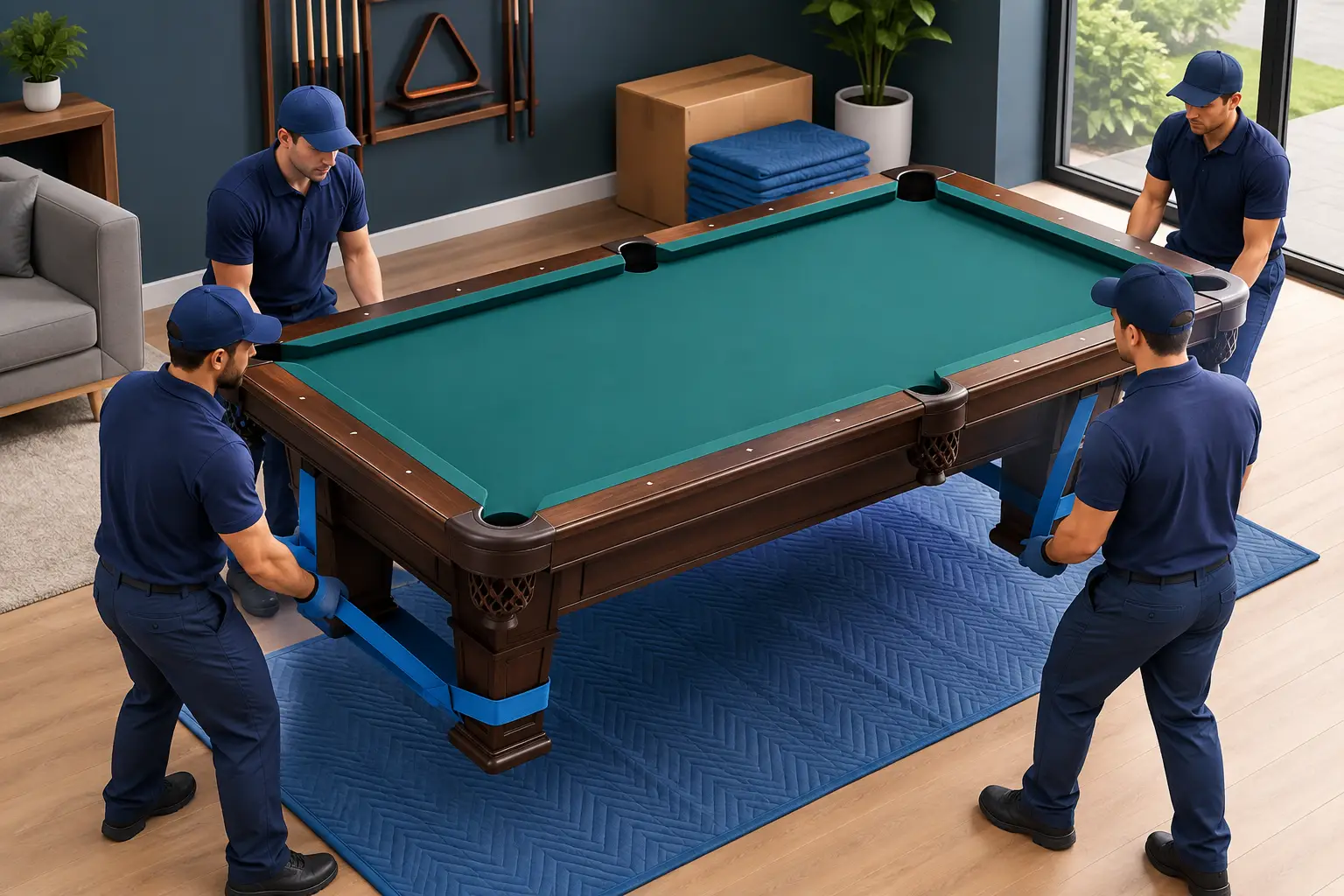
A slate pool table is not a piece of furniture you slide across the room with a few friends. Its playing surface is made from heavy stone, its frame is designed to support that weight in a specific way, and its level affects every shot. Learning how to move a slate table means understanding when a careful DIY move is realistic and when professional billiard service is the far less expensive choice.
A damaged slate, torn felt, bent rail, or table that never rolls true again can quickly erase any money saved by handling the move casually. Whether you are relocating within your home, moving across town, or preparing for a new Arizona address, the goal is the same: protect the table’s components and have it professionally level when it reaches its new room.
Why a Slate Pool Table Requires a Different Move
Most quality home pool tables use either a three-piece slate bed or one solid slate piece. A regulation-size slate bed can weigh several hundred pounds by itself, while a fully assembled table may weigh 700 to more than 1,000 pounds. The slate is stable when supported by the cabinet and frame. Once that support is removed, it can crack from a hard impact, twisting pressure, or improper lifting.
The felt is another concern. Tournament-grade wool felt is durable during play, but it can stretch, wrinkle, stain, or tear during an unplanned move. Rails also need to be removed and labeled carefully. Their bolt pattern, pocket liners, and cushion alignment all affect how the finished table plays.
This is why moving a slate table is usually a disassembly-and-reinstallation project, not a lifting project. A table that is only moving a few feet may be an exception, provided it stays fully supported and remains level. For a move through doorways, down stairs, into storage, or onto a truck, disassembly is the safer standard.
Decide Whether to Move It Yourself or Hire a Specialist
There is no single answer for every table. A compact, entry-level table on the same floor of a home may be manageable for a prepared group with the right equipment. A custom solid-hardwood table with Brazilian slate, fine wool felt, and a staircase in the plan deserves professional handling.
Hiring a billiard mover costs more upfront, but the service should include the work that protects the investment: disassembly, slate handling, packing, transport, reassembly, precision leveling, and often a warranty on the installation. This matters most when your table has sentimental value, premium materials, or a playing surface you expect to perform correctly for years.
Be especially cautious if your move includes stairs, narrow hallways, a tight turn, uneven outdoor ground, or a second-floor game room. A general household moving crew may be excellent with sofas and cabinets but may not carry the slate-specific tools, shims, and leveling experience a pool table requires.
How to Move a Slate Table: Start With a Real Plan
Before loosening a single bolt, measure the route. Measure the new room, door openings, hallways, stair landings, elevator interiors, and any turns between the truck and the final location. Confirm that the table will fit the room with enough cue clearance around all sides.
For a standard 8-foot pool table, homeowners typically need a room around 13 feet 6 inches by 17 feet for comfortable play with standard cues. You can make a smaller room work with short cues, but it is better to know that before the table is reassembled and leveled.
Take photos of the table from every side before beginning. Photograph rail positions, pocket hardware, leg attachment points, and any existing marks. Label parts in bags as they come off. Small hardware is easy to misplace, and guessing which rail bolt or pocket screw belongs where adds frustration later.
Gather the appropriate supplies before the work begins:
- Socket set, screwdrivers, and a staple remover
- Moving blankets, cardboard corner protection, and stretch wrap
- Heavy-duty straps, a furniture dolly, and a hand truck rated for the load
- Plastic bags, labels, and a marker for hardware
- A long carpenter’s level and quality wood or composite shims
Never plan to move slate using only blankets and muscle. The slate must be carried upright, edge-supported, and protected from collisions. It should not be laid flat in a truck where other items can flex it or rest weight on top of it.
Disassemble the Table in the Right Order
Begin by removing the balls, rack, cue accessories, and any detachable light or wall-mounted storage near the work area. Then remove the pockets and rails. Depending on the table, rail bolts may be accessed from underneath the frame. Keep each rail protected as soon as it comes off, especially if it has leather pockets or a detailed hardwood finish.
Next, carefully remove the felt. If you intend to reuse it, pull staples or adhesive slowly and fold the cloth cleanly. Older cloth may not reinstall well even when handled properly. A relocation can be a smart time to replace worn, faded, or stained felt with a color that better fits the new game room.
With the cloth removed, inspect the slate seams. Three-piece tables usually have beeswax or seam filler at the joints. Remove this material carefully before lifting the individual slate sections. Do not pry aggressively against the slate. The objective is to separate sections without putting a twisting load on an edge.
Once the slate is off, remove the legs and cabinet components as needed for the route. On many tables, the cabinet can move as a larger assembled piece after the legs come off. On others, more disassembly may be necessary. Keep all exposed wood surfaces wrapped and avoid taping directly to a finished surface.
Transport Slate, Rails, and Cabinet Pieces Separately
Each slate section should be wrapped in padded moving blankets and transported vertically on its long edge. Secure it so it cannot tip, vibrate excessively, or shift in transit. It takes at least two capable people to manage most slate pieces safely, and larger sections may require additional hands.
Avoid stacking slate sections directly against one another without cushioning. Do not put heavy boxes on them. Do not allow slate to hang over the edge of a dolly. The stone can appear indestructible until one poorly supported corner meets a curb, step, or truck threshold.
The cabinet and rails deserve the same care. Solid hardwood is made to last, but it can still dent or develop finish damage. Keep hardware with the matching component, not loose in the truck. A few minutes of organization at pickup can save hours during setup.
Arizona heat creates another reason to plan ahead. Do not leave a slate table or its felt in a hot truck longer than necessary. Extreme heat can affect adhesives, dry out leather details, and make a rushed installation more difficult. Schedule the work so the table can move directly from one conditioned space to the next whenever possible.
Reassemble and Level for the Way the Table Should Play
At the new location, place the cabinet exactly where you want it before installing slate. Once the slate, rails, and felt are back on, moving the table even a few inches becomes a major task. Check the table’s relationship to windows, ceiling lights, wall décor, and traffic flow – not just whether it physically fits.
Set the frame and legs, then confirm that the cabinet is stable before slate goes back on. Install each slate piece without forcing seams together. A qualified installer will level the frame and slate progressively, using shims where needed, then fill and smooth the seams before applying the cloth.
Precision leveling is not a cosmetic detail. A table can look level to the eye yet send a slow-rolling ball off line. Test multiple paths across the bed, including along rails and through the center. If the floor is uneven, which is common in many homes, the table needs careful adjustment rather than a quick fix under one leg.
Finally, reinstall the felt, rails, pockets, and hardware. The cloth should be evenly tensioned, the rails securely bolted, and the cushions aligned. Before the first game, roll several balls slowly in different directions and listen for loose hardware or unusual cushion response.
A premium pool table is built for decades of family games, entertaining, and serious play. Treating its move as specialized service protects that value. If your table is headed across Peoria, Scottsdale, or anywhere else in Arizona, The Billiard Broker can handle the details from careful breakdown through professional leveling, so the first rack in your new room feels exactly as it should.