
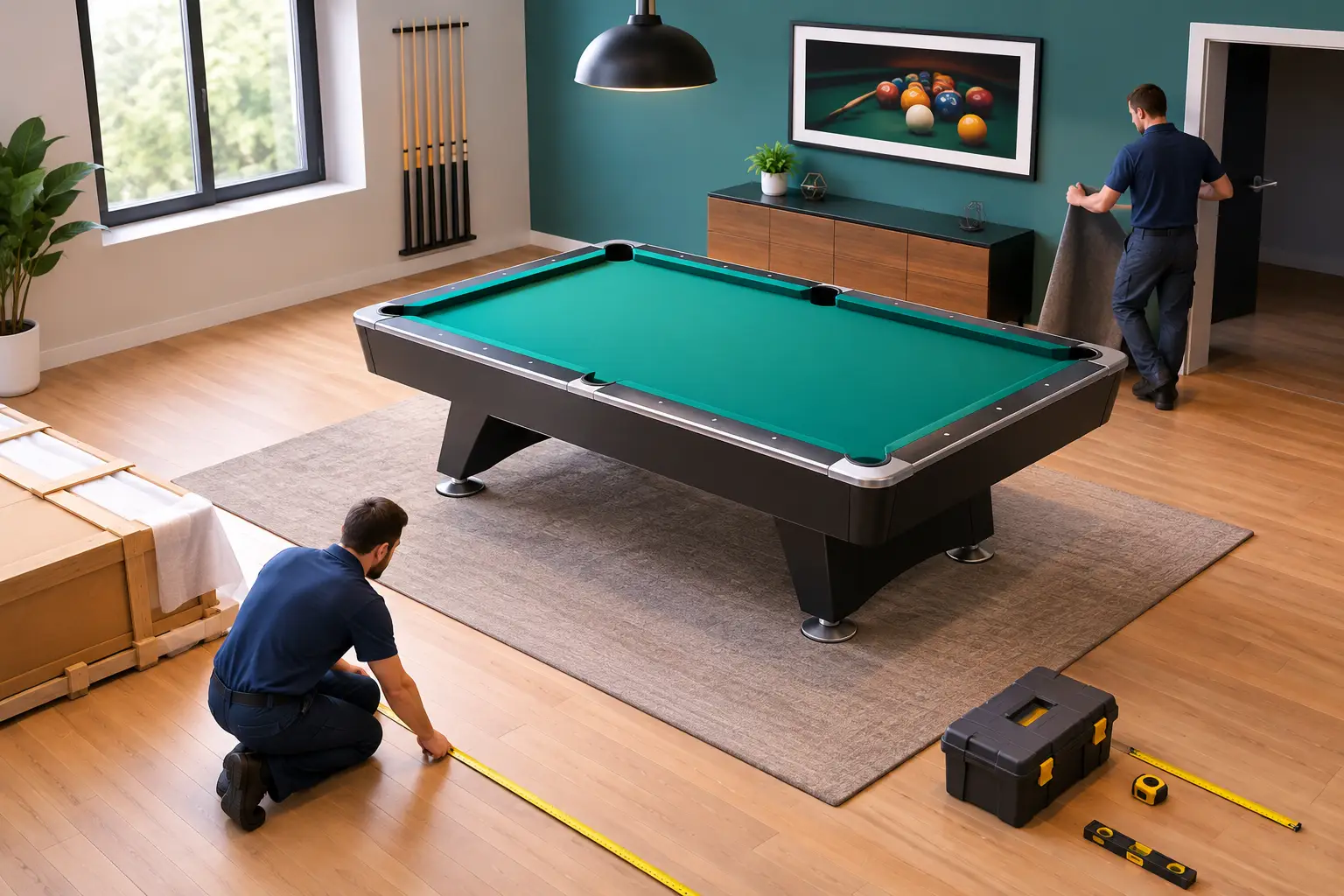
A pool table is not a piece of furniture you squeeze into an open corner and hope fits. When you prepare a room for billiard delivery, the difference between a good setup and a frustrating one comes down to a few inches of clearance, a clear delivery path, and a floor that can support a precision-leveled table for years.
A quality home table with one-inch Brazilian slate, solid hardwood construction, and tournament-grade cloth is a long-term investment. Planning the room before delivery protects that investment, makes installation faster, and ensures the table is genuinely enjoyable to play on – not just impressive to look at.
Start With the Playing Space, Not the Table Size
The most common planning mistake is measuring only the footprint of the pool table. A seven-foot, eight-foot, or nine-foot table may physically fit in the room, but players also need room to make a full, comfortable stroke around every rail.
As a practical rule, start with the table’s outside dimensions and add the length of your cue to all sides. Standard 58-inch cues are ideal for most rooms. For an eight-foot pool table, plan for a room approximately 14 feet by 18 feet for comfortable play with standard cues. A seven-foot table usually works well in a room around 13 feet by 17 feet, while a nine-foot table generally needs about 14 feet by 19 feet.
Those are planning targets, not arbitrary rules. A room can still work when one wall is tighter if you are comfortable using a shorter cue for occasional shots. That trade-off is common in bonus rooms, lofts, and converted living areas. What matters is knowing where the tight spots will be before the table arrives, rather than discovering them after installation.
Measure Obstacles That Affect the Cue
Measure from wall to wall, but do not stop there. Built-in cabinets, fireplaces, bar tops, half walls, columns, sofas, and open doors can all reduce usable cue clearance. A ceiling fan generally will not affect play, but a low-hanging light fixture over the table can become a problem if it is installed at the wrong height.
Mark the proposed table position on the floor with painter’s tape. Then stand at each rail position and mimic a cue stroke. It is a simple exercise, and it quickly reveals whether a doorway swing, sectional sofa, or corner cabinet will interfere with the game.
Prepare the Delivery Route Before Billiard Delivery
Getting a pool table into the room is a separate question from whether it fits once assembled. Professional installers typically bring the table in components, then build and level it in the final location. The slate itself is still heavy, awkward, and deserving of a clear path.
Walk the route from the driveway or curb to the game room. Check gate widths, front-door openings, stairways, hallways, tight turns, and elevator access if applicable. Remove fragile décor, floor lamps, small tables, and anything that narrows the path. If a delivery team has to maneuver around obstacles, it increases the chance of damage to your belongings and slows down the appointment.
Before delivery day, take care of these practical details:
- Move vehicles from the driveway or garage if that provides the easiest entry.
- Secure pets in a separate room or arrange for them to be away from the home.
- Clear shoes, rugs, toys, and other trip hazards from hallways and entryways.
- Let the delivery team know about stairs, narrow gates, unusual access points, or construction in progress.
- Reserve nearby parking when your neighborhood has limited access or HOA restrictions.
Arizona homes often have tile, polished concrete, hardwood, or luxury vinyl throughout the main living area. Those surfaces are excellent for a game room, but a clear route matters even more. Professional delivery crews take care to protect the home, yet homeowners can make the process much easier by removing loose rugs and breakable items in advance.
Choose the Final Location Before Installation Begins
Once a slate table is assembled and professionally leveled, moving it across the room is not a casual task. It must be disassembled, transported correctly, reassembled, and leveled again. Decide on the exact location before the installers arrive.
Centering the table visually is usually the right first instinct, but the best playing position is not always the geometric center of the room. A centered table may leave one end crowded by a wet bar or a door. Shifting it a few inches can create more balanced cue clearance and make the whole room feel better.
Think about how the room will function when people are not playing. Leave walking space between the table and seating. Keep access open to patios, closets, and bathrooms. If the room will host family gatherings or game nights, place spectator seating where guests can watch without standing in a player’s stroke path.
If you are adding a shuffleboard table, arcade game, bar, or poker table, plan the full entertainment layout at the same time. Pool tables need breathing room. Filling every available wall with furniture can turn a beautiful game room into an obstacle course.
Check the Floor and Room Conditions
A premium slate pool table is heavy. Depending on size and construction, the finished weight can easily approach or exceed 800 pounds. Most properly built ground-floor concrete slabs in Arizona homes are well suited for this load. Upper-floor rooms and older homes deserve a more thoughtful conversation, particularly when the table will sit perpendicular to floor joists or in a room with known structural concerns.
The installation crew will precision-level the table, so a floor does not need to be perfectly level beforehand. What it does need is to be stable. If the floor feels soft, uneven, or bouncy underfoot, mention it before delivery. This gives your billiards professional an opportunity to assess the situation and recommend the right placement.
Avoid placing a table where it will receive constant direct sunlight. Arizona sun can fade cloth over time and create glare during play. If a bright room is your preferred game room, window coverings make a meaningful difference. Likewise, avoid locations directly under an active leak, near high humidity, or in an area exposed to frequent wind-driven dust from an open patio door.
Plan Lighting Before the Table Arrives
Good billiard lighting is functional first and decorative second. The goal is even light across the entire playing surface without glare in a player’s eyes. A dedicated billiard light should generally hang above the table rather than at the room’s center if those locations differ.
For most home installations, the bottom of the fixture should sit roughly 30 to 36 inches above the playing surface. That usually places it high enough for safe sightlines and low enough to illuminate the table properly. Exact height depends on the fixture design, ceiling height, and table size.
If electrical work is planned, complete it before delivery day. This is also the time to decide whether you want dimmers, recessed perimeter lighting, wall sconces, or accent lighting for a bar area. A well-lit table invites play; a poorly placed chandelier becomes something everyone avoids hitting with a cue.
Protect the Room, Then Let the Pros Handle the Table
Remove wall art near the delivery route, cover delicate furniture if it cannot be moved, and protect newly finished flooring if your contractor recommends it. Keep children and pets away from the work area during installation. A professional setup involves heavy components, hand tools, leveling work, cloth stretching, and precise rail alignment.
Do not try to pre-level the table with shims or attempt to help carry slate unless the installation team specifically directs you. Precision installation is part of what makes a premium table play correctly. The slate sections must be aligned, seams treated, the frame leveled, and the cloth installed with the proper tension. A table can look level to the eye and still roll poorly if these steps are rushed.
When the table is complete, inspect the finish, pockets, cloth color, and overall placement before the crew leaves. Roll a few balls, ask any care questions, and confirm how to protect the table during moves, remodeling, or extended periods of non-use.
A Better First Day in Your Game Room
Preparing well means your delivery appointment feels less like a construction project and more like the beginning of the room you planned. The Billiard Broker’s professional statewide delivery and installation service is designed for exactly that: a table brought in carefully, assembled correctly, and leveled for serious play.
Bring your room measurements, photos of the space, and any access concerns to a private showroom appointment before you order. One careful planning conversation can save you from compromising on table size, layout, or the game room experience your family will enjoy for years.