
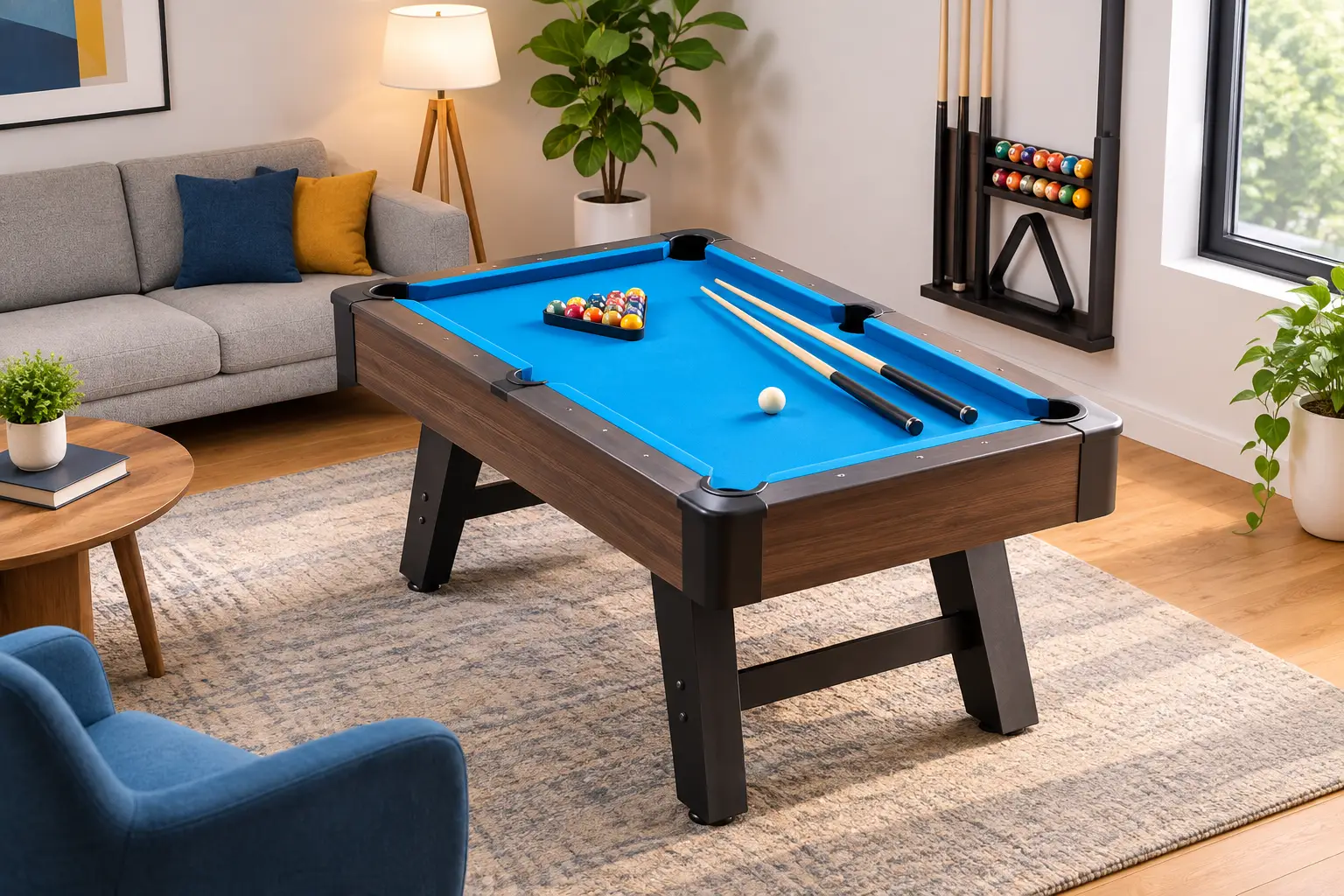
A small pool table can turn an underused bonus room, den, loft, or covered patio into the place where the family actually gathers. But smaller should never mean disposable. The right table still needs true slate, dependable cushions, a level playing surface, and enough room around it to make every shot comfortable.
For many Arizona homeowners, the best answer is a 6-foot or 7-foot table customized to suit the room rather than a full-size 8-foot or 9-foot table forced into it. The goal is not simply getting a table through the door. It is buying a table your family will enjoy playing for years without crowding the space or settling for furniture-store quality.
What Counts as a Small Pool Table?
In residential billiards, a small pool table usually means a 6-foot or 7-foot model. A 6-foot table is compact and approachable, while a 7-foot table is the familiar bar-box size and offers a more substantial playing experience. Both can be excellent choices when they are built correctly.
A full-size 8-foot table is often the preferred home size for players who have the room. A 9-foot table is tournament size and demands even more space. Yet the largest table is not automatically the smartest purchase. A 7-footer in a room where players can move freely will deliver far more enjoyment than an 8-footer with cue sticks constantly striking walls, furniture, or windows.
Be cautious with ultra-compact tables sold as game-room furniture. Many use MDF or particleboard beds instead of slate, lightweight frames, and lower-grade cushions. They may look attractive online, but they rarely stay level or play consistently over time. If you want a real billiards experience, look for a table with a 1-inch Brazilian slate bed, solid hardwood construction, K66 gum rubber cushions, and tournament-grade wool felt.
Start With the Room, Not the Table
The playing surface is only part of the footprint. You also need clearance for the cue, the player, and a natural shooting stance. A standard cue is 58 inches long, so room dimensions matter before you choose a size, finish, or pocket style.
A 6-foot table generally works best in a room around 14 feet by 17 feet or larger. A 7-foot table is more comfortable in roughly a 15-foot by 18-foot room. These guidelines assume standard cues and a reasonably open layout. A room can sometimes accommodate a table with less clearance if short cues are used for occasional wall-side shots, but that should be a deliberate compromise, not an installation surprise.
Measure more than drywall-to-drywall dimensions. Account for built-in cabinets, a sectional sofa, bar stools, doors that swing into the room, fireplace hearths, and ceiling fans. In Arizona homes, an open-concept great room or converted flex space can be an excellent table location, provided the layout gives players enough usable perimeter.
A private showroom appointment is useful here because the decision becomes visual and practical. Bring photos, room measurements, and a basic floor plan. A knowledgeable billiards specialist can help you weigh a 6-foot versus 7-foot table before you commit to a design.
Why a 7-Foot Table Is Often the Sweet Spot
For homeowners who want a compact table without a toy-like feel, the 7-foot size is hard to beat. It has the proportions most people recognize from well-maintained bar tables, yet it is manageable in rooms that cannot support an 8-footer.
The shorter playing field makes the game more accessible for younger players and casual guests. At the same time, a well-built 7-foot table still rewards good cue-ball control, accurate speed, and consistent stroke mechanics. It can support serious practice, family games, and entertaining without taking over the entire room.
A 6-foot table can be the better answer for a tighter loft, a smaller condo game room, or a dedicated kids’ space. Just understand the trade-off: balls cluster more quickly, and the shorter rails change the rhythm of the game. That does not make it a poor choice. It simply means the table should fit the way you plan to use it.
A Small Table Still Deserves Premium Construction
Size affects the room requirement, not the standard of construction you should expect. A quality small pool table should be built to stay level, play true, and look appropriate in a finished home.
The slate is the foundation. One-inch Brazilian slate provides a stable, precision-machined playing bed that holds its level far better than wood-based alternatives. Professional installers level the slate in place, then stretch the cloth and fine-tune the table after assembly. That process matters as much as the materials themselves.
The frame and cabinet deserve equal attention. Solid hardwood gives the table structural strength and a furniture-grade appearance. K66 gum rubber cushions help the balls rebound consistently instead of producing the dull, unpredictable response common on low-cost tables. Tournament-grade wool felt offers dependable roll and a refined finish, with color options that can coordinate with your cabinetry, flooring, and upholstery.
A smaller footprint also makes customization easier to appreciate. You can select a traditional carved cabinet for a classic game room, a clean-lined contemporary style for a Scottsdale great room, or a weather-conscious option for a properly protected outdoor living area. Finish, cloth color, sights, leg design, and pocket style all change the personality of the table.
The Price Question: Compact Does Not Have to Mean Cheap
Many buyers assume they have two options: a costly table from a traditional retail showroom or a low-priced imported table that may not last. There is a better middle ground when you buy dealer-direct and avoid the overhead built into conventional retail pricing.
A made-to-order, American-made table with premium components can be surprisingly attainable when the seller operates with a low-overhead, appointment-only model. The Billiard Broker helps customers avoid the inflated markup often attached to a traditional $5,000 retail pool table, with comparable premium tables commonly available around $2,495 depending on size and customization.
That value matters because a pool table is not a short-term purchase. A properly built slate table can remain in the home for decades, and it can be recovered, moved, serviced, and refreshed as your style changes. Paying for real construction once is often less expensive than replacing a bargain table after a few years of uneven play or structural problems.
Plan for Delivery, Leveling, and Future Service
A pool table is not delivered like a boxed piece of furniture. Professional installation protects the table and the investment. The crew should inspect access points, move the table carefully into the room, assemble it, level each piece of slate precisely, install the cloth, and confirm the final playability.
This is especially relevant for upstairs game rooms, narrow stairwells, gated communities, and homes with delicate flooring. The table may be built to order, but it still has to enter the home safely and be positioned correctly the first time.
Ownership also continues after installation. Over time, cloth may need replacement, cushions may need attention, or the table may need to move during a remodel or relocation. Working with a billiards company that also handles maintenance, repair, and professional moving means you do not have to search for an unfamiliar crew later.
How to Choose the Right Small Pool Table
The best choice comes down to three questions: How much clear playing space do you have, who will use the table, and what role should it play in the room?
If the table will be the centerpiece of a dedicated game room, a 7-footer with premium slate and a custom hardwood cabinet is usually the strongest balance of playability and space efficiency. If the room has tighter dimensions or the table is intended primarily for casual family use, a 6-footer may preserve the room’s comfort and still create a genuine entertainment destination.
Do not choose from a product photo alone. See the cabinet finishes, feel the cloth, compare rail profiles, and discuss the room measurements with someone who installs tables every week. A no-pressure appointment gives you the time to make a design decision based on your home, not a retailer’s floor plan.
A small pool table should make your room feel more inviting, not more restricted. Choose the size that leaves room for the game, build it with materials that will hold up, and let professional installation handle the details that make every rack play the way it should.