
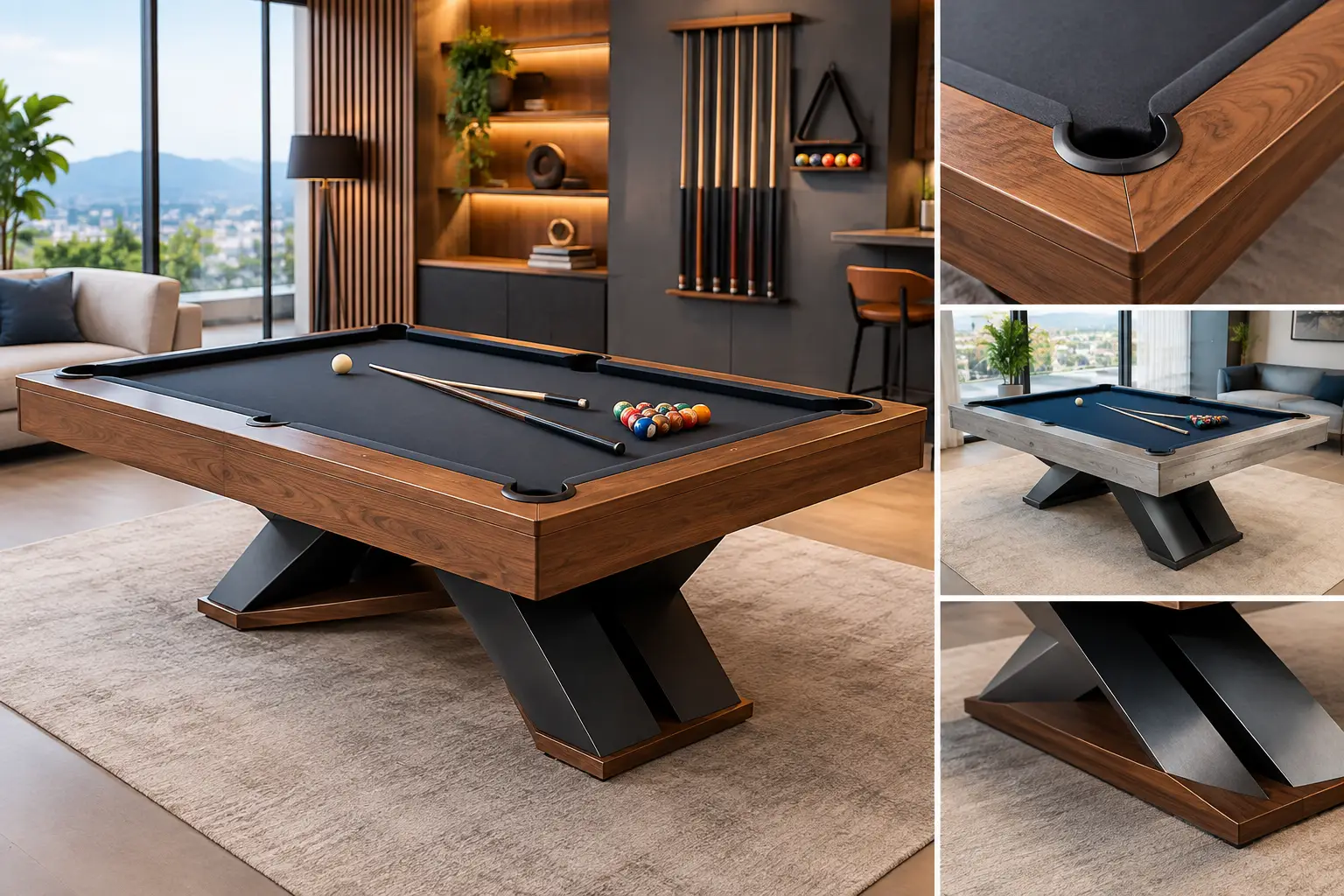
A pool table is not a piece you tuck into a corner after the room is finished. It becomes the center of the room. This custom billiard table design guide helps Arizona homeowners make the choices that matter before they select a finish, cloth color, or pocket style – so the finished table looks right, plays right, and holds its value for years.
A well-built custom table gives you far more than a game surface. It gives your family a reason to gather, gives guests a place to stay longer, and gives a bonus room, den, basement, or entertaining area a clear purpose. The goal is not to chase the most options. The goal is to choose the right options for your home, your style, and the way you will actually use the table.
Start With the Room, Not the Table
The most expensive mistake is choosing a table size before measuring the playing area. A table may physically fit in a room while leaving no comfortable space for a full cue stroke. That turns a premium purchase into a frustrating compromise.
For most homes, an 8-foot table is the sweet spot. It offers a serious playing experience without requiring the footprint of a full 9-foot tournament table. A 7-foot table can be a smart choice for a tighter game room, condo, or multi-use space. A 9-foot table makes sense when you have dedicated room dimensions and want the closest feel to competitive play.
The table’s outside dimensions are only part of the calculation. You also need cue clearance on every side. Standard 58-inch cues require a meaningful open perimeter around the table, but shorter cues can solve an occasional tight spot near a wall, column, or built-in bar. Do not assume a shorter cue will fix a room that is undersized on multiple sides. It is a practical adjustment, not a substitute for proper planning.
Before ordering, measure the room at baseboard level and identify doors, traffic paths, ceiling fans, windows, and furniture that will remain. A professional consultation is especially valuable when the room is irregular or shared with a media area. The right layout should make the table feel intentional, not crowded.
Custom Billiard Table Design Guide: Build Quality First
Customization should begin with the parts you cannot see after installation. Finish samples and cloth colors matter, but they do not compensate for poor construction.
A quality home pool table should start with a one-inch Brazilian slate bed. Slate is the foundation of a consistent roll, and one-inch slate provides the stability serious players expect. It should be precision leveled during installation, not simply placed in the room and called finished.
Next, look at the cabinet and frame. Solid hardwood construction gives a table the strength to support heavy slate over decades of use. Veneer and particleboard tables may look appealing in a showroom, but they are more vulnerable to damage, loosening hardware, and movement over time, particularly when moved or exposed to changing conditions.
Cushions deserve the same attention. K66 gum rubber cushions create predictable rebound and a lively, accurate response. Low-grade cushions can harden, deaden, or play inconsistently. That difference becomes obvious quickly, whether you are practicing bank shots or hosting a casual Friday night game.
Finally, choose tournament-grade wool felt or upgraded cloth based on how you play. Traditional wool felt is durable, attractive, and well suited to family use. Faster worsted cloth provides a smoother, more competitive roll and is often preferred by experienced players. The trade-off is simple: performance cloth feels exceptional, but it may show spills, chalk, and heavy use more readily than a forgiving everyday felt.
Choose a Style That Belongs in Your Home
A custom pool table can complement nearly any interior, but its style should connect with the room around it. Start with the larger visual language of the house.
Traditional homes often pair beautifully with carved legs, warm oak, espresso, walnut, or chestnut finishes, and leather shield pockets. These tables carry presence and work well near rich wood cabinetry, stone fireplaces, and classic bar areas.
For contemporary homes in Scottsdale, Peoria, Paradise Valley, and beyond, clean-lined cabinets, tapered or square legs, and matte black, gray, driftwood, or natural finishes often make more sense. A modern table can still be solid hardwood and built for serious play. Contemporary does not have to mean lightweight or disposable.
Rustic and transitional spaces offer the broadest range. A weathered finish, trestle base, metal accents, or a farmhouse-inspired cabinet can make the table feel integrated with exposed beams, wide-plank flooring, and comfortable entertaining spaces. If your home mixes styles, a transitional table with a simple profile and a medium-tone hardwood finish is often the safest long-term choice.
Avoid selecting a finish from a tiny swatch without considering the room’s lighting. Arizona sunlight can make finishes appear lighter and warmer than they do under a showroom light. Bring photos of your flooring, cabinetry, wall color, and key furniture pieces to your appointment. A good side-by-side comparison prevents costly guesswork.
Cloth Color Sets the Mood
Green remains timeless because it recalls classic billiard rooms and hides chalk well. But it is no longer the only sensible choice. Tournament blue creates a crisp, professional look and helps balls stand out visually. Charcoal, burgundy, camel, navy, and dark red can add a more tailored feel to a media room or lounge.
Think about how the room is used. Lighter cloth can look striking, but it demands more care in a busy household with children, pets, snacks, and frequent guests. Darker cloth creates drama and can be more forgiving, though very dark colors may make the room feel heavier if the walls and furnishings are also dark.
There is also a playing consideration. Players who use the table frequently generally prefer colors that offer clear contrast with the balls. If the table is primarily an entertainment feature, visual coordination may matter more. Neither approach is wrong. The right answer depends on whether the room is built around the game or the game is part of the room.
Details That Change the Finished Look
Pockets are a smaller choice with a large visual effect. Leather shield pockets lean traditional and refined. Fringe pockets create an old-world billiard-room look. Clean, concealed pocket styles suit modern tables. Pocket color can either match the cabinet or introduce contrast through black, brown, or burgundy leather.
Consider the sights as well. Traditional diamond sights feel familiar and work with nearly any table style. Metal or mother-of-pearl-style sights can add a more finished furniture-grade detail. They are subtle, but a pool table is viewed from every angle, and these choices contribute to the overall impression.
Do not overlook the dining-top question. A well-designed conversion top can make a pool table more versatile in a space where every square foot matters. It is particularly useful for open-concept homes and rooms that host holidays or game nights. The trade-off is that the top must be stored when playing, and it should be built to protect the rails and preserve the table’s finish.
Protect the Investment With Professional Installation
A premium table is only as good as its delivery and setup. Pool tables are not furniture-store drop-offs. They are precision game equipment made of slate, hardwood, hardware, and tightly fitted components.
Professional installers disassemble and position the table correctly, level the slate, seal the seams, stretch the cloth, and test the finished playing surface. This is particularly important in Arizona, where a table may travel through stairs, tight hallways, or multi-level homes before it reaches its final location.
The Billiard Broker provides white-glove delivery, professional installation, moving, maintenance, and repair across Arizona. That matters long after purchase day. If you renovate, move, replace cloth, or need a table re-leveled years from now, you should have a qualified billiard service partner to call rather than trusting a general moving company with a heavy slate table.
Buy for Long-Term Value, Not a Retail Markup
Custom does not mean you should accept inflated showroom pricing. In many traditional retail settings, a table’s price carries the cost of high overhead, layers of distribution, and a sales model built around pressure. Dealer-direct access and a private appointment-only showroom make it possible to focus on construction and design while avoiding much of that markup.
When comparing quotes, make sure you are comparing the complete package: slate thickness, hardwood construction, cushion quality, cloth, accessories, delivery, installation, warranty coverage, and service after the sale. A lower sticker price can become expensive once delivery charges, basic accessories, and future repairs are added. On the other hand, a higher price is not automatically proof of better quality.
The best custom table is the one that earns its place in your home. Choose the size that gives players room to shoot, the construction that will still play true years from now, and the design details that make you happy every time you walk into the room. Schedule a private showroom appointment, bring your room measurements and inspiration photos, and make the decision with confidence rather than pressure.