
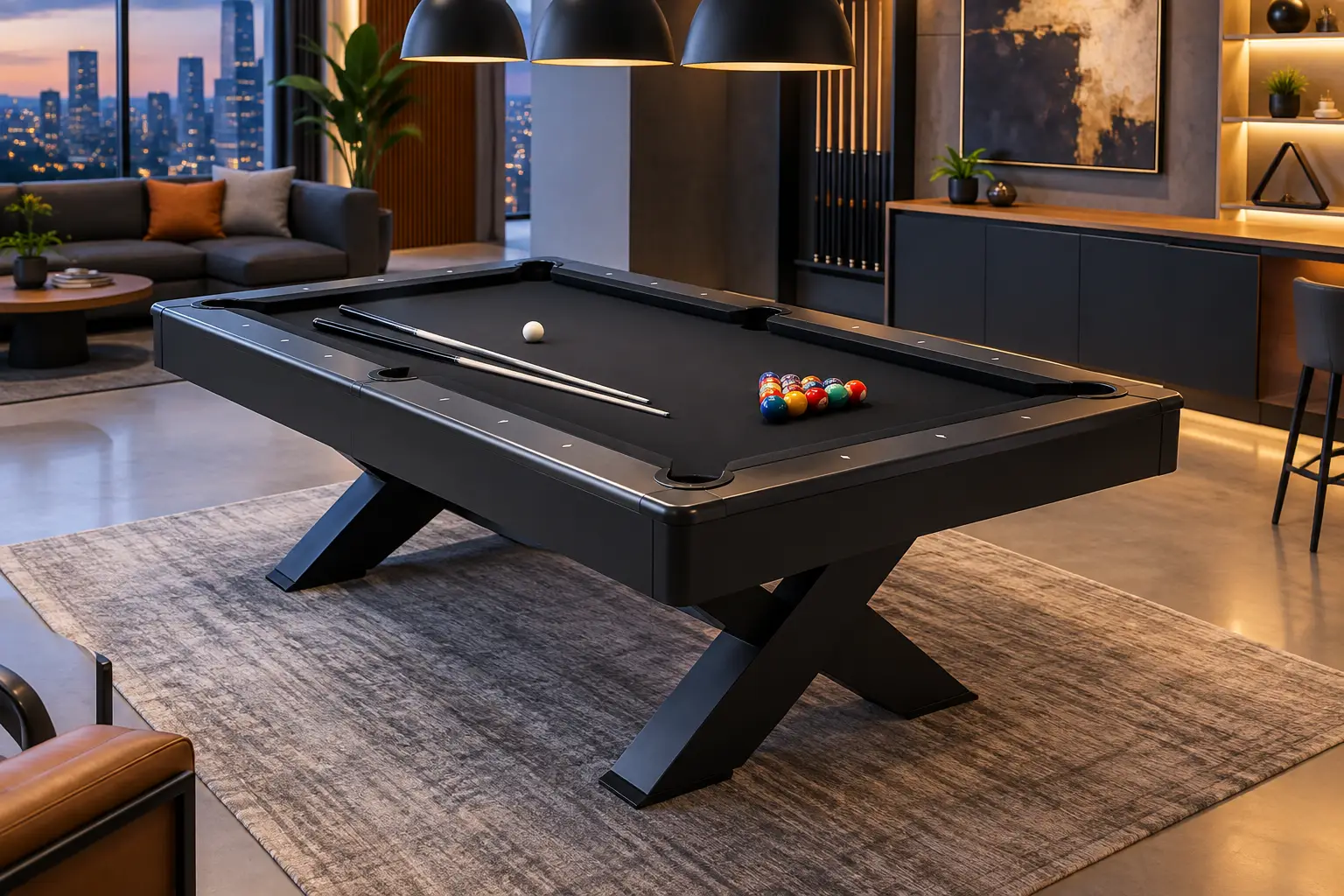
A black pool table can do more than fill a game room. It can give the entire space a finished, intentional look while creating the kind of gathering place your family and guests actually use. Against Arizona’s bright natural light, warm woods, stone finishes, and modern interiors, black brings welcome definition. It feels tailored without asking the rest of the room to compete for attention.
The right table, however, is not simply a black finish on a budget frame. A pool table is a long-term piece of furniture and a precision game surface. The difference shows up in the way it plays, the way it holds its level through the years, and the way it looks after countless weekend games, birthday parties, and late-night matches.
Why a Black Pool Table Works So Well
Black is one of the most flexible finish choices for a home game room. In a contemporary home, a matte or satin black table can make a bonus room feel cleaner and more architectural. In a traditional setting, black pairs naturally with leather seating, brass lighting, dark-framed art, and rich wood accents. It also gives homeowners a confident starting point when the rest of the room is still coming together.
A black table is particularly effective when the room includes strong visual elements such as exposed beams, a stacked-stone fireplace, patterned tile, or a dramatic bar backsplash. Instead of adding another competing wood tone, it creates an anchor. That does not mean black is always the automatic answer. A small room with limited daylight may benefit from a charcoal, espresso, or weathered finish that softens the contrast. The best choice depends on the room, not a trend board.
There is also a practical advantage. A darker cabinet can be more forgiving around active family use than very light finishes, especially in high-touch areas near the rails and legs. It still needs reasonable care, but it will not make every small mark feel like a crisis.
Start With the Room, Not the Table Photo
Most pool table regrets start before the order is placed. A homeowner sees a beautiful eight-foot table online, measures the open floor area, and forgets that cue clearance matters just as much as the table footprint.
For comfortable play, plan for the table plus enough room on every side to stroke a cue without hitting a wall, sofa, bar stool, or television console. An eight-foot table typically needs a room around 14 feet by 18 feet when using standard 58-inch cues. A seven-foot table can work well in more compact spaces, while a nine-foot table needs a genuinely generous room and is best suited to serious players with the square footage to support it.
Furniture layout matters, too. Do not treat the pool table as an obstacle placed in the middle of the room. Give it a proper lighting zone, circulation space, and a clear sightline from seating or the bar. A table that is technically installed but frustrating to play will not get the use it deserves.
Ceiling height is usually less of a concern than floor condition and access. Upstairs game rooms, narrow stairwells, and tight turns do not necessarily prevent installation because a quality table is delivered in components and assembled on site. They do make professional planning essential. Slate is heavy, and a precision installation is not a job for a general furniture delivery crew.
Construction Matters More Than Black Paint
A black pool table should be evaluated the same way you would evaluate any premium table: from the playing surface outward. The cabinet color is visible, but the internal construction determines whether you are buying a piece that looks good for a season or performs well for decades.
Insist on 1-Inch Brazilian Slate
The bed of the table is where the game happens. Premium home tables use three pieces of 1-inch Brazilian slate, professionally leveled during installation. Slate is stable, durable, and capable of providing the consistent roll players expect. Cheaper alternatives may use thinner slate, particleboard, MDF, or synthetic materials. They can save money at checkout, but they do not provide the same playing experience or long-term confidence.
Three-piece slate also allows trained installers to make fine adjustments at the seams and across the entire surface. That is how a table gets level, not by hoping the floor is perfect or tightening a few bolts after delivery.
Choose Solid Hardwood and Real Cushion Rubber
The cabinet should be substantial enough to support the slate properly. Solid hardwood construction provides strength, weight, and better long-term durability than lightweight veneered furniture-grade frames. It also gives a black finish greater depth, whether you prefer a smooth contemporary look or a finish that lets some wood character remain visible.
Cushions are equally important. K66 gum rubber cushions deliver reliable rebound and are the standard players expect on a quality home table. Low-grade rubber can harden, lose response, or create inconsistent angles over time. It is one of those details that is easy to overlook in a showroom and impossible to ignore once the game begins.
Tournament-grade wool felt completes the playing surface. Felt color is a design decision, but it is also a performance choice. A classic black cabinet with charcoal, burgundy, camel, tournament green, or electric blue felt can each create a completely different room. Dark felt is striking, though lighter chalk and lint can be more visible on it. Green and blue tend to offer a familiar billiard look and make balls easy to track. There is no single best color, only the right balance of design preference and daily use.
Make the Finish Feel Custom, Not Generic
Black does not have to mean one-dimensional. The finish, pocket style, hardware, legs, and felt give you room to create a table that belongs in your home rather than one that looks pulled from a warehouse.
A matte black finish is a strong fit for modern homes with clean lines and minimal ornamentation. Satin black offers a subtle sheen that works well beside polished fixtures and contemporary cabinetry. Distressed black or black with visible wood grain can add warmth to farmhouse, transitional, and lodge-inspired spaces. If the home already has dark cabinetry, consider whether the table should match it closely or provide slight contrast through leg design, rail detailing, or felt color.
Pocket options deserve attention as well. Leather drop pockets can bring traditional character and warmth. Shield-style pockets may suit a more formal table design. Fringe, tassels, and ornate carvings are not for every homeowner, but they can look exactly right in a classic study, wine room, or richly detailed entertainment space. The goal is not to add options for their own sake. It is to make every visible decision work together.
The Price Question: Compare the Whole Table
A premium black pool table can look expensive at conventional retail, often because showroom overhead and retail markups are built into the price. That is why comparing tags alone can be misleading. Ask what is included: slate thickness, hardwood construction, cushion rubber, felt, delivery, setup, leveling, warranty coverage, and future service.
A table advertised at a low price may not include professional installation, upgraded cloth, or the construction details that protect the investment. On the other hand, an inflated retail price does not automatically mean better materials. A typical $5,000 retail table can often be available around $2,495 through a dealer-direct model, depending on the selected design and options. The smart purchase is the one that makes quality transparent and keeps unnecessary markup out of the room.
At The Billiard Broker, a private appointment makes that comparison easier. You can see finishes under real lighting, compare table styles, discuss room dimensions, and build a made-to-order American-made table around your home and budget without a high-pressure showroom experience.
Installation Is Part of the Product
A black finish may be what catches your eye, but precision installation protects everything beneath it. White-glove delivery should include careful placement, professional slate assembly, seam work, leveling, cloth installation, and final inspection. A properly installed table plays true from day one and gives the cabinet the support it was built to have.
This is especially valuable in Arizona homes where moves, remodels, and changing entertainment spaces are common. If you relocate a table, do not drag it or rely on a standard moving company. Pool tables should be disassembled, transported, reassembled, and releveled by billiard professionals. Regular brush care, occasional cloth cleaning, and attention to humidity, direct sun, and drink spills will help preserve both the felt and the finish.
The strongest black pool table is one that earns its place after the first impression fades: a solid hardwood table, built on 1-inch slate, customized for the room, and installed by people who understand the game. Schedule a private showroom appointment before choosing a finish, and let the room dimensions, your style, and the way your family will use the space guide the decision.