
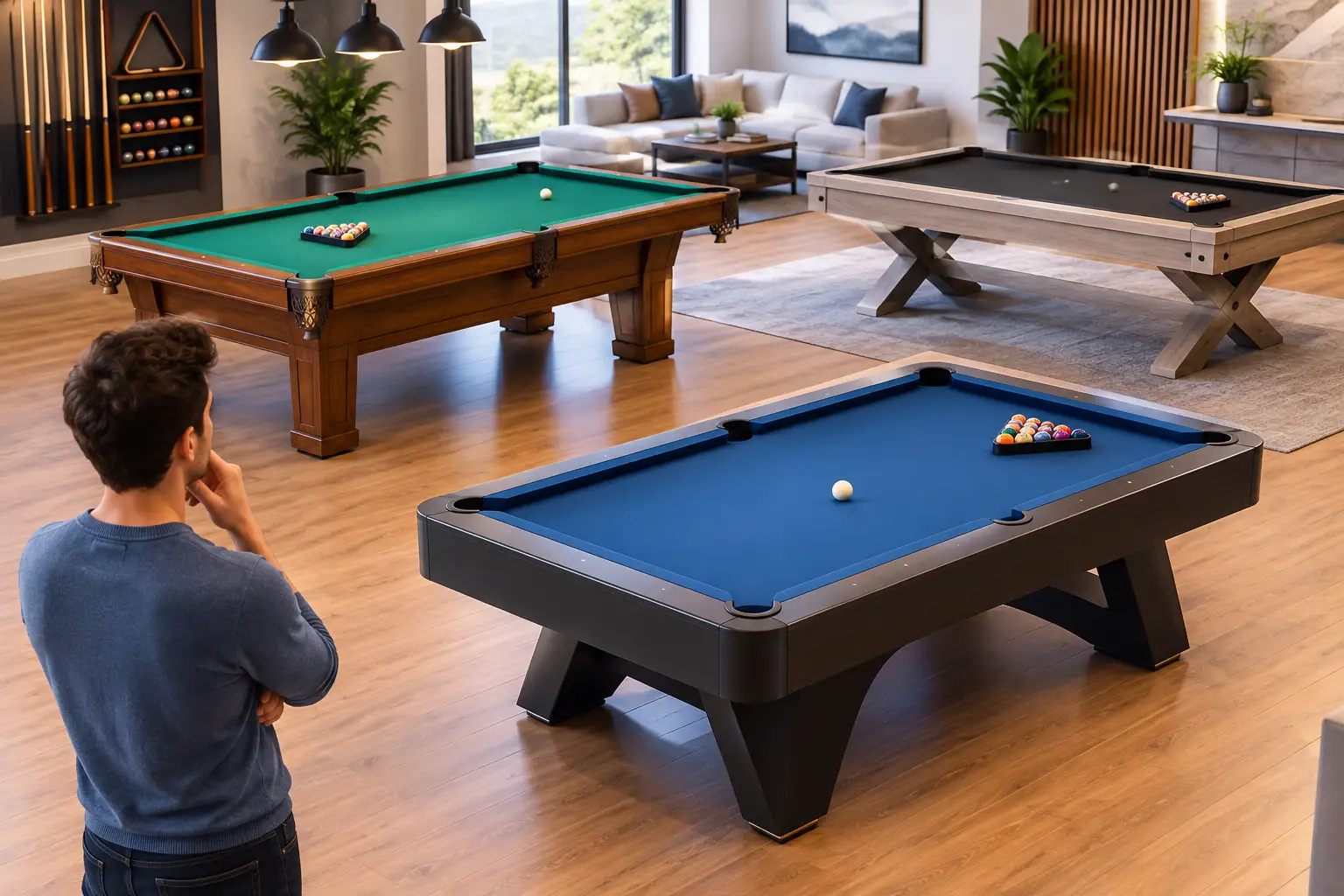
A pool table can become the center of a game room, but it can also become an expensive regret when the size is wrong, the frame is weak, or delivery is treated as an afterthought. If you are searching for how to choose pool table options for your home, start with the decisions that protect your space, your budget, and the way your family will actually play.
A well-built table should feel like furniture, play like a serious billiard table, and hold its value long after the first rack. That does not mean paying a conventional showroom markup. It means knowing where quality counts and where a dealer-direct purchase can save you thousands.
How to Choose a Pool Table That Fits the Room
The table does not need to fill the room to make an impact. In fact, leaving enough cue clearance around it is the difference between a polished game room and a table everyone avoids using because the walls are too close.
Measure the finished room, not just the open floor. Account for bars, seating, doors that swing inward, televisions, fireplaces, and any columns or built-ins. Then add playing space around every side of the table. A standard cue is 58 inches long, so a comfortable room allows roughly five feet of clearance beyond the table’s outside dimensions.
For most homes, these are useful starting points:
- A 7-foot table works well for tighter bonus rooms, casual family play, and spaces around 13 by 16 feet.
- An 8-foot table is the most popular home size and generally needs about 14 by 18 feet.
- An 8-foot oversize table offers a little more challenge while retaining a residential-friendly footprint.
- A 9-foot table delivers the closest tournament experience and typically needs a room near 15 by 19 feet or larger.
These are planning guidelines, not hard rules. Shorter cues can make a compact room workable, but they are a compromise. If the room is close, bring in the exact measurements before choosing a table. An experienced showroom consultation can prevent a costly sizing mistake before an order is placed.
Start With Slate and Structural Quality
The playing surface determines whether a pool table plays true. For a long-term home table, look for a three-piece, one-inch slate bed. Brazilian slate is widely respected because it is dense, stable, and can be precision-machined to a smooth, level surface.
Three-piece slate matters because it allows professional installers to level each section on site. A one-piece slate top can be very heavy and difficult to move through Arizona homes, while thinner slate and non-slate alternatives are more likely to warp, sag, or play inconsistently over time.
The cabinet underneath matters just as much. Solid hardwood construction offers strength, repairability, and the furniture-grade look most homeowners want in a main living or entertainment space. Veneers and engineered wood may look acceptable in a product photo, but they are less forgiving during a move, in dry conditions, and through years of family use.
Ask what supports the slate. A quality table should have substantial cross beams and a rigid frame, not a lightweight cabinet carrying a heavy surface. The table’s legs should include strong, accessible leveling hardware. A table cannot play correctly if its foundation shifts.
Cushions are another place where entry-level tables cut corners. K66 gum rubber cushions provide the responsive, consistent rebound players expect. Cheap synthetic rubber can harden, lose its shape, or create dead rails that make even a good shot unpredictable. When you compare tables, roll balls off the rails and pay attention to whether the rebound feels lively and consistent from one cushion to the next.
Choose a Table for How You Will Use It
A family table and a training table can both be excellent purchases, but they may not be the same table. Be honest about the primary use.
If the table will host kids, friends, and weekend gatherings, an 8-foot table is usually the sweet spot. It feels substantial, accommodates players of every level, and suits most dedicated game rooms. If you are an experienced player who wants to practice for league or tournament play, a 9-foot table may be worth the additional room requirement.
Consider the room’s role as well. A table in a formal Scottsdale living space may call for a refined traditional cabinet, carved legs, and leather drop pockets. A table in a modern Peoria game room may look better with clean lines, a matte finish, and shield pockets. The best choice should look intentional even when nobody is holding a cue.
Outdoor use requires a separate conversation. Arizona heat, dust, sun exposure, and monsoon moisture are hard on indoor wood tables, felt, and rubber cushions. A covered patio is not automatically a protected environment. If the table will live outside, select a product specifically engineered for outdoor conditions instead of trying to make an indoor table survive where it was never meant to be.
Build the Look Around Your Home
Customization is where a made-to-order pool table earns its place. The finish should coordinate with flooring, cabinetry, beams, and nearby furniture, not compete with them. Dark espresso, warm walnut, weathered gray, natural oak, and black finishes each create a different visual weight in the room.
Felt color deserves more thought than many buyers give it. Traditional green remains timeless, while tournament blue improves ball visibility and gives the room a sharper sports-lounge feel. Charcoal, burgundy, tan, and custom colors can work beautifully when they support the home’s palette. The trade-off is practical: very light cloth can show chalk and dust faster, while very dark cloth can make low-light games harder to see.
Tournament-grade wool felt is a smart choice for most home tables. It is durable, plays consistently, and provides the classic billiard feel families expect. Faster worsted cloth is available for players who prefer a more competitive roll, but it can be less forgiving and may show wear differently in high-use homes.
Pocket style completes the design. Leather drop pockets feel traditional and warm. Shield pockets offer a clean, tailored appearance. Ball-return systems are convenient in active game rooms, though they change the table’s cabinet profile and may not match every furniture style. There is no universally correct answer. Choose the combination that fits both the room and the way your household plays.
Compare the Real Price, Not the Sticker Price
Pool tables are often sold through conventional retail showrooms with heavy overhead and inflated pricing. A table marked at $5,000 may not represent $5,000 in materials, craftsmanship, or long-term value. Ask for a clear breakdown of what is included: slate thickness, wood species, cushion type, cloth, delivery, setup, warranty, and accessories.
A lower price is not automatically a bargain. If it leaves out professional installation, uses thin slate, or relies on low-grade components, the savings can disappear when the table needs service. On the other hand, paying a retail premium simply for a showroom address does not make a table better.
The Billiard Broker helps Arizona homeowners compare premium, American-made tables with dealer-direct pricing, often delivering the quality of a traditional $5,000 table for around $2,495. That difference allows buyers to invest in the construction and customization they want rather than funding unnecessary retail markup.
Do Not Treat Delivery and Leveling as Extras
A slate pool table is precision equipment, not boxed furniture. It should be disassembled and carried by trained billiard professionals, then assembled, leveled, and finished in the room where it will live. Even a premium table will play poorly if it is not leveled correctly.
Professional installation also protects your home. Slate sections are extremely heavy, and moving them through stairs, tight hallways, or delicate flooring requires planning. Before delivery, confirm access points, room location, stairs, and any special handling needs. This matters just as much for a future move, remodel, or re-felting service.
Ask about warranty coverage and who will service the table after installation. A lifetime warranty on the table’s structure provides confidence, but responsive local service is what keeps the table playing right over the years. You should know who to call if cushions need attention, felt is damaged, or the table must be relocated.
Your pool table should make people want to stay in the room a little longer. Measure carefully, insist on real slate and solid construction, choose finishes that belong in your home, and work with professionals who will still answer the phone after delivery. Schedule a private appointment, see the materials in person, and make a choice you will be proud to rack up for years.