
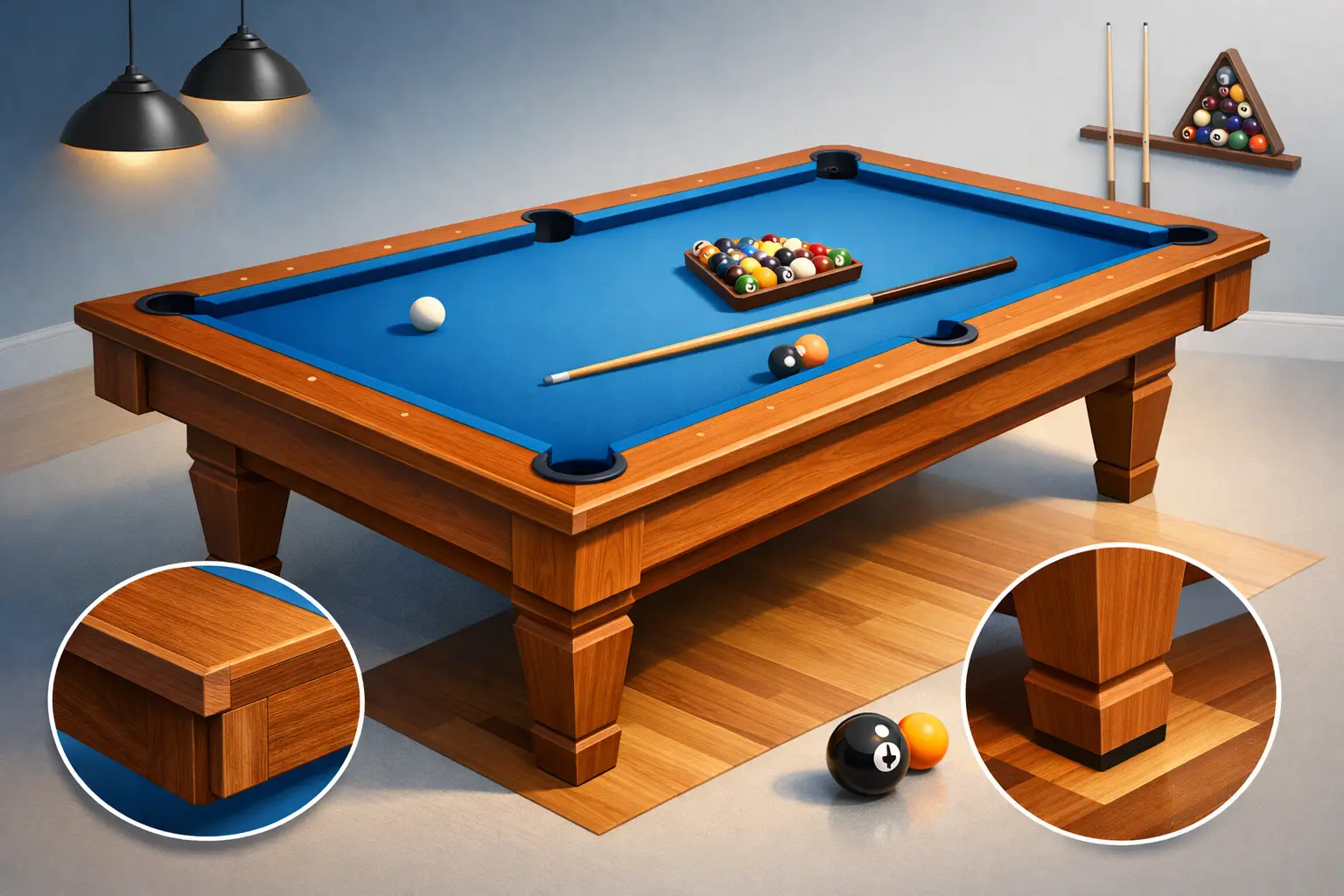
A pool table can look impressive on delivery day and still disappoint a few years later. The difference usually shows up in the frame, legs, and slate support long before it shows up in the felt. Solid hardwood pool table durability is not just a selling point. It determines whether your table stays level, plays true, and remains a piece of furniture your family is proud to keep for decades.
For Arizona homeowners investing in a game room, bonus room, or entertaining space, materials matter. Dry air, temperature changes, active family use, and the occasional move all place real demands on a table. A well-built solid hardwood table is designed for that long ownership cycle. A lower-cost table built with particleboard, thin veneers, or lightweight framing often is not.
What Solid Hardwood Actually Changes
Solid hardwood means the structural components are made from real lumber, rather than engineered board covered with a wood-look surface. On a quality pool table, that typically includes the cabinet, rails, legs, crossbeams, and key slate-supporting structure. Species and styling can vary, but the goal is the same: a rigid foundation capable of carrying substantial weight without flexing.
That rigidity is critical because a serious home pool table is not light furniture. A table built around 1-inch Brazilian slate can weigh 700 pounds or more once it is fully assembled. The slate needs consistent support across the cabinet. If the frame shifts, sags, or loosens, the playing surface can move out of level and the table’s performance suffers.
Solid hardwood also holds fasteners more reliably than particleboard. Rail bolts, leg connections, and frame hardware are under repeated stress from play, installation, and future service. Real wood gives those connections better long-term purchase. That does not mean every solid wood table is automatically superior, but it gives a properly engineered table a far stronger starting point.
Hardwood Pool Table Durability Depends on More Than Wood
The phrase “solid hardwood” should never be the end of the conversation. A beautiful hardwood cabinet cannot compensate for weak slate support, poor cushion rubber, or rushed installation. Durability comes from the complete build.
Start with the slate and frame
The slate is the playing foundation, and 1-inch Brazilian slate remains the standard homeowners should look for when they want serious performance. It is precisely machined, stable, and heavy enough to create a true playing surface. But slate alone does not keep a table level. It must rest on a frame designed to support it evenly over time.
Look for a substantial center beam and crossbeam system, solid legs, and reliable leg levelers. A lightweight cabinet with slate dropped into it is not the same as a table engineered around slate. The distinction matters most after years of use, not during a quick showroom glance.
Rails take the daily impact
Every break shot transfers force through the rails. Hardwood rail construction helps keep the cushion assembly secure and the table feeling solid instead of hollow. Quality K66 gum rubber cushions are equally important. They provide consistent rebound and generally retain their playing characteristics far better than cheap, hardened rubber.
If a table has real hardwood rails but low-grade cushions, it may still look right while playing poorly. A durable table should deliver both furniture-grade presence and dependable action.
The finish protects the investment
A quality finish does more than add color. It helps protect hardwood from minor spills, fingerprints, sunlight exposure, and everyday cleaning. That is especially valuable in bright Arizona homes, where game rooms often include large windows or open-concept living areas.
No finish makes wood indestructible. Direct sun can fade wood over time, and standing moisture can damage any table. Still, a professionally applied finish on genuine hardwood is easier to maintain and refinish than a thin veneer once it has been scratched or worn.
Why Cheap Construction Costs More Later
A lower upfront price can be tempting, especially when a table appears similar in a photo. Yet many inexpensive tables cut costs where the buyer cannot immediately see them: composite frames, thin rail assemblies, undersized support systems, low-grade rubber, and lightweight hardware.
These tables may be fine for occasional short-term use. They are not always a poor choice for every situation. If a homeowner needs a temporary table for a rental or has a limited budget, the trade-off may be reasonable. The problem comes when a table is marketed as a lifetime game-room centerpiece without the construction to support that promise.
Over time, weak materials can lead to loose legs, rail movement, uneven play, stripped fasteners, sagging cabinets, or a table that becomes difficult to move and reinstall correctly. Repairing a poorly built table is not always economical because the underlying structure may be the issue.
A solid hardwood table costs more to manufacture, but it is also the kind of purchase that can remain in the family, be professionally moved, receive new felt, and continue serving its purpose after a room redesign. That is long-term value, not just a higher price tag.
Arizona Conditions Make Proper Setup Essential
Hardwood is durable, but it is still a natural material. Wood responds to environmental changes, especially dramatic swings in temperature and humidity. Arizona’s dry climate does not automatically harm a pool table, but an unconditioned garage, patio exposure, or frequent extreme heat can create problems for wood, rubber, felt, and finishes.
The best location is a climate-controlled indoor space with reasonable airflow and protection from direct afternoon sun. If your table is near large windows, window coverings can reduce UV exposure and heat buildup. Keep drinks on a nearby table rather than on the rail, and address spills immediately with a clean, dry cloth.
Professional installation is another part of protecting durability. A heavy three-piece slate table must be assembled, leveled, and seamed correctly. The floor itself may not be perfectly level, which is why installers level the playing surface rather than simply trusting the room. A table that is improperly installed can play poorly even if it is built from excellent materials.
How to Evaluate a Table Before You Buy
Ask direct questions. A reputable seller should be able to explain what is solid hardwood, where the slate is supported, what cushion profile is used, and how the table will be installed. Vague phrases such as “wood construction” or “professional style” do not tell you enough.
Pay attention to the details you can feel. The cabinet should not seem flimsy. Rails should feel secure. Leg connections should look substantial. You should also understand what comes after delivery: who levels the table, whether moving services are available, and what warranty supports the construction.
At The Billiard Broker, homeowners can compare made-to-order American-made tables with the construction details in plain view: solid hardwood, 1-inch Brazilian slate, K66 gum rubber cushions, and tournament-grade wool felt. That makes it easier to choose a finish and design you love without accepting conventional showroom markups for the quality you expect.
Preserve the Table You Buy
A hardwood pool table does not require complicated care. Brush the felt with a proper billiard brush, avoid harsh household cleaners on the rails, use a table cover when the room is dusty or the table will sit unused, and have the table professionally serviced if you notice a level or cushion issue. Never try to drag it across the room. Even a well-built table needs proper disassembly and reinstallation when it moves.
When comparing tables, focus less on the first-day appearance and more on what will still be supporting the slate ten or twenty years from now. Schedule a private showroom appointment, inspect the construction, and choose the table that earns a permanent place in your home.